Guide
Best Coccyx Cushion for Gaming Chair Users (2026)
By Coccyx Relief Editorial Team · Updated 2026-08-11
Disclosure: CoccyxRelief may earn commissions from qualifying purchases. This does not influence our recommendations.
By Mat — sharing what worked after 9 years of coccyx pain · Last updated March 2026
The best coccyx cushion for gaming chairs in 2026 is the ComfiLife Gel-Enhanced Coccyx Cushion — its 3-inch gel-infused memory foam eliminates tailbone contact via a precision-cut U-shaped opening, its non-slip base grips gaming chair upholstery effectively, and its heat-dissipating gel prevents the temperature buildup that standard foam accumulates during extended gaming sessions. For budget buyers, the Everlasting Comfort Seat Cushion delivers comparable tailbone relief at lower cost.
The Coccyx Relief System: Everything You Need in One Place
Exercises, ergonomic setups, stretches, and a complete daily program. 30+ pages, instant download.
Get My Coccyx Relief SystemInstant download • 30-day money-back guarantee
Table of Contents
- Why Gaming Chairs Cause Tailbone Pain
- What to Look for in a Gaming Chair Coccyx Cushion
- Top 5 Coccyx Cushions for Gaming Chairs
- Product Comparison Table
- Gaming Chair vs Office Chair: Does the Cushion Choice Differ?
- How to Position a Coccyx Cushion in a Gaming Chair
- Complementary Ergonomic Tips for Gamers
- Frequently Asked Questions
- Sources and Methodology
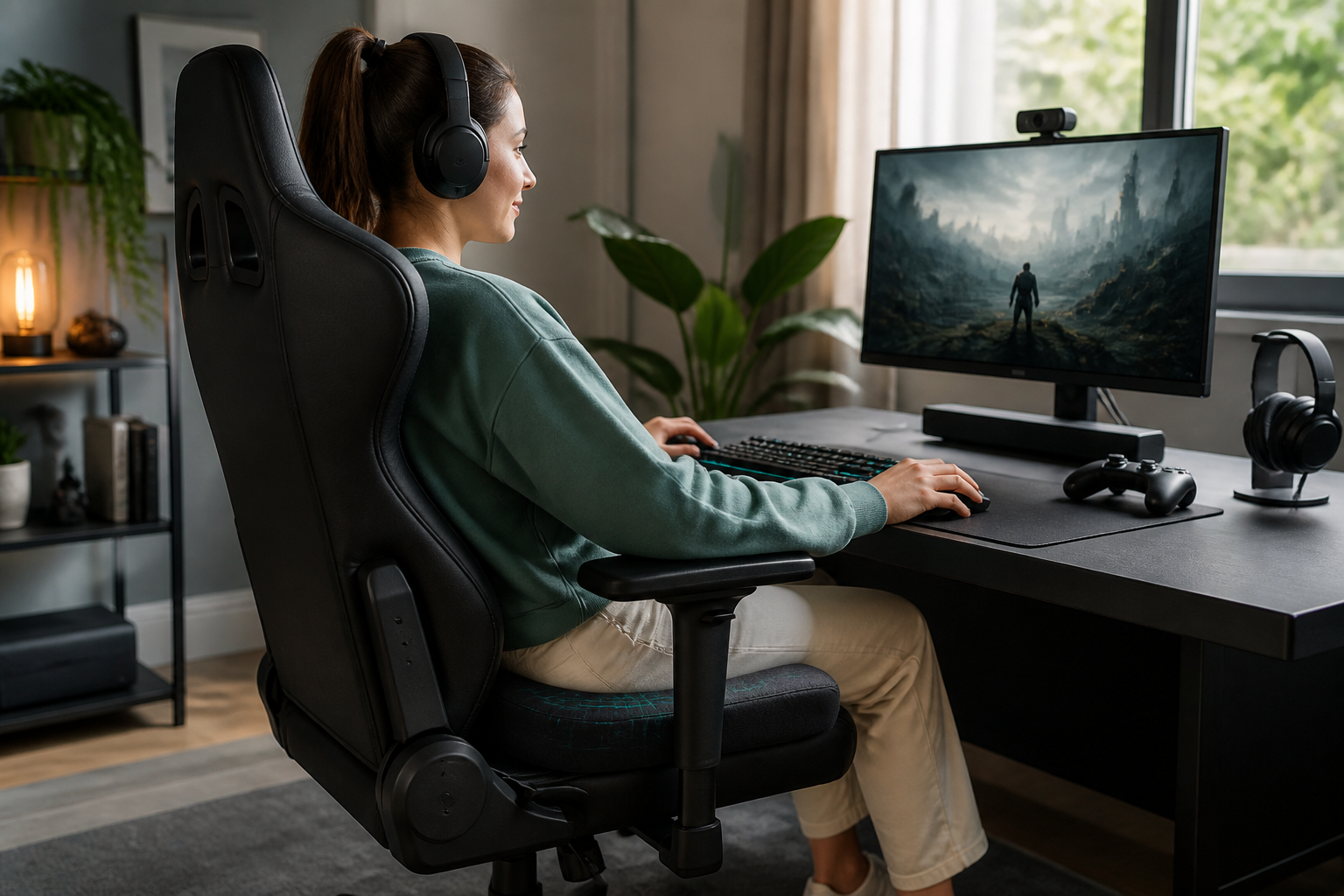
 A properly fitted coccyx cushion eliminates direct tailbone contact in gaming chairs — critical for 4+ hour gaming sessions.
Why Gaming Chairs Cause Tailbone Pain
Gaming chairs are designed for aesthetics and initial comfort. The bucket-seat design, aggressive lateral bolsters, and firm PU leather upholstery that make gaming chairs look impressive in a battlestation setup are precisely the features that cause tailbone pain.
The Mechanical Problem
Three factors combine to create coccyx pressure in gaming chairs:
-
Posterior pelvic tilt — Gaming chairs with bucket seats naturally push the pelvis into slight posterior tilt (tilting backward). This position shifts weight directly onto the coccyx (tailbone) instead of the ischial tuberosities (sitting bones).
-
Hard seat pan — PU leather over dense foam provides initial comfort but lacks the graduated pressure distribution of quality office chair foam. Over 2+ hours, the foam compresses and the seat effectively becomes rigid.
-
Concentrated sitting time — Gaming sessions average 3–5 hours, often without movement breaks. This sustained pressure accumulation exceeds what even good chair padding can handle without tailbone contact.
Result: Tailbone pain that progressively worsens through a gaming session, often persisting for hours after standing.
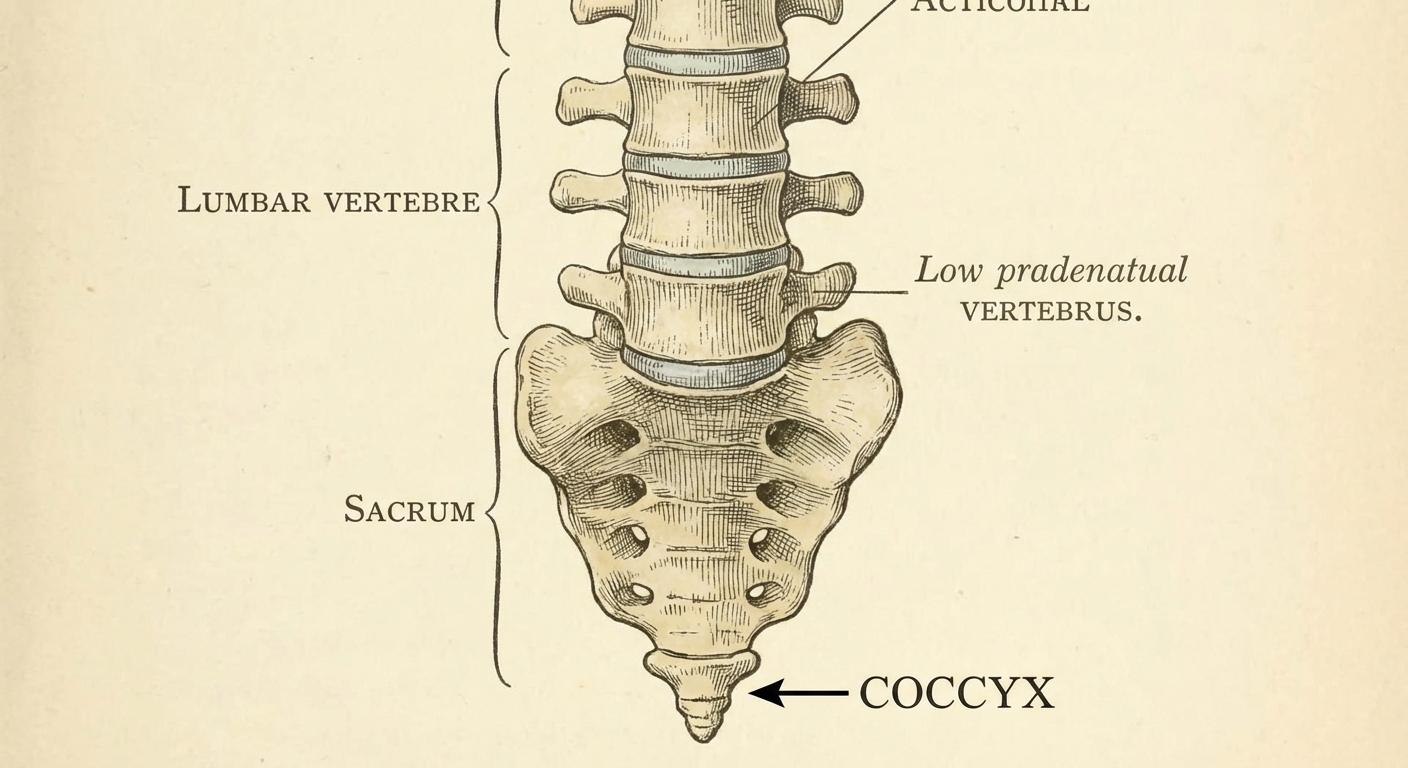 The coccyx (tailbone) at the base of the spine bears direct pressure in bucket-seat gaming chairs with posterior pelvic tilt.
Who Gets Gaming Chair Coccyx Pain
| Risk Factor | Why It Increases Coccyx Pain Risk |
|---|---|
| Thin body frame | Less natural gluteal tissue to cushion the coccyx |
| Gaming sessions > 2 hours | Pressure accumulates beyond foam recovery time |
| Previous coccyx injury | Damaged tailbone has heightened pressure sensitivity |
| Older gaming chair (2+ years) | Foam compresses permanently; loses cushioning |
| Leaning forward during gameplay | Shifts weight posteriorly onto tailbone |
What to Look for in a Gaming Chair Coccyx Cushion
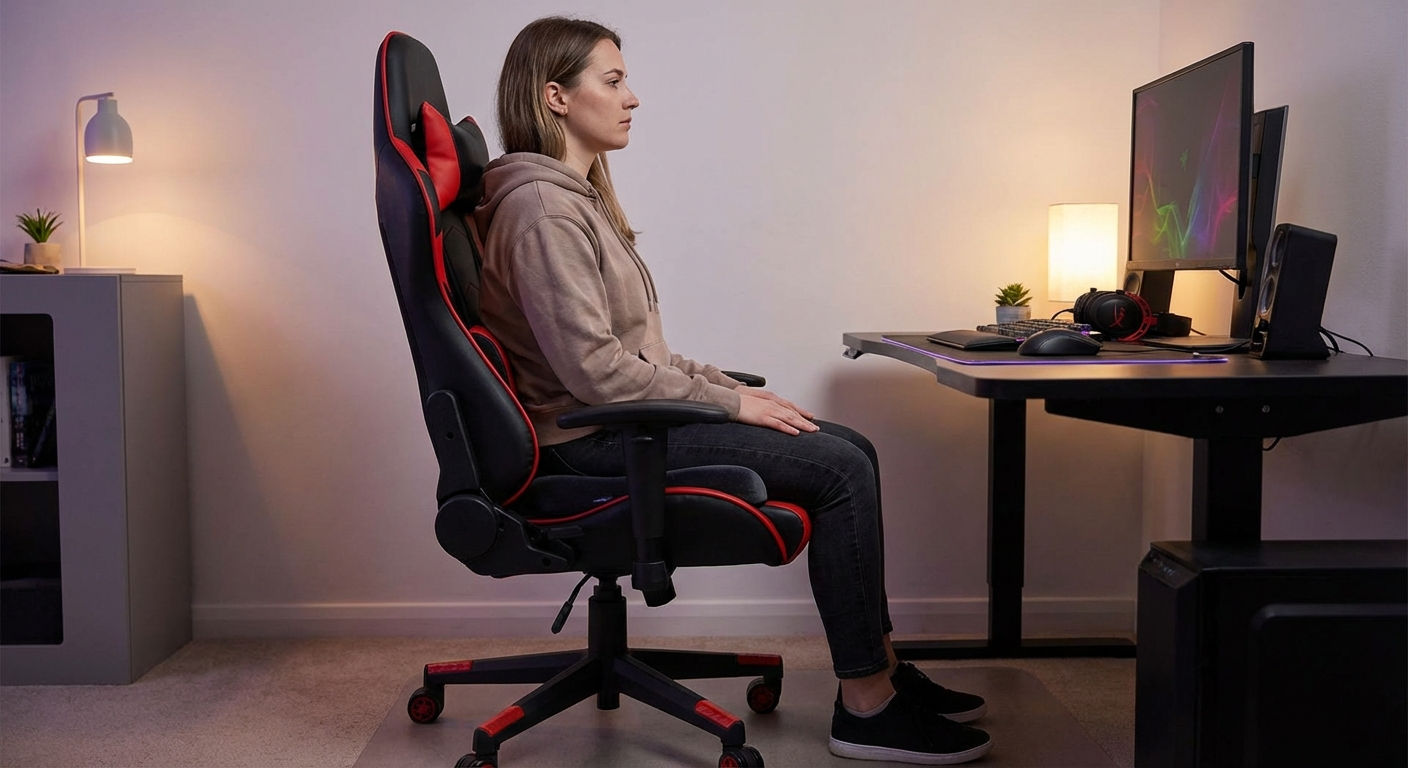 Correct positioning: cushion sits fully on the seat pan, coccyx suspended in the cutout, back upright against backrest.
1. U-Shaped Cutout (Essential)
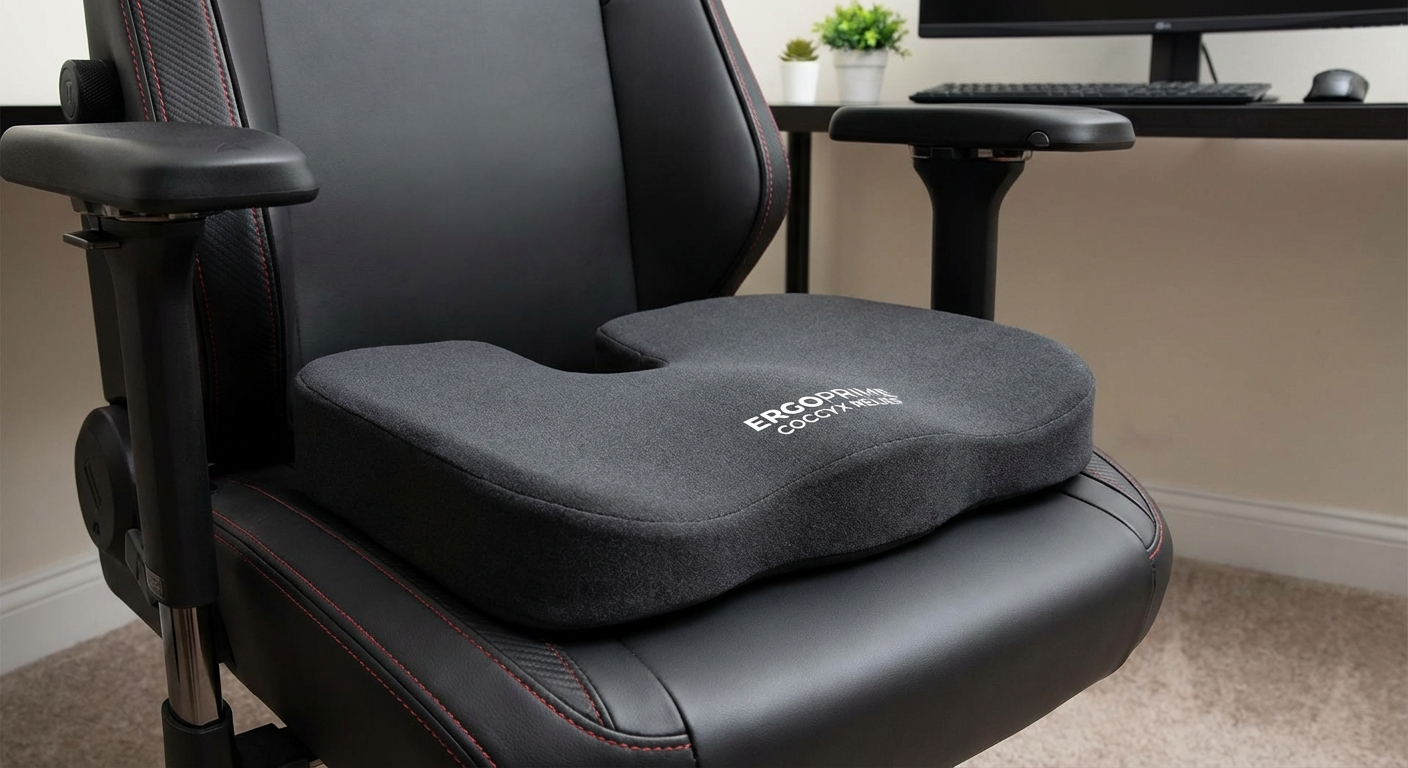
The most important feature: a U-shaped opening at the rear of the cushion that suspends the coccyx in midair. Without this, the cushion simply provides softer padding — helpful but not eliminating direct coccyx contact.
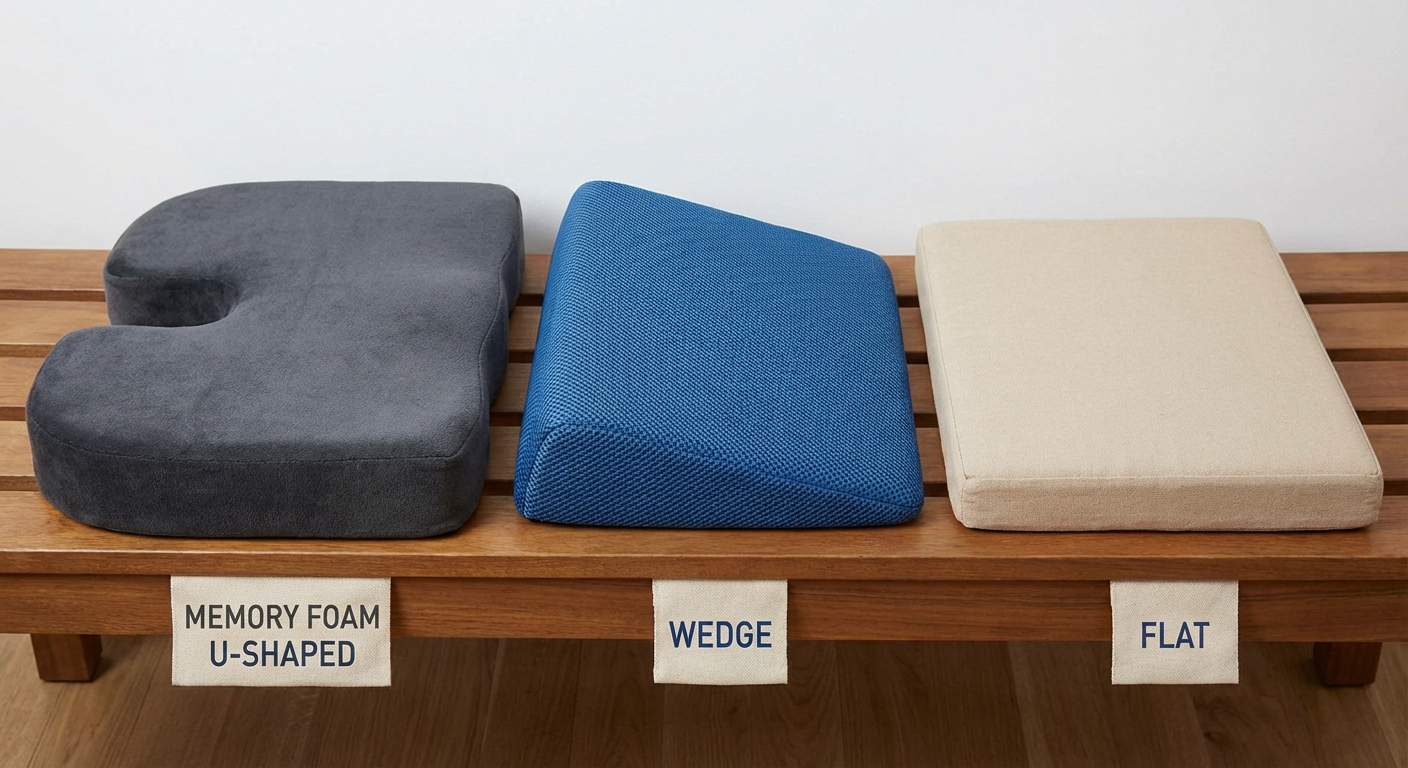 U-shaped cutout (center) provides the best tailbone offloading for gaming chairs.
2. Foam Density (3.5+ lbs/ft³)
Gaming sessions are long. Low-density foam compresses fully within 2–3 hours, losing all support. Look for:
- High-density memory foam (3.5–5.5 lbs/ft³) that retains support throughout extended sessions
- Gel-infused foam for heat management — gaming generates heat, and standard memory foam traps it
3. Thickness (3–4 inches)
Thinner cushions bottom out. Thicker cushions raise your seating position, which may require desk height adjustment. 3–3.5 inches is the optimal range for most gaming chairs.
4. Non-Slip Base
Gaming chairs typically have PU leather or vinyl seat surfaces that are slippery. A non-slip rubber base or silicone grip pattern prevents the cushion sliding forward during gameplay.
5. Size Fit
Standard gaming chair seat widths are 45–55 cm. A cushion 40–50 cm wide sits within the bolsters without folding up the sides. Measure your chair's usable seat width before buying.
Top 5 Coccyx Cushions for Gaming Chairs
1. ComfiLife Gel-Enhanced Coccyx Cushion — Best Overall
Best for: Extended gaming sessions (3+ hours), heat management, all gaming chair types
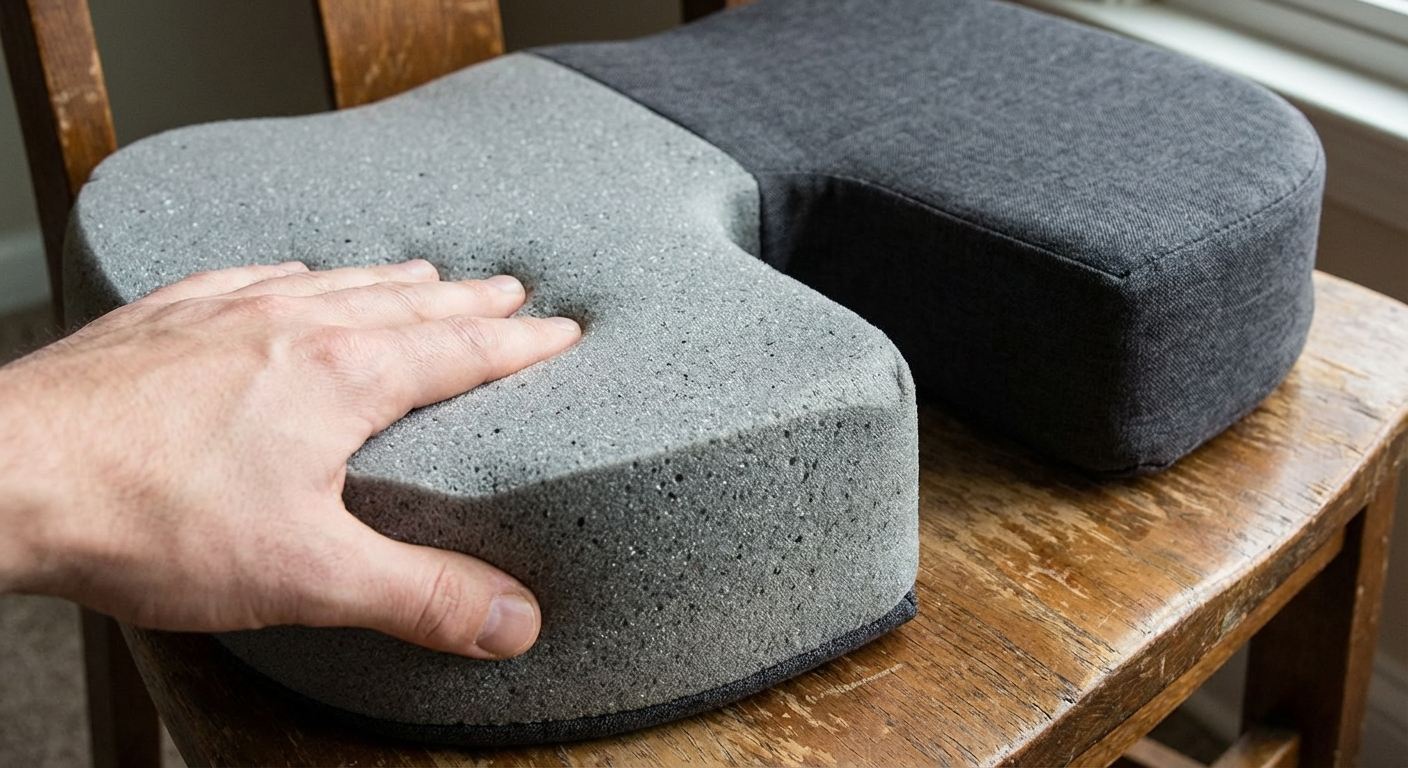 Close-up of U-shaped cutout in memory foam — the coccyx suspends in this space without any contact.
The ComfiLife is the gold standard for gaming chair coccyx cushions. Its gel-infused memory foam stays 3–5°C cooler than standard foam throughout a gaming session. The precision-cut U-shaped opening is sized appropriately for both average and larger users. The velour cover is washable and more comfortable against the back of the thighs than vinyl-covered alternatives.
Key specs: 16.5"×13.5"×2.8", gel-infused memory foam, non-slip base, washable cover
View ComfiLife Cushion on Amazon
2. Everlasting Comfort Seat Cushion — Best Budget Option
Best for: Budget buyers, shorter gaming sessions (1–3 hours), trying coccyx cushions for the first time
At approximately $30, the Everlasting Comfort delivers genuine coccyx relief at half the cost of premium options. The memory foam quality is slightly lower (faster compression after 2–3 hours), but for most gaming sessions under 3 hours it performs comparably to more expensive options.
Key specs: 17.5"×14"×2.8", memory foam, non-slip bottom, machine-washable cover
View Everlasting Comfort on Amazon
3. Purple Royal Seat Cushion — Best Premium Option
Best for: Heavy users, 4+ hour gaming sessions, premium build quality
The Purple Royal uses Purple's grid elastomer technology — the same material in their mattresses. Unlike memory foam, the grid doesn't trap heat and provides consistent support regardless of temperature. It is significantly more expensive (~$90) but outlasts foam cushions by 2–3× and maintains consistent support throughout even marathon gaming sessions.
Key specs: 15"×12"×4", Purple grid elastomer, no-slip bottom
4. Lovehome Coccyx Orthopedic Seat Cushion — Best for Pain Relief
Best for: Active coccyx pain, post-injury use, medical-grade support
The Lovehome is specifically designed for clinical coccyx pain rather than general comfort. The coccyx opening is deeper and wider than most competitors, providing more aggressive tailbone offloading. Recommended for gamers with an active coccyx injury or diagnosed coccydynia.
Key specs: 17"×12"×2.5", orthopedic memory foam, ergonomic design for pain conditions
View Lovehome Cushion on Amazon
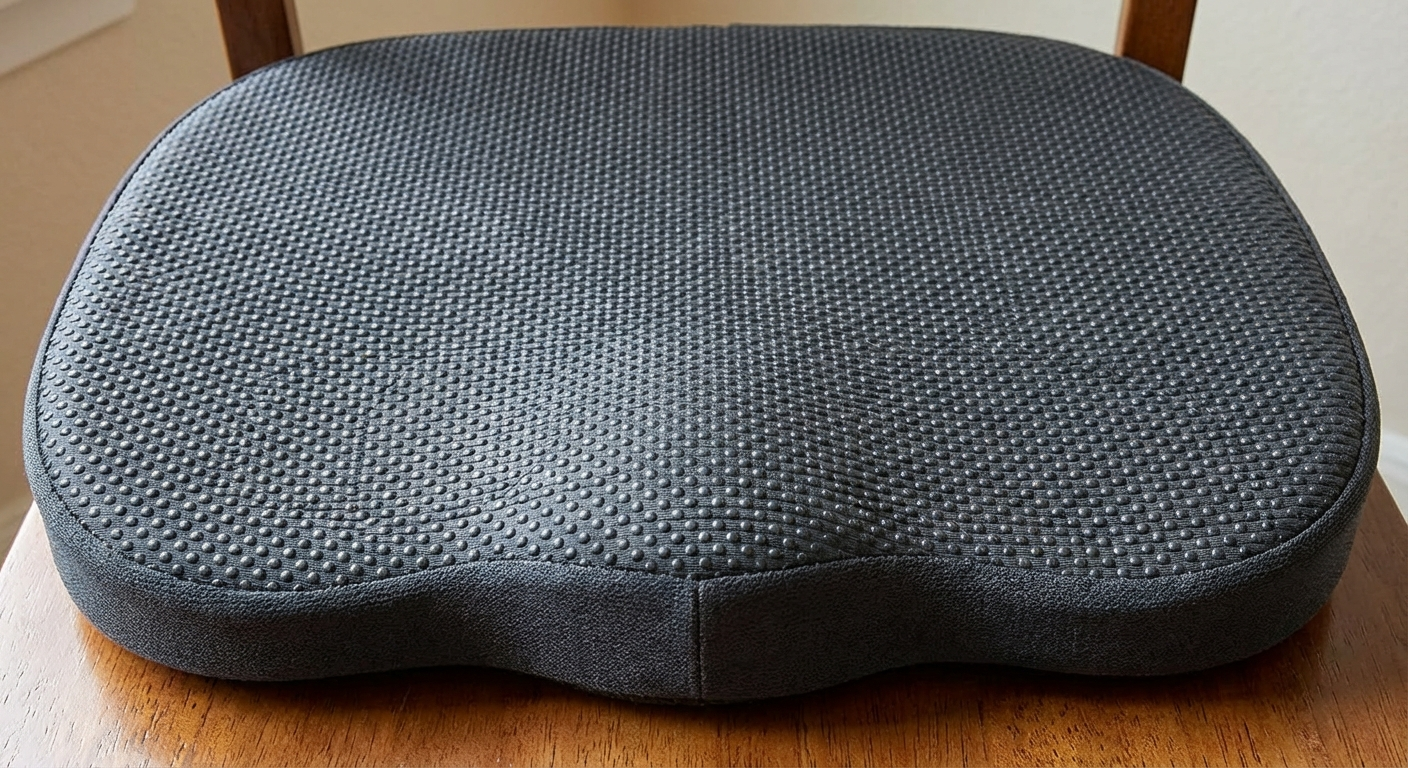 Non-slip base is essential for PU leather gaming chair seats — prevents cushion from sliding during gameplay.
5. FOMI Premium Coccyx Seat Cushion — Best for Sitting Posture
Best for: Gamers who also want lumbar improvement, upright posture support
The FOMI adds a slight forward wedge angle (3–5°) to the coccyx cutout design, which promotes anterior pelvic tilt and improves lumbar alignment alongside tailbone relief. Particularly beneficial for gamers who tend to slump forward — the wedge encourages sitting back against the chair backrest.
Key specs: 18"×14"×3", high-density foam with wedge, foam density supports upright posture
Prefer a Structured Recovery Plan? Review the System
Use a step-by-step plan with exercises, setup guidance, and clear pacing prompts.
Get My Coccyx Relief SystemInstant download • 30-day money-back guarantee
Product Comparison Table
| Cushion | Price | Foam Type | Thickness | Gaming Session Length | Best For |
|---|---|---|---|---|---|
| ComfiLife Gel | ~$40 | Gel-infused memory foam | 2.8" | Up to 6 hours | Best overall |
| Everlasting Comfort | ~$30 | Memory foam | 2.8" | Up to 3 hours | Budget |
| Purple Royal | ~$90 | Grid elastomer | 4" | Unlimited | Premium, marathon gaming |
| Lovehome | ~$35 | Orthopedic memory foam | 2.5" | Up to 4 hours | Active coccyx pain |
| FOMI Premium | ~$45 | High-density foam + wedge | 3" | Up to 4 hours | Posture correction |
Gaming Chair vs Office Chair: Does the Cushion Choice Differ?
Gaming chairs and office chairs require slightly different cushion considerations:
| Factor | Gaming Chair | Office Chair |
|---|---|---|
| Seat surface | PU leather/vinyl — more slippery | Usually fabric — less slippage |
| Seat depth | Typically deeper bucket seat | Usually shallower |
| Bolsters | Prominent side bolsters | Minimal or none |
| Foam quality | Often lower density | Often higher density in premium chairs |
| Cushion width needed | 40–50 cm (narrower to fit between bolsters) | Up to 18 inches (more room) |
Key difference: Gaming chairs with prominent bolsters require a narrower cushion that sits within the bolsters rather than spanning the full seat width. Measure the space between your bolsters before buying.
For office chair coccyx cushion recommendations, see our best coccyx cushion for office chairs guide. For ergonomic office chair upgrades that complement coccyx cushions, see our friends at officechairguides.com for comprehensive chair recommendations.
How to Position a Coccyx Cushion in a Gaming Chair
Correct positioning makes the difference between effective coccyx relief and no improvement.
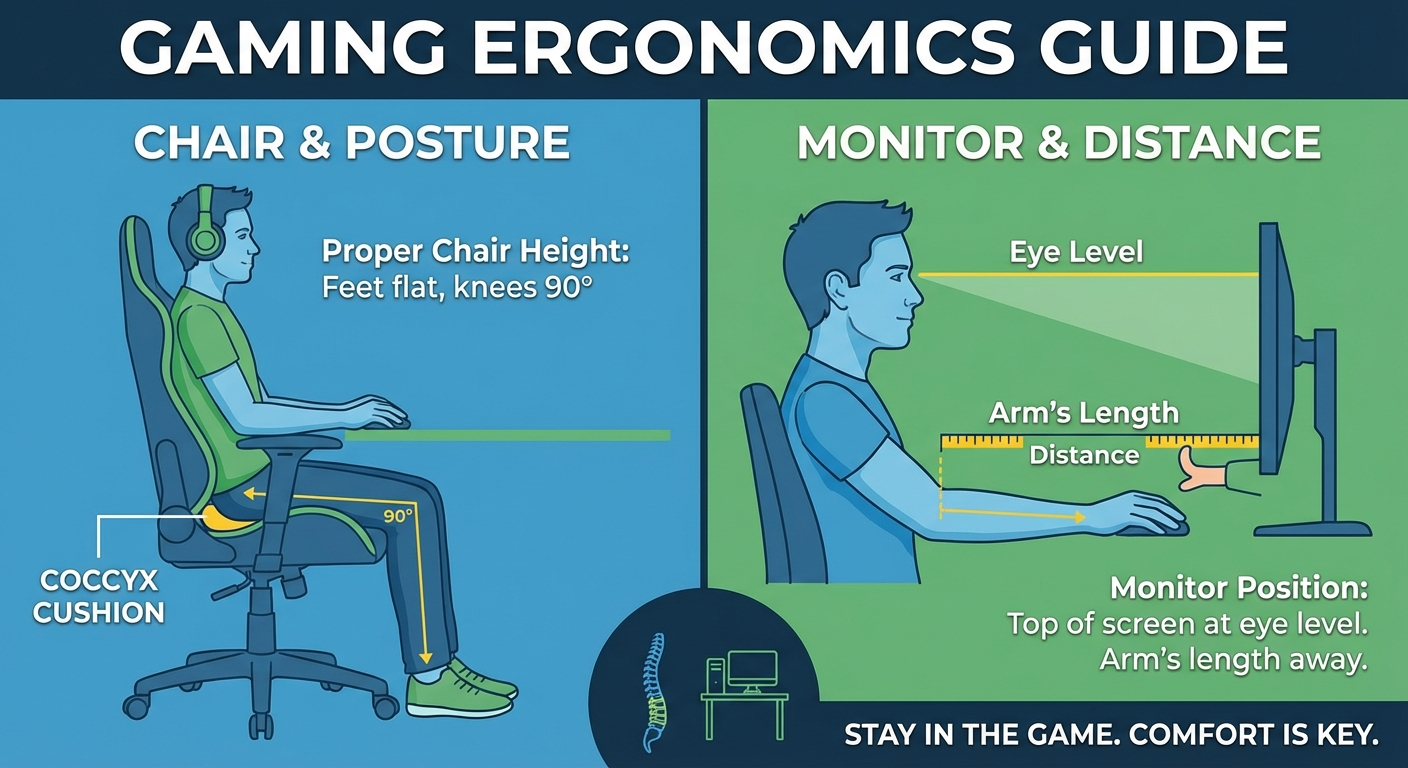 Ergonomic gaming setup: cushion positions your coccyx in the cutout; backrest angle 100-110°; monitor at eye level.
Step-by-step positioning:
- Place the cushion so the U-shaped opening is at the rear of the seat, facing away from the backrest
- Sit on the cushion and verify the coccyx is suspended in the opening — it should not contact the cushion at the rear
- Adjust your sitting position so your sitting bones (ischial tuberosities) rest on the full cushion surface forward of the cutout
- Backrest contact: ensure your back contacts the gaming chair backrest — the cushion should tilt you forward slightly, improving lumbar contact
- Verify armrest height: the cushion raises your seating position 2.5–3 inches — readjust desk height or armrest position accordingly
Common positioning mistakes:
- Cushion placed too far forward (coccyx contacts the cushion rear edge)
- Sitting on the very front of the cushion (no tailbone offloading)
- Cushion sliding forward during gaming (use non-slip base or grip mat)
Complementary Ergonomic Tips for Gamers
A coccyx cushion addresses the mechanical cause of tailbone pain, but these additional strategies maximize comfort:
Movement Breaks (Most Important)
Set a 45-minute timer. When it rings: stand, walk to another room, stretch. Five minutes of movement prevents pressure accumulation that outpaces any cushion's ability to redistribute it.
Hip flexor stretch (critical for gamers): Stand, step one foot forward, sink the back knee toward the floor, push hips forward. Hold 30 seconds each side. Counteracts hours of hip flexion in seated gaming position.
Monitor and Chair Height
With a coccyx cushion raising your seating position:
- Raise your desk to match (standing desk makes this easy)
- Raise armrests so elbows are at ~90°
- Ensure monitor top is at eye level (a raised monitor arm compensates)
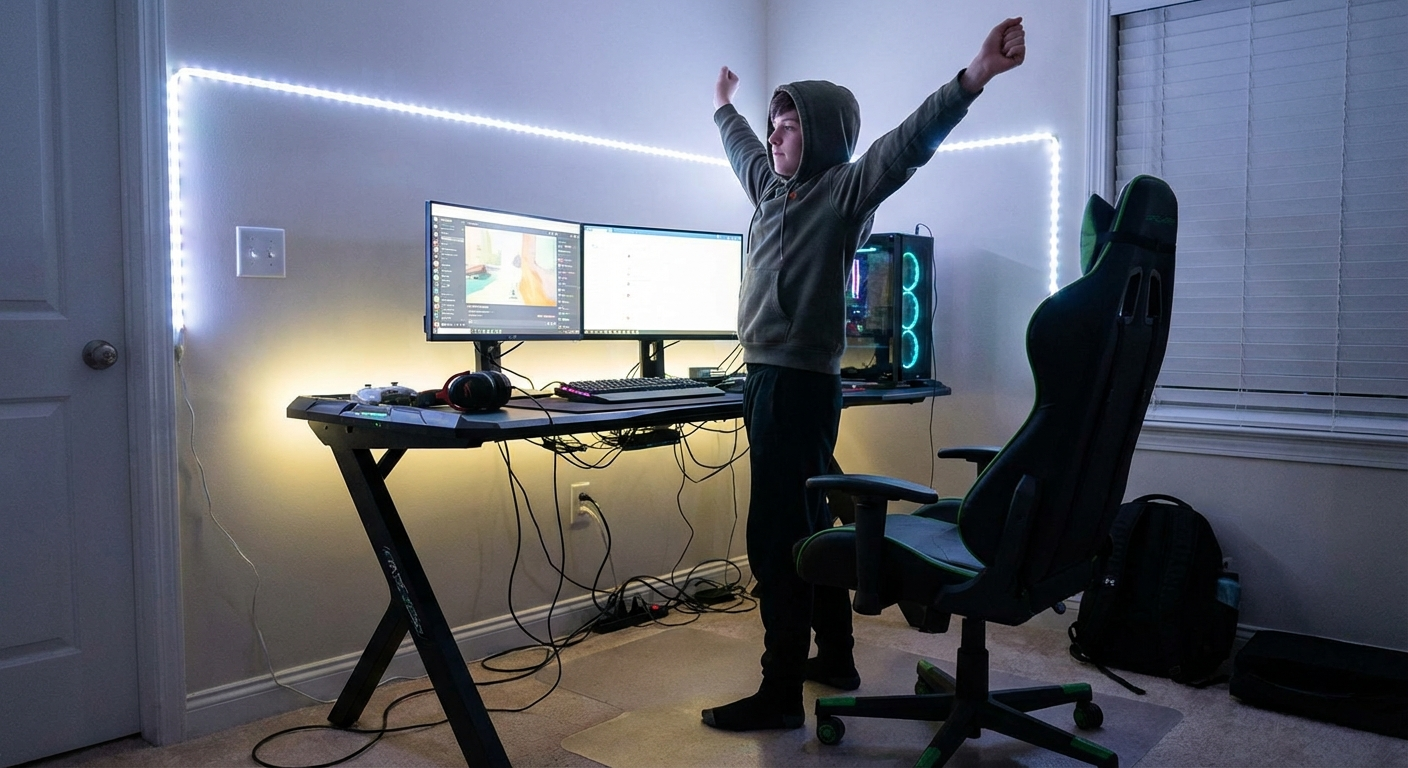 5-minute movement break every 45 minutes is more important than any cushion quality.
Lumbar Support
Coccyx cushions address the tailbone; lumbar support addresses the lower back. Use them together for comprehensive lower back ergonomics.
Gaming Chair Angle
Set backrest angle to 100–110° — slightly reclined from perfectly upright. This reduces lumbar disc pressure and distributes weight more favorably across the pelvis, reducing coccyx loading.
Frequently Asked Questions
Why do gaming chairs cause coccyx pain?
Gaming chair bucket seats create posterior pelvic tilt and direct body weight onto the tailbone. Extended sessions of 3+ hours and firm PU leather upholstery compound the effect.
Can a coccyx cushion fix gaming chair pain?
Yes — a quality coccyx cushion eliminates direct tailbone contact via the U-shaped cutout. Combined with posture and regular movement breaks, it addresses the mechanical cause of gaming chair tailbone pain.
What size coccyx cushion fits a gaming chair?
Most gaming chairs need a cushion 40–50 cm wide to fit within the bolsters. Measure your chair's seat width between the bolsters before buying.
Is memory foam or gel better for gaming chair coccyx pain?
Gel-infused memory foam — combines the heat dissipation of gel with the consistent support of memory foam. Important for 2+ hour gaming sessions where standard foam traps heat.
How long can you sit with a coccyx cushion?
2–4 hours comfortably per session. Take movement breaks every 45–60 minutes regardless of cushion quality.
Sources and Methodology
Clinical References:
- Duraisamy S, et al. "Effect of seat cushions on coccygeal pain — a randomized controlled trial." European Spine Journal, 2020.
- OSHA: Computer Workstation Ergonomics — prolonged sitting and pressure distribution guidelines
- NICE guidelines: Low back pain and tailbone pain management
- Foye PM. "Coccydynia: Tailbone Pain." Physical Medicine & Rehabilitation, 2017.
Product References:
- Cushion specifications from manufacturer product pages (ComfiLife, Purple, Everlasting Comfort)
- Pricing reflects typical US retail at publication (March 2026)
By Mat, sharing what worked after 9 years of coccyx pain
Evidence note: This comparison uses manufacturer specifications, published research, and independently reported owner feedback. We have not independently verified laboratory measurements, clinical outcomes, or long-term-use claims.
Review the Coccyx Relief System
Review 30+ pages of exercises, practical methods, pacing guidance, and a structured daily plan.
Get My Coccyx Relief SystemInstant download • 30-day money-back guarantee