Coccyx Pain
15 Coccyx Pain Exercises: Physical Therapist Guide (2026)
By Coccyx Relief Editorial Team · Updated 2026-03-01
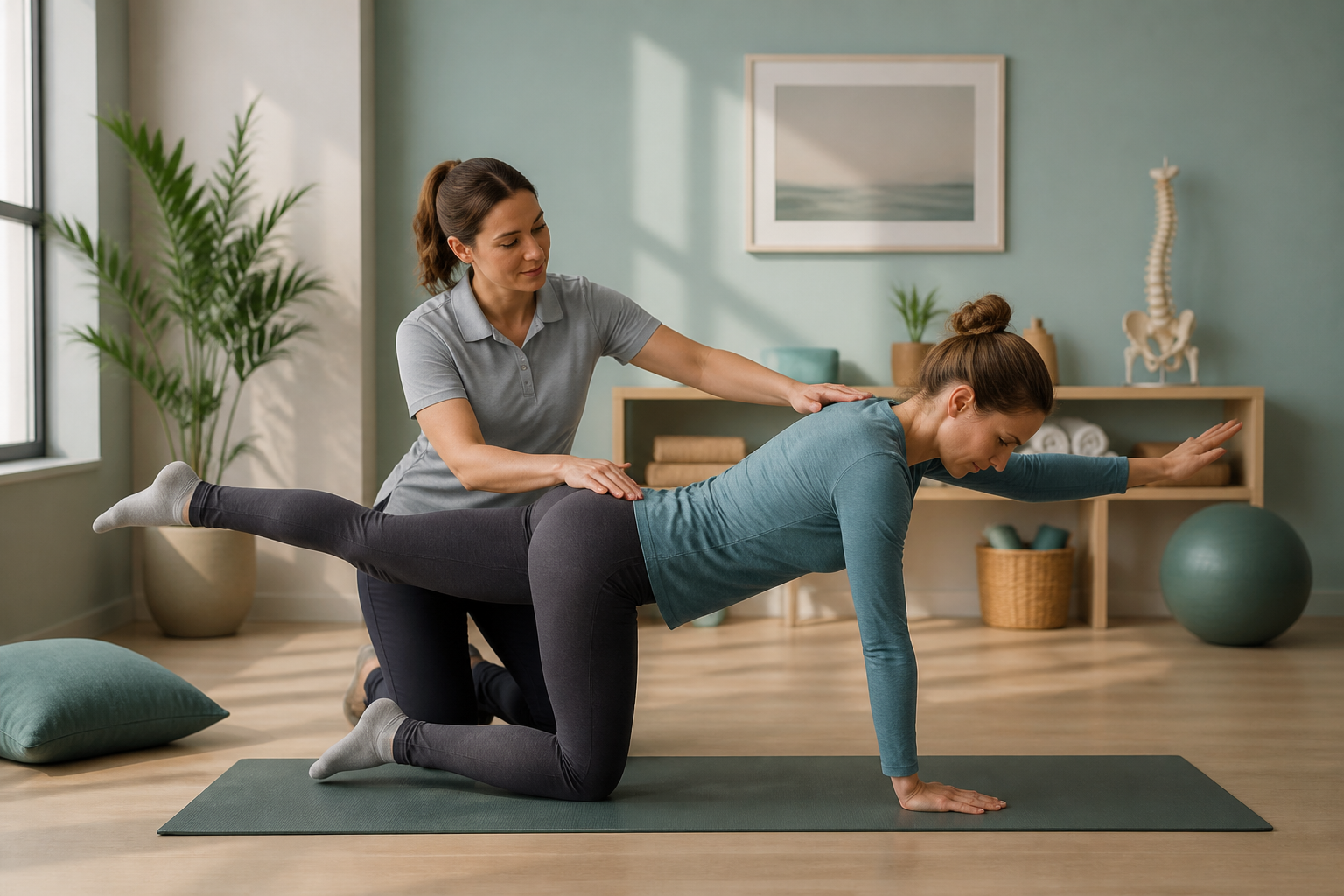
Most coccyx pain exercises take 10–15 minutes and can be done at home with no equipment. Consistent daily practice produces meaningful improvement in 2–4 weeks for most people.
These 15 exercises are arranged by phase — from gentle acute-phase movements through to strengthening for long-term prevention.
📘 Want the full recovery plan? Get the step-by-step Coccyx Relief System eBook here: View the eBook
Before you start: If your coccyx pain is acute (recent injury), focus only on the Phase 1 exercises until pain begins to reduce. Avoid any exercise that causes a sharp increase in your tailbone pain.
The Coccyx Relief System: Everything You Need in One Place
Exercises, ergonomic setups, stretches, and a complete daily program. 30+ pages, instant download.
Get My Coccyx Relief SystemInstant download • 30-day money-back guarantee
Table of Contents
- How Exercises Help Coccyx Pain
- Phase 1: Gentle Decompression (Acute Phase)
- Phase 2: Mobility and Flexibility
- Phase 3: Strengthening for Prevention
- Daily Routine Summary
- Exercises to Avoid
- Frequently Asked Questions
How Exercises Help Coccyx Pain
The coccyx itself is rarely the primary problem — it is the endpoint of a kinetic chain involving:
- Pelvic floor muscles — when overly tight, they create direct tension on the coccyx
- Piriformis and hip rotators — tightness refers pain to the coccyx area
- Gluteus maximus — weakness fails to stabilise the pelvis, overloading the tailbone
- Lumbar multifidus — deep stabilisers whose weakness causes the pelvis to shift into coccyx-loading positions
Exercises work by: releasing tension in contributing muscles, mobilising the sacrococcygeal joint, and building the stabilising strength that takes load off the tailbone.
Phase 1: Gentle Decompression (Acute Phase)
Use these exercises when pain is still significant. Start here if your coccyx pain is acute or flared up.
Exercise 1: Diaphragmatic Breathing
Often overlooked, but breathing directly affects pelvic floor tension — the pelvic floor rises and falls with each breath.
How to:
- Lie on your back with knees bent
- Place one hand on your belly, one on your chest
- Breathe deeply so your belly hand rises and your chest stays relatively still
- On the exhale, consciously relax the pelvic floor — let it soften downward
- 10 slow breaths, twice daily
Why it helps: Reduces resting tension in the pelvic floor and levator ani muscles that attach directly to the coccyx.
Exercise 2: Pelvic Floor Relaxation
Builds on the breathing exercise above.
How to:
- Lie on your back, knees bent
- Take a full breath in
- As you exhale, consciously release all pelvic floor tension — imagine "letting go" of any gripping in the perineal area
- Hold this relaxed state for 5 seconds before releasing
- Repeat 8–10 times
Exercise 3: Knee-to-Chest Stretch
Gently decompresses the lower spine and releases tension in the gluteal region.
How to:
- Lie on your back with knees bent
- Slowly draw one knee toward your chest, supporting behind the thigh
- Hold 20–30 seconds, breathing continuously
- Lower slowly and repeat on the other side
- 3 repetitions each side
Modification: If lying flat is uncomfortable, perform this in a semi-reclined position with pillows under your back.
Exercise 4: Pelvic Tilts
Mobilises the sacrococcygeal joint through gentle rocking movements.
How to:
- Lie on your back, knees bent, feet flat on the floor
- Gently tilt your pelvis so your lower back presses lightly into the floor (posterior tilt)
- Then tilt your pelvis the other way, creating a small arch in your lower back (anterior tilt)
- Rock slowly between these two positions — 10–15 repetitions
- Keep movements small and pain-free
Exercise 5: Figure-4 Stretch
Targets the piriformis, a key muscle in coccyx pain.
How to:
- Lie on your back with knees bent
- Cross your right ankle over your left knee (like the number 4)
- Flex your right foot to protect the knee
- For a deeper stretch: hold behind the left thigh and draw both legs toward your chest
- Hold 30–45 seconds each side
- 2–3 repetitions
✅ Need a done-for-you plan? Get the Coccyx Relief System eBook with a daily schedule, flare-up protocol, and progress tracker: Get the eBook
Phase 2: Mobility and Flexibility
Add these exercises once Phase 1 exercises can be done pain-free. Typically after 1–2 weeks for acute pain, or immediately for chronic low-grade pain.
Exercise 6: Cat-Cow Spinal Mobilisation
Decompresses the entire spine including the coccygeal segments.
How to:
- Start on hands and knees (tabletop position)
- Cow: Inhale and let your belly drop toward the floor, lifting your head and tailbone upward
- Cat: Exhale and round your spine toward the ceiling, tucking your chin and tailbone under
- Move slowly between positions, 10–12 cycles
- Focus on feeling movement all the way to the tailbone
Exercise 7: Child's Pose
A sustained stretch that releases the entire posterior chain from the sacrum to the shoulders.
How to:
- From kneeling, sit back onto your heels
- Extend your arms forward on the floor and rest your forehead down
- Breathe deeply, consciously relaxing into the stretch
- For a lateral variation: gently walk your hands to each side to release the lateral hip
Hold 45–60 seconds. Excellent as an evening reset or after prolonged sitting.
Exercise 8: Supine Hip External Rotation Stretch
Targets the external hip rotators and piriformis.
How to:
- Lie on your back, both knees bent
- Drop both knees slowly to one side
- Hold 30 seconds, then return to centre
- Repeat to the other side
- 3 repetitions each side
Exercise 9: Standing Hip Flexor Stretch
Hip flexor tightness tilts the pelvis posteriorly, directly increasing coccyx pressure.
How to:
- Stand in a split stance — right foot forward, left foot back
- Drop your rear knee toward the floor (kneeling lunge position)
- Push your hips gently forward until you feel a stretch in the front of your left hip
- Hold 30–45 seconds each side
- 2–3 repetitions
Exercise 10: Seated Pelvic Clock
Improves sacrococcygeal joint mobility and awareness.
How to:
- Sit upright on a firm chair or on a coccyx cushion
- Imagine a clock face on the seat beneath you
- Gently shift your weight to 12 o'clock (forward), then 3, 6 (backward — minimise pressure here), 9, and back to 12
- Make small, controlled movements
- 5 full circles in each direction
🎯 Want faster progress? Use the exact weekly routine from our Coccyx Relief System eBook: See the eBook
Prefer a Structured Recovery Plan? Review the System
Use a step-by-step plan with exercises, setup guidance, and clear pacing prompts.
Get My Coccyx Relief SystemInstant download • 30-day money-back guarantee
Phase 3: Strengthening for Prevention
Add these exercises when pain has reduced to 3/10 or less. Typically after 3–4 weeks for acute injury.
Exercise 11: Glute Bridges
The most important single exercise for coccyx pain prevention. Weak glutes fail to stabilise the pelvis during sitting.
How to:
- Lie on your back, knees bent, feet flat on the floor
- Squeeze your glutes and lift your hips until your body forms a straight line from shoulders to knees
- Hold the top position for 2–3 seconds, squeezing the glutes firmly
- Lower slowly over 3 counts
- 10–15 repetitions, 2–3 sets
Progression: Single-leg bridge — lift one foot while performing the bridge
Exercise 12: Clamshells
Targets gluteus medius, which stabilises the pelvis during sitting and walking.
How to:
- Lie on your side with hips and knees bent to 45°
- Keep your feet together and rotate your top knee toward the ceiling (like a clamshell opening)
- Ensure your pelvis does not roll backward
- Hold the top position for 2 seconds
- 15–20 repetitions each side, 2 sets
Progression: Add a light resistance band around the thighs
Exercise 13: Dead Bug
Builds deep core stability without compressing the spine.
How to:
- Lie on your back, arms pointing toward the ceiling, hips and knees bent to 90°
- Slowly lower your right arm above your head while extending your left leg — keep your lower back pressed into the floor throughout
- Return to start and repeat on the other side
- 8–10 repetitions each side, 2 sets
- Stop if your lower back arches off the floor
Exercise 14: Standing Side Leg Raise
Strengthens gluteus medius and improves single-leg pelvic stability.
How to:
- Stand beside a wall for balance support
- Keeping your leg straight, slowly raise it out to the side to about 30–40°
- Control the return — do not drop the leg
- 15 repetitions each side, 2 sets
Exercise 15: Bird Dog
Integrates core stabilisation with hip extension — excellent for long-term coccyx and lumbar health.
How to:
- Start on hands and knees (tabletop position)
- Simultaneously extend your right arm forward and left leg backward
- Hold for 3–5 seconds, maintaining a neutral spine
- Return to start and switch sides
- 10 repetitions each side, 2 sets
📌 If symptoms keep returning: Follow the structured 30-day protocol in the Coccyx Relief System eBook: Access the eBook
Daily Routine Summary
| Phase | Time Required | Exercises |
|---|---|---|
| Acute (Phase 1) | 10 min | Exercises 1–5 |
| Mobility (Phase 2) | 15 min | Exercises 6–10, plus 1–3 from Phase 1 |
| Strengthening (Phase 3) | 15–20 min | Exercises 11–15, plus 6–9 from Phase 2 |
Frequency: Once daily, every day. Consistency matters more than duration. 10 minutes daily consistently outperforms 45 minutes twice a week.
Exercises to Avoid
Avoid these during acute coccyx pain:
- Deep squats — increases sacrococcygeal compression
- Heavy deadlifts — loads the pelvis significantly
- Sit-ups and crunches — compresses the lumbar and sacral region
- Rowing machines — repetitive seated pressure with forward flexion
- Cycling — if tailbone pain is active (without a cutout saddle)
- Running on hard surfaces — impact travels up through the pelvis
Frequently Asked Questions
How long do coccyx exercises take to work? Most people see improvement within 2–4 weeks of consistent daily exercises. Acute injuries may improve faster; chronic coccyx pain can take 6–12 weeks of regular practice.
Which exercise is best for coccyx pain? The pelvic tilt (Exercise 4) and knee-to-chest stretch (Exercise 3) are the most effective starting exercises. They decompress the tailbone without stressing surrounding tissue.
Can I do coccyx exercises while pregnant? Yes, modified coccyx exercises are safe during pregnancy. Avoid lying flat on your back after the first trimester. Side-lying stretches and seated pelvic tilts work well. Always consult your OB or prenatal physiotherapist before starting.
Should I exercise if my coccyx pain is severe? Start with only Phase 1 exercises — breathing and gentle relaxation. Avoid any movement that causes sharp pain. Consult a physiotherapist if pain is acute.
How often should I do coccyx exercises? Aim for once or twice daily, 10–15 minutes per session. Consistency matters more than duration. Even 5 minutes of targeted daily stretching outperforms occasional long sessions.
Need a Structured Recovery Plan?
If you want a step-by-step protocol (exercise sequencing, sitting strategy, flare-up rules, and weekly progression), get the Coccyx Relief System eBook here:
👉 Download the Coccyx Relief System eBook
Disclaimer: This content is for informational purposes only and is not a substitute for professional medical advice. Always consult a qualified healthcare provider before making medical decisions.
Review the Coccyx Relief System
Review 30+ pages of exercises, practical methods, pacing guidance, and a structured daily plan.
Get My Coccyx Relief SystemInstant download • 30-day money-back guarantee