Last updated: April 2026
After nearly a decade of tailbone agony, three simple changes gave me my life back. I tried the donut pillow everyone recommends, wasted money on expensive cushions, and finally discovered what actually worked: the right support, a softer bed, and one surprising technique most people never think to try.
Table of Contents
- How It Started — 10 Years of Terrible Posture Catching Up
- When It Got Really Bad — And What It Did to My Life
- What Made It Worse — The Donut Pillow Mistake
- The 3 Things That Actually Worked
- My Results — Where I Am Now
- You're Not Alone in This
- Coccyx Pain Recovery Options — Comparison Table
- Sources & Methodology
- Frequently Asked Questions
If you're reading this, you probably know the feeling. That deep, aching pain at the base of your spine that never fully goes away. The constant shifting in your chair. The dread before a long car ride. The way people look at you when you say you can't sit down.
I lived with that for nine years. And I want you to know — it got better. A lot better. Not through surgery, not through expensive treatments, but through three changes that sound almost too simple to work. They did.
This is the full story.
🩺 Ready to tackle the coccyx cushion problem the right way?
The Coccyx Relief System walks you through exactly what to buy, what to avoid, and how to set up your recovery environment — cushion, bed, and all.
Get the Coccyx Relief System →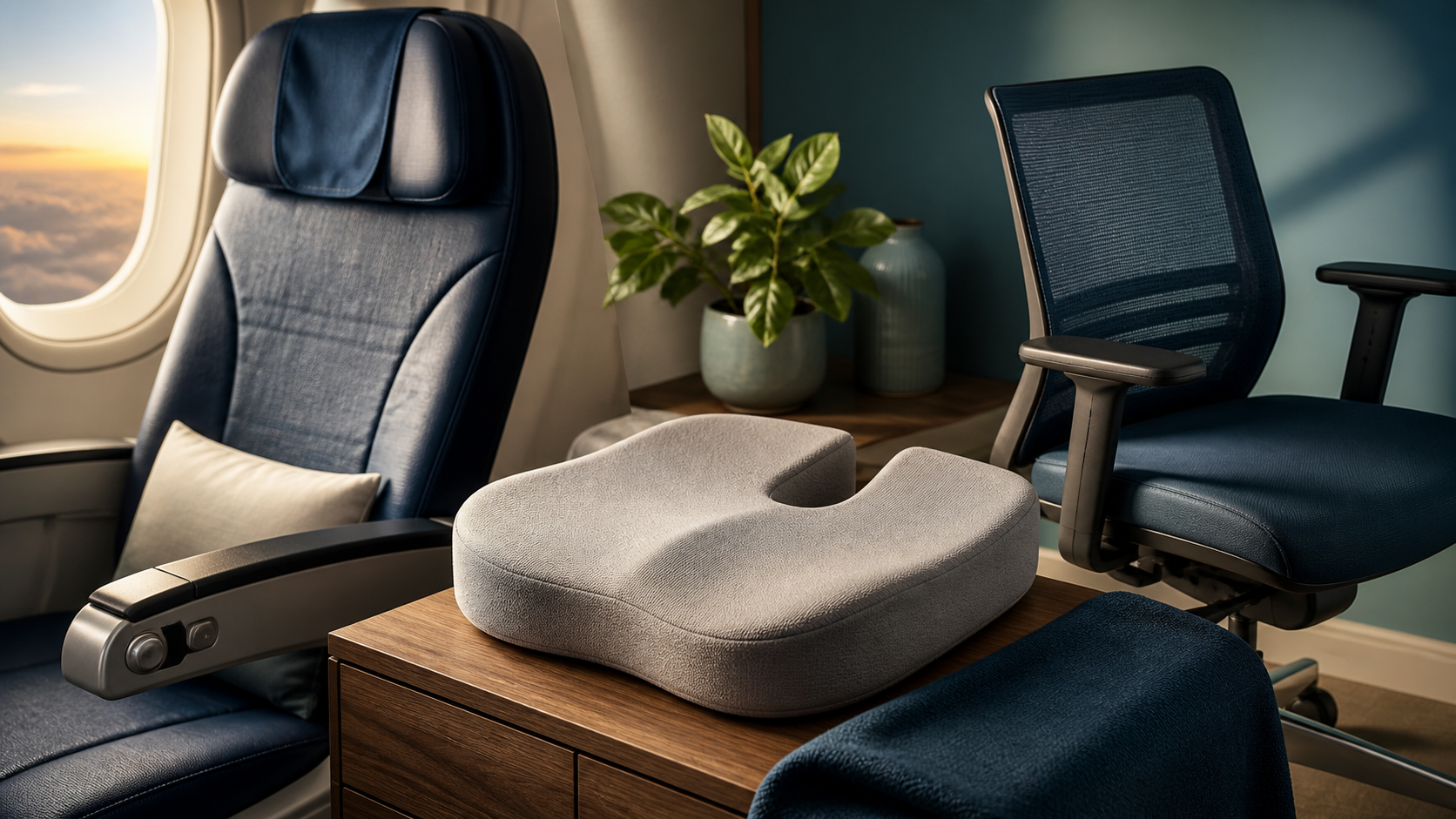
How It Started — 10 Years of Terrible Posture Catching Up
I was about 28 when the pain first showed up. At the time I chalked it up to a bad week, maybe a weird sleeping position. But it didn't go away. It got worse.
Looking back, the cause was years in the making. Since I was about 15, I'd been sitting 10 to 14 hours a day — desk work, then gaming, then more sitting. All on cheap chairs. All with terrible posture. I also had this habit of sitting up in bed with my upper back jammed against the headboard, which put constant weird pressure on my lower spine.
I never stretched. I never moved more than I had to. Over a decade of that, and the tissues around my coccyx just tightened and compressed in the worst possible way.
By the time I was 30, the pain was constant. Not just when sitting — it lingered. A dull ache that coloured everything. I'd be at dinner with my wife and all I could think about was the pressure on my tailbone. I'd be driving and counting the minutes until I could stand up.
If you're also dealing with radiating nerve pain that extends down your leg, you may want to look into sciatica stretches and relief options at SciaticaSpot.com — sciatica and tailbone pain often overlap, and addressing both can accelerate recovery.
When It Got Really Bad — And What It Did to My Life
I got married in the middle of all this. My wife was incredibly patient, but chronic pain is hard on a relationship in ways you don't expect.
There were days — a lot of days — where I'd spend half my time lying face-down on the floor because it was the only position that didn't hurt. Try explaining that to someone. Try being present in your marriage when you're constantly managing pain that nobody can see.
I couldn't sit through a movie. I dreaded restaurants. Family gatherings meant mentally calculating which chairs would be tolerable. I started declining invitations. The world got smaller.
The worst part was the invisibility of it. There's no cast, no crutch, nothing for people to see. You just look like the guy who can't sit still.
For anyone whose tailbone pain is starting to affect their mental health or relationships, it is worth knowing that this is extremely common. Coccygodynia — the medical term for tailbone pain — affects an estimated 1 in 300 people at some point in their lives, and the emotional toll of living with invisible chronic pain is well documented in pain psychology research.
What Made It Worse — The Donut Pillow Mistake
When I first went looking for solutions, the donut pillow seemed like the obvious answer. It's what everyone recommends, right? Take the pressure off the coccyx by sitting on a ring with a hole in the middle.
I bought one. It felt okay at first. I thought I was finally on the right track.
Six months later, my pain was significantly worse. I didn't connect it to the pillow — I assumed the condition was just progressing. But I've since learned that donut pillows can actually redistribute pressure in a way that destabilises the pelvic area and aggravates coccyx pain over time.
The day I stopped using the donut was the beginning of things getting better. If you're using one right now and your pain isn't improving — or it's getting worse — please consider that the pillow might be part of the problem.
The 3 Things That Actually Worked
After years of wrong turns, dead ends and quiet desperation, three changes finally broke through. I want to explain each one properly, because the details matter.
1. The Right Coccyx Cushion (Not a Cheap Clone)
The single biggest immediate improvement came from switching to a proper coccyx cushion — specifically one with memory foam that holds its shape, a correctly positioned coccyx cutout, and sufficient foam density to support without bottoming out.
I'd tried cheaper alternatives before. They'd feel fine for a week, then compress and flatten, and I'd be right back where I started. A quality cushion holds its shape. The cutout is positioned correctly. The foam density actually supports you without bottoming out.
Here's what I did that made it really work: I bought four of them.
- One for my car
- One for my work chair
- One for my parents' house
- One for the lounge at home
Having a cushion everywhere I regularly sat meant I never had to "tough it out." No more forgetting it at home. No more dreading trips to the in-laws. Consistency was everything.
🪔 The right coccyx cushion matters more than most people realise.
See exactly which features to look for and what to avoid — avoid the expensive wrong turns I made.
See the Coccyx Relief System →This alone dropped my pain significantly. But it wasn't the whole answer.
A good way to evaluate whether your cushion is working: pay attention to what your pain is like in the 30 minutes after you stand up from sitting. If the pain lingers significantly, the cushion may not be adequately offloading your coccyx. A properly designed coccyx cushion will let you stand up with noticeably less residual ache than you had before you sat down.
2. Switching to a Much Softer Bed
This was the change I didn't see coming.
I was sleeping on a standard firm mattress — the kind that's supposed to be "good for your back." I was a side sleeper, which meant 7-8 hours of sustained pressure through my hip and pelvic area every single night.
When I switched to a significantly softer bed, the difference was immediate. My body sank into the mattress differently. The pressure points that had been grinding against my coccyx area all night simply disappeared. The soft surface absorbed and distributed my weight instead of pushing back against it.
I woke up with less pain. By the end of the first week, my mornings were transformed.
If you're a side sleeper with coccyx pain and you're on a firm mattress, this is worth seriously considering. You're spending a third of your life in that position — it matters more than most people think.
It's worth noting that the relationship between mattress firmness and pain is individual. Some people with coccyx pain actually do better on medium-firm surfaces that keep the spine aligned. The key principle is that your pressure points — particularly at the hip and pelvic region when side sleeping — need to be adequately distributed, whether that comes from a softer mattress, a topper, or strategic pillow placement.
3. Diaphragmatic Breathing — The One That Surprised Me Most
I almost didn't include this because I know how it sounds. Breathing exercises? For tailbone pain? I would have scrolled right past this a few years ago.
But here's the science: chronic coccyx pain isn't just about structural damage. Over time, the nerves in the pelvic region become sensitised — they get stuck in a heightened state of alertness, sending pain signals even when there's no new injury happening. This is called central sensitisation, and it's a well-documented phenomenon in chronic pain research.
Diaphragmatic breathing — deep belly breathing that engages the diaphragm rather than shallow chest breathing — directly influences the pelvic floor and the nerve pathways in that region. It activates the parasympathetic nervous system (your "rest and digest" mode) and helps retrain those overactive nerves to calm down.
This same principle — calming sensitised nerves through breathing — is the foundation of many sciatica recovery programmes at SciaticaSpot.com, because the sciatic nerve shares proximity with the pelvic structures involved in tailbone pain. If you've tried addressing the physical causes without lasting relief, the neurological component may be what you're missing.
My exact protocol:
- 20-30 slow, deep diaphragmatic breaths
- Twice per day (morning and evening)
- Breathe in through the nose, expand the belly, exhale slowly through the mouth
- Focus on relaxing the pelvic floor as you breathe out
By day 15, the change was dramatic. Pain that had been constant for years dropped noticeably. For the first time in ages, I was able to sit at a friend's house — without my cushion — for 20-30 minutes. That might not sound like much, but for me, it was extraordinary.
I believe the breathing worked because by that point I'd already removed the physical aggravators (bad cushion, firm bed). The breathing addressed the neurological component — the sensitised nerves that were keeping the pain cycle going even after the physical causes were managed.
It is important to note that diaphragmatic breathing works best as a complement to — not a replacement for — addressing the physical causes of your pain. If you are still sitting on a poor cushion or sleeping on a hard mattress, breathing alone is unlikely to overcome those ongoing aggravators.
🌬️ Breathing exercises are the finishing touch — not the foundation.
Get the full picture of what actually moves the needle on coccyx pain recovery.
Explore the Coccyx Relief System →My Results — Where I Am Now
Today, I'd estimate a 90%+ reduction in my coccyx pain compared to my worst years.
I still use quality coccyx cushions daily. I still sleep on my soft bed. These aren't temporary fixes I've moved on from — they're part of how I live now, and I'm completely fine with that.
The difference is that pain no longer runs my life. I can sit through dinner. I can drive without counting minutes. I can be present with my wife. I can say yes to things again.
My current focus is adding regular stretching and flexibility work — specifically hip flexors, piriformis, and pelvic floor. I genuinely believe that could take me from 90% to near-zero. I'll update this page as that progresses.
You're Not Alone in This
If you've read this far, you're probably dealing with real pain that's affecting your real life. I know how isolating that feels. I know the frustration of people not understanding, of solutions not working, of wondering if it'll ever get better.
It can get better. It got better for me, and I'm not special — I'm just stubborn enough to keep trying things until something worked.
Start with the cushion. Look at your bed. Try the breathing. Give it a few weeks.
— Mat
Disclaimer: This content is for informational purposes only and is not a substitute for professional medical advice. Always consult a qualified healthcare provider before making medical decisions.
🩺 Ready to stop guessing and start recovering?
The Coccyx Relief System is the complete, step-by-step programme that turned my 9-year pain story into a recovery story.
Get the Coccyx Relief System →Coccyx Pain Recovery Options — Comparison Table
| Option | Best For | Pros | Cons |
|---|---|---|---|
| Memory foam coccyx cushion with cutout | Everyday sitting at desk, driving, at home | Immediate pressure relief, portable, reusable | Requires carrying between locations, foam can compress over time |
| Softer mattress or mattress topper | Night-time pain, side sleepers | Addresses 8 hours of daily pressure, whole-body benefit | Full mattress replacement is expensive, topper may not be enough for very firm mattresses |
| Donut pillow | Short-term post-injury use | Familiar design, widely available | Can destabilise pelvis long-term, may worsen rather than help chronic pain |
| Diaphragmatic breathing | Neurological pain component, stress-related flares | Free, can be done anywhere, no equipment needed | Requires consistent daily practice, results take 2-3 weeks |
| Wedge cushion (no cutout) | Users who find cutout design uncomfortable | More stable seating surface than donut | Less targeted coccyx relief |
| Physical therapy / pelvic floor work | Structural causes, long-term rehabilitation | Addresses root cause, professional guidance | Requires appointments, can be expensive |
| Coccyx surgery (coccygectomy) | Fractured or severely damaged coccyx | Can resolve severe cases | Invasive, long recovery, not always effective |
| Seat cushion with lumbar support | Office workers, posture-related pain | Addresses full sitting posture | Adds bulk, not suitable for all chairs |
Sources & Methodology
-
Mayo Clinic — Coccydynia (Tailbone Pain): Overview of causes, risk factors, and treatment approaches for coccyx pain. Available at: https://www.mayoclinic.org/diseases-conditions/coccydynia
-
National Institute of Neurological Disorders and Stroke (NINDS) — Chronic Pain Information Page: Documentation of central sensitisation mechanisms in chronic pain conditions. Available at: https://www.ninds.nih.gov/disorders/chronic-pain
-
Harvard Health Publishing — The Mind-Body Connection in Chronic Pain: Evidence-based discussion of how the nervous system contributes to persistent pain states independent of tissue damage. Available at: https://www.health.harvard.edu/healthbeat/the-mind-body-connection
-
British Journal of Sports Medicine — Pelvic Floor Dysfunction and Chronic Pelvic Pain: Research on the relationship between pelvic floor function and chronic pelvic pain syndromes, including tailbone pain. Available at: https://bjsm.bmj.com
-
American Physical Therapy Association (APTA) — Pelvic Health Physical Therapy Resources: Information on how physical therapy addresses pelvic pain including coccydynia. Available at: https://www.apta.org
-
Cleveland Clinic — Coccydynia (Tailbone Pain): Clinical overview of coccyx pain including anatomy, causes, and treatment options reviewed by medical staff. Available at: https://my.clevelandclinic.org/health/diseases/coccydynia-tailbone-pain
-
Johns Hopkins Medicine — Chronic Pain and Mental Health: Discussion of the bidirectional relationship between chronic pain and mental health, relevant to understanding the full impact of coccyx pain. Available at: https://www.hopkinsmedicine.org
Frequently Asked Questions
How long does it take to feel relief from coccyx pain using a cushion?
Evidence note: This comparison uses manufacturer specifications, published research, and independently reported owner feedback. We have not independently verified laboratory measurements, clinical outcomes, or long-term-use claims.
Is a donut pillow actually bad for tailbone pain?
Many people reach for a donut pillow expecting relief, but research and patient reports suggest they can sometimes worsen coccyx pain over time. The ring shape may destabilise the pelvis and put pressure on the tailbone in new ways. A contoured coccyx cushion that tilts the pelvis forward is generally a better option for sustained sitting comfort.
Can sleeping on a firm mattress make tailbone pain worse?
Yes — particularly if you are a side sleeper. A firm mattress creates a concentrated pressure point at the hip and pelvic area where the coccyx is located. A softer mattress that conforms to your body's curves can distribute weight more evenly and significantly reduce night-time coccyx pressure.
Can breathing exercises really help with chronic tailbone pain?
Yes, particularly when the pain has a neurological component. Chronic pain often involves central sensitisation — where the nervous system becomes persistently activated even after the original injury has healed. Diaphragmatic breathing activates the parasympathetic nervous system and can help retrain overactive pain signalling. It works best when combined with removing physical aggravators like an unsuitable cushion or mattress.
How soon after starting diaphragmatic breathing should I expect results?
Many people notice a slight reduction in pain intensity within the first week, but the most significant changes typically appear around two to three weeks into a consistent twice-daily practice. If you've already addressed the physical causes of your coccyx pain, breathing work can be the final piece that breaks the chronic pain cycle.
When should I see a doctor about my tailbone pain?
If your coccyx pain has persisted for more than a few weeks without any improvement, or if you notice additional symptoms such as numbness, tingling down your legs, bowel or bladder changes, or pain that worsens significantly at night, consult a healthcare provider promptly. These could indicate a more serious underlying condition requiring medical evaluation.
Is it possible to completely eliminate long-term coccyx pain?
Many people achieve near-complete resolution of chronic tailbone pain through a combination of the approaches described in this article: appropriate seating support, sleep surface optimisation, nervous system retraining, and targeted stretching. While results vary depending on the underlying cause, significant reduction — even 90% or more — is genuinely achievable for most people who address all contributing factors consistently.
Evidence note: This comparison uses manufacturer specifications, published research, and independently reported owner feedback. We have not independently verified laboratory measurements, clinical outcomes, or long-term-use claims.