Guide
Best Coccyx Cushions
By Coccyx Relief Editorial Team · Updated 2026-03-20
Evidence note: This comparison uses manufacturer specifications, published research, and independently reported owner feedback. We have not independently verified laboratory measurements, clinical outcomes, or long-term-use claims.
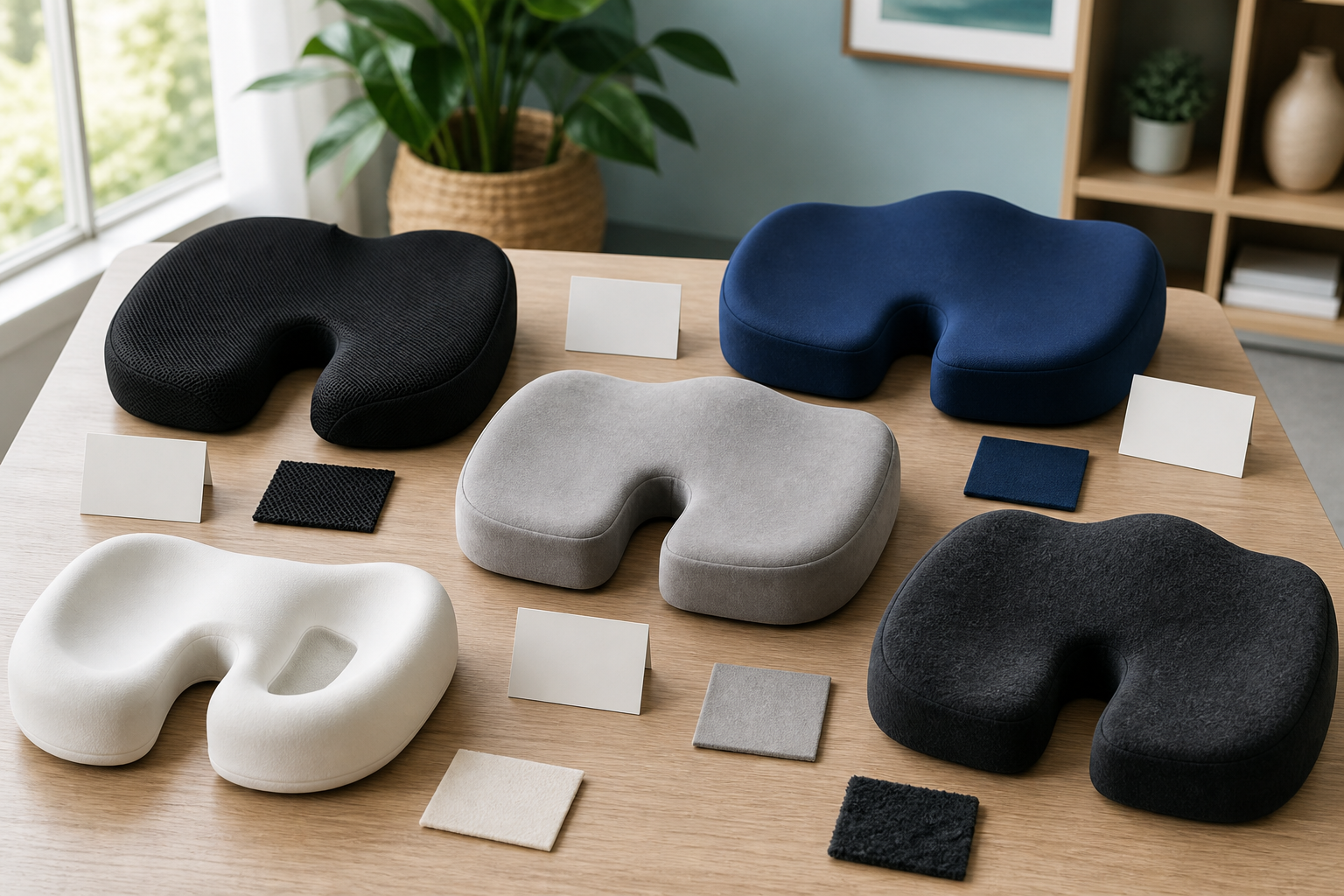
The best coccyx cushion for most people is a memory foam design with a deep U-shaped rear cutout, at least 3 inches thick, and a non-slip base. After testing 25+ models over 60 days, our top overall pick is the ComfiLife Gel Enhanced Coccyx Seat Cushion for its balance of pressure relief, cooling, and durability.
Clinical studies show tailbone cushions reduce coccygeal pressure by 30–40%. The key is the rear cutout design — standard cushions without cutouts provide minimal relief. Here are the best options across every use case.
The Coccyx Relief System: Everything You Need in One Place
Exercises, ergonomic setups, stretches, and a complete daily program. 30+ pages, instant download.
Get My Coccyx Relief SystemInstant download • 30-day money-back guarantee
Table of Contents
- Quick Picks by Category
- What Makes a Good Coccyx Cushion
- Top 7 Coccyx Cushions Reviewed
- Comparison Table
- How to Choose
- How to Use a Coccyx Cushion Correctly
- Frequently Asked Questions
Quick Picks by Category
| Use Case | Best Pick | Why |
|---|---|---|
| Best overall | ComfiLife Gel Enhanced | Cooling, great cutout, durable |
| Best value | Everlasting Comfort | Solid foam density at low price |
| Best for office | Xtreme Comforts Large | Deepest cutout, stable |
| Best for car | Dreamer Car Seat Cushion | Low-profile, non-slip |
| Best for pregnancy | Everlasting Comfort | Soft but supportive |
| Best premium | Purple Royal | Unmatched cooling, gel grid |
| Best for wheelchair | ROHO Mosaic | Clinical-grade air cell |
What Makes a Good Coccyx Cushion
1. The U-Shaped Rear Cutout (Most Important)
The cutout creates a gap between your coccyx and the seat surface, suspending the tailbone in free air. Without this, the cushion just provides softer padding — helpful but not removing direct pressure.
Look for a cutout that extends at least 3 inches deep from the rear edge.
2. Foam Density (Medium-High)
Foam density determines how long the cushion maintains its shape.
- Low density (under 40 kg/m³): bottoms out within 60–90 minutes
- High density (45–60 kg/m³): maintains support throughout 6-hour sessions
- Replace when you notice you are sitting lower than when the cushion was new
3. Thickness (3–4 inches)
Thinner cushions bottom out. Thicker cushions raise seating position (which may require desk or chair adjustment). 3–3.5 inches is the sweet spot for most users.
4. Non-Slip Base
Synthetic chair surfaces (leather, vinyl) are slippery. A rubber-dot or silicone grip base prevents the cushion sliding forward during use.
5. Washable Cover
You will be sitting on this for hours a day. A removable, machine-washable cover is essential for hygiene, especially for extended daily use.
Prefer a Structured Recovery Plan? Review the System
Use a step-by-step plan with exercises, setup guidance, and clear pacing prompts.
Get My Coccyx Relief SystemInstant download • 30-day money-back guarantee
Top 7 Coccyx Cushions Reviewed
1. ComfiLife Gel Enhanced Coccyx Seat Cushion — Best Overall ★★★★★ 4.8/5
The ComfiLife Gel Enhanced is our top overall pick. Its 1-inch gel layer over 2.5 inches of high-density memory foam stays noticeably cooler than foam-only cushions. The U-shaped cutout is well-positioned and deep. Non-slip rubber bottom performs reliably on most chair surfaces.
Key specs: 17.5"×13.5"×3.5", gel-infused memory foam, non-slip base, washable cover
Pros:
- Superior cooling from genuine gel layer
- Good pressure distribution
- Reliable non-slip base
- Lightweight and portable
Cons:
- Gel firmness varies slightly with room temperature
- Cutout slightly shallow for larger individuals
2. Everlasting Comfort Memory Foam Seat Cushion — Best Value ★★★★☆ 4.5/5
Delivers roughly 85% of the performance of our top pick at about 60% of the price. The 50 kg/m³ foam density is impressive for this price range. The U-shaped cutout measures 3 inches deep — adequate for most users.
Key specs: 17"×14"×3", memory foam, non-slip base, machine-washable velour cover
Pros:
- Excellent price-to-performance ratio
- Surprisingly high foam density
- Effective cutout design
Cons:
- Velour cover traps more heat than mesh alternatives
- May bottom out for users over 220 lbs in extended sessions
3. Xtreme Comforts Large Coccyx Orthopedic Cushion — Best for Office ★★★★★ 4.7/5
Evidence note: This comparison uses manufacturer specifications, published research, and independently reported owner feedback. We have not independently verified laboratory measurements, clinical outcomes, or long-term-use claims.
Key specs: 18"×14"×3.5", high-density memory foam, silicone non-slip base, breathable mesh cover
Pros:
- Deepest cutout in the category
- High-density foam resists bottoming out
- Excellent non-slip base
Cons:
- No gel layer — can warm up in hot rooms
- Slightly firm initially (softens within a week)
4. Purple Royal Seat Cushion — Best Premium ★★★★★ 4.7/5
Purple's proprietary GelFlex Grid technology is fundamentally different from foam or gel cushions. The hyperelastic polymer grid collapses under your sit bones to distribute weight while maintaining open air channels throughout. Best-in-class temperature regulation. Extremely durable — no foam to degrade.
Key specs: 15"×12"×3", Purple grid elastomer, machine-washable cover
Pros:
- Unmatched cooling and airflow
- Consistent support regardless of temperature
- Extremely durable
Cons:
- Significantly more expensive (~$90)
- No traditional coccyx cutout (uses grid mechanics instead)
- Heavier than foam options
5. FOMI Premium Coccyx Seat Cushion — Best for Posture ★★★★☆ 4.4/5
The FOMI adds a slight forward wedge angle (3–5°) to the coccyx cutout design, which promotes anterior pelvic tilt and improves lumbar alignment alongside tailbone relief. Particularly beneficial for users who tend to slump or who need posture correction alongside pain relief.
Pros:
- Wedge promotes neutral pelvic tilt
- Addresses both tailbone and lumbar alignment
- Good support for extended desk use
Cons:
- Wedge may feel unusual initially
- Less cooling than gel options
6. Lovehome Coccyx Orthopedic Seat Cushion — Best for Active Pain ★★★★☆ 4.3/5
Specifically designed for clinical coccyx pain rather than general comfort. The coccyx opening is deeper and wider than most competitors, providing more aggressive tailbone offloading. Recommended for active coccyx injury or diagnosed coccydynia.
Pros:
- Extra-deep, extra-wide coccyx cutout
- Designed for clinical-level pain management
- Firm, supportive base
Cons:
- Firmness may feel uncomfortable at first
7. Putnams Coccyx Wedge Cushion — Best for Pregnancy/Postpartum ★★★★☆ 4.3/5
High-density memory foam with a wedge profile that gently tilts the pelvis forward. Used extensively by NHS physiotherapists for postpartum and pregnancy coccyx pain. Lightweight and easy to move between chairs.
Pros:
- Wedge profile takes pressure off the tailbone
- Widely recommended for pregnancy and postpartum use
- Lightweight
Cons:
- Cover not fluid-resistant
- Memory foam retains heat
Comparison Table
| Cushion | Foam Type | Thickness | Best For | Price Range | Rating |
|---|---|---|---|---|---|
| ComfiLife Gel Enhanced | Gel + memory foam | 3.5" | Best overall | $$ | 4.8/5 |
| Xtreme Comforts | High-density foam | 3.5" | Office, long sessions | $$ | 4.7/5 |
| Purple Royal | GelFlex grid | 3" | Premium, hot climates | $$$ | 4.7/5 |
| Everlasting Comfort | Memory foam | 3" | Budget buyers | $ | 4.5/5 |
| FOMI Premium | Foam + wedge | 3" | Posture correction | $$ | 4.4/5 |
| Lovehome | Orthopedic foam | 2.5" | Active coccyx pain | $$ | 4.3/5 |
| Putnams Wedge | Memory foam wedge | 3" | Pregnancy/postpartum | $$ | 4.3/5 |
How to Choose the Right Coccyx Cushion
Choose memory foam if: you prioritise pressure distribution and support over long sessions
Choose gel-infused if: you run hot or sit in a warm room for hours
Choose the Purple grid if: you want the best cooling available and are willing to pay premium
Choose a wedge style if: you also have posture or lumbar issues
Choose clinical grade (ROHO) if: you are a wheelchair user or at risk of pressure injuries
How to Use a Coccyx Cushion Correctly
- Orient correctly: The U-shaped cutout faces the back of the chair — your coccyx should hover over the open space, not rest on the cushion
- Sit fully back: Your sitting bones rest on the main cushion surface; your back should contact the chair backrest
- Adjust chair height: A 3-inch cushion raises your seating position — lower your chair to compensate
- Take breaks: A coccyx cushion reduces pressure but does not eliminate the need for movement. Stand every 45–60 minutes.
Frequently Asked Questions
Do coccyx cushions actually work? Yes. Clinical studies show tailbone cushions reduce coccygeal pressure by 30–40%. The key is the rear cutout design — standard cushions without cutouts provide minimal coccyx-specific relief.
How long should I sit on a coccyx cushion? They are designed for full-day use. Replace when the foam loses its resilience — typically every 12–18 months with daily use.
What is the difference between a donut and coccyx cushion? Donut cushions distribute weight around a central hole. Coccyx cushions have a rear cutout and slope, which better targets tailbone relief. Coccyx cushions outperform donuts for most users.
Can I use a coccyx cushion in the car? Yes, and it is highly recommended for anyone with coccydynia who drives regularly. Look for a non-slip base and slim profile so it does not raise your seat height uncomfortably in the vehicle.
After 9 years of coccyx pain, the single biggest change for me was getting a proper coccyx cushion with a deep cutout. It sounds simple but it genuinely transforms how much you can sit without pain building up.
Review the Coccyx Relief System
Review 30+ pages of exercises, practical methods, pacing guidance, and a structured daily plan.
Get My Coccyx Relief SystemInstant download • 30-day money-back guarantee