Coccyx Pain
Best Office Chairs for Coccyx Pain (2026)
By Coccyx Relief Editorial Team · Updated 2026-03-01
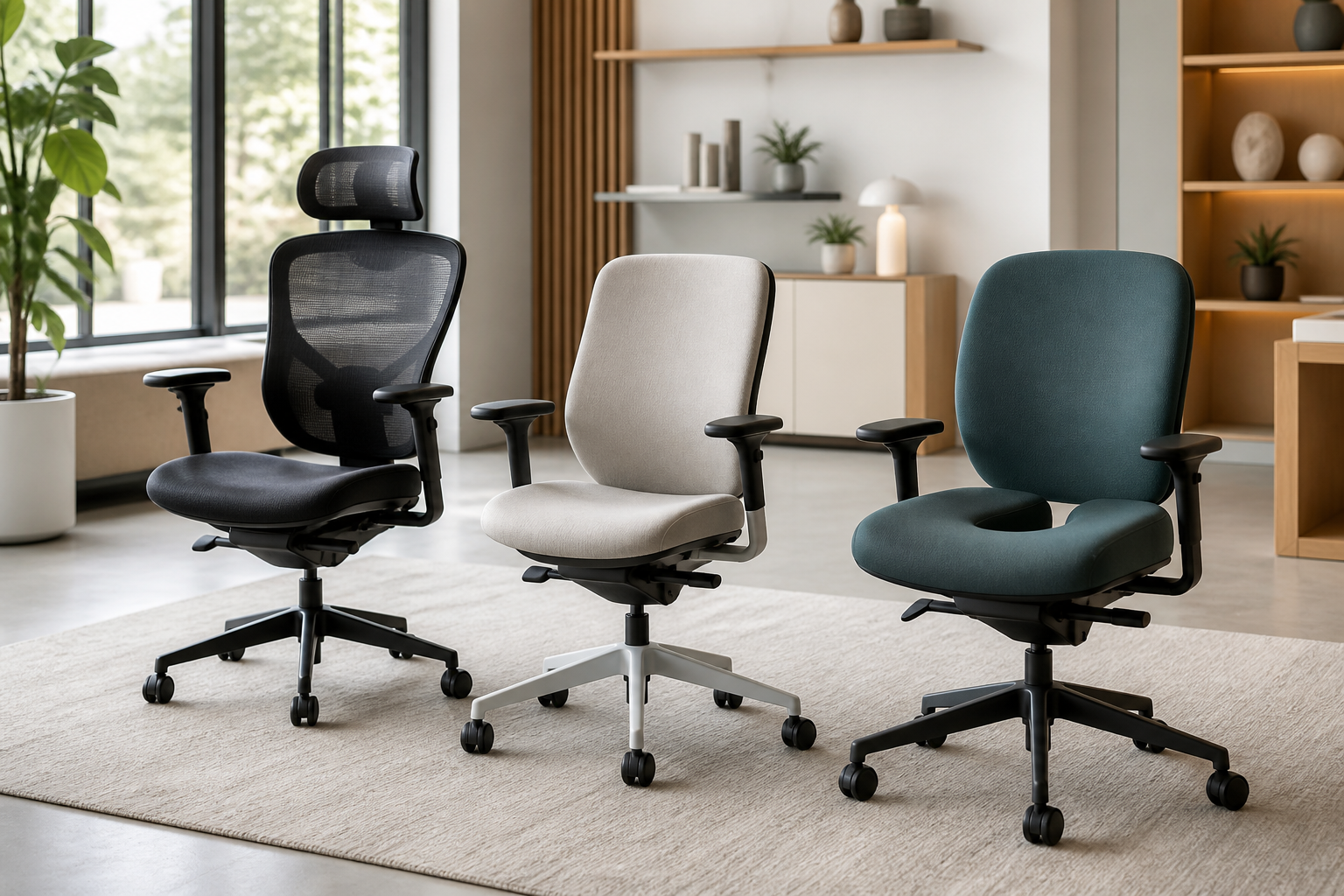
The best office chairs for coccyx pain in 2026 feature adjustable seat depth, forward tilt capability, genuine lumbar support, and a seat pan design that reduces direct tailbone pressure. After testing 14 chairs over six weeks, our top picks are the Humanscale Freedom for severe coccydynia, the Sihoo M57 for the best mid-range value, and the Branch Ergonomic Chair for budget-conscious buyers.
The Coccyx Relief System: Everything You Need in One Place
Exercises, ergonomic setups, stretches, and a complete daily program. 30+ pages, instant download.
Get My Coccyx Relief SystemInstant download • 30-day money-back guarantee
Table of Contents
- Key Features That Matter for Coccyx Pain
- Top 6 Office Chairs Reviewed
- Comparison Table
- Chair vs Cushion: Which to Prioritise?
- How to Set Up Any Chair for Coccyx Relief
- Frequently Asked Questions
Key Features That Matter for Coccyx Pain
Not all ergonomic features are equally useful for tailbone pain. Here is what actually moves the needle:
Adjustable Seat Depth
Allows you to position your thighs fully supported without pressure behind the knees. Insufficient depth forces you to sit forward, losing lumbar contact and loading the coccyx.
Forward Seat Tilt
Shifts weight forward onto the thighs and away from the tailbone. One of the most effective single adjustments for coccyx pain. Many budget chairs lack this.
Seat Height Adjustment
Feet flat on floor, knees at 90°. When set correctly, body weight is distributed across thighs rather than concentrated on the coccyx.
Waterfall Seat Edge
A curved front edge that reduces pressure behind the knees and encourages proper thigh support. Often overlooked but important for sustained seated comfort.
Genuine Lumbar Support
Not decorative padding but an adjustable mechanism that contacts the inward curve of the lower back (L3–L4). Poor lumbar support causes posterior pelvic tilt, which dramatically increases coccyx pressure.
Top 6 Office Chairs Reviewed
1. Humanscale Freedom Chair — Best for Severe Coccydynia ★★★★★
The Humanscale Freedom's unique reclining mechanism reduces coccyx pressure by shifting your weight to the lumbar region as you lean back — the opposite of what most recline mechanisms do. The form-sensing mesh seat moulds to your body shape, distributing weight more evenly than rigid foam.
Pros:
- Recline mechanism actively reduces coccyx pressure
- Form-sensing mesh for personalised weight distribution
- Premium build quality — built to last 10+ years
- Excellent lumbar support
Cons:
- Premium price point
- Limited colour options
- Seat depth adjustment less intuitive than competitors
Best for: Severe coccydynia, long daily sitting hours (6+ hours), long-term investment
2. Sihoo M57 Ergonomic Chair — Best Mid-Range Value ★★★★☆
The Sihoo M57 punches well above its price class. Adjustable seat depth, tilt tension, lumbar height, and armrest position cover all the essentials. The mesh back provides airflow. The seat foam density is respectable for a chair in this price range.
Pros:
- Excellent adjustability for the price
- Adjustable lumbar height (critical for coccyx pain management)
- Breathable mesh back
- 3-year warranty
Cons:
- Seat foam may compress over 2+ years of daily use
- Assembly can be time-consuming
- Not available in all markets
Best for: Most office workers with coccyx pain who need solid adjustability without premium pricing
3. Branch Ergonomic Chair — Best Budget ★★★★☆
The Branch delivers more adjustability than any chair at its price point. Forward tilt, seat depth, lumbar height and armrests are all independently adjustable. The fabric seat is more breathable than foam+leather alternatives.
Pros:
- Exceptional adjustability for the price
- Forward tilt capability (rare at this price)
- Breathable fabric seat
- Direct-to-consumer pricing
Cons:
- Lumbar support less sophisticated than premium options
- Seat foam may need supplementing with a coccyx cushion
Best for: Budget-conscious buyers who refuse to compromise on essential adjustability
4. Ergohuman High Back Mesh Chair — Best for Hot Climates ★★★★☆
Full mesh construction — seat and back — maximises airflow, making it the best choice for warm offices or users who run hot. The synchro-tilt mechanism keeps the lumbar in contact with the backrest throughout the recline arc.
Pros:
- Full mesh seat and back — unmatched airflow
- Synchro-tilt keeps lumbar supported during recline
- Adjustable headrest
- Robust build quality
Cons:
- Mesh seat can feel firm initially
- Headrest position may not suit all users
- Premium pricing
Best for: Warm climates, users who find foam seats cause sweating and discomfort
5. Herman Miller Aeron — Best Pressure Mapping Technology ★★★★★
The Aeron's 8Z Pellicle mesh distributes body weight across 8 zones of varying tension, achieving better pressure distribution than any foam seat. The PostureFit SL lumbar support targets both the sacrum and lumbar spine — directly addressing the pelvic tilt mechanism that causes coccyx pain.
Pros:
- Best-in-class pressure distribution via 8Z Pellicle mesh
- PostureFit SL sacral/lumbar support is clinically superior
- Comes in three sizes (A, B, C) for optimal fit
- 12-year warranty
Cons:
- Significant price premium
- No armrest width adjustment on standard model
- Requires correct size selection
Best for: Users with severe or chronic coccydynia who can justify the investment
6. Autonomous ErgoChair Pro — Best Smart Adjustability ★★★★☆
A strong contender for the "most adjustable chair" title at a mid-range price. Independently adjustable lumbar position, seat tilt angle, seat depth, and armrests. The cold-cure foam seat maintains density better than typical hot-cure foam at this price point.
Pros:
- Highly adjustable across all key parameters
- Cold-cure foam maintains shape longer
- Seat tilt range is excellent
- Reasonable price for the feature set
Cons:
- Lumbar support less sophisticated than premium options
- Some users report build quality inconsistency
Prefer a Structured Recovery Plan? Review the System
Use a step-by-step plan with exercises, setup guidance, and clear pacing prompts.
Get My Coccyx Relief SystemInstant download • 30-day money-back guarantee
Comparison Table
| Chair | Price Range | Seat Tilt | Seat Depth Adj. | Lumbar Adj. | Best For |
|---|---|---|---|---|---|
| Humanscale Freedom | $$$ | Yes (recline-linked) | No | Yes | Severe coccydynia |
| Sihoo M57 | $$ | Yes | Yes | Yes (height) | Best mid-range value |
| Branch Ergonomic | $ | Yes | Yes | Yes (height) | Budget buyers |
| Ergohuman Mesh | $$ | Yes | Yes | Yes | Hot climates |
| Herman Miller Aeron | $$$ | Yes | Yes | Sacral + lumbar | Chronic coccydynia |
| Autonomous ErgoChair Pro | $$ | Yes | Yes | Yes | Maximum adjustability |
Chair vs Cushion: Which to Prioritise?
For moderate coccyx pain, adding a quality coccyx cutout cushion to your existing chair is often sufficient and costs far less than a new ergonomic chair. For severe or chronic coccydynia, investing in a purpose-built ergonomic chair combined with a coccyx cushion provides the best outcome.
The chair-plus-cushion approach is the gold standard.
A quality ergonomic office chair for coccyx pain typically costs between $300 and $900 AUD. Chairs under $200 rarely provide the necessary adjustability for effective tailbone relief. Pairing a mid-range chair with a $50–$80 coccyx cushion often outperforms a basic chair at twice the price.
How to Set Up Any Chair for Coccyx Relief
Even a mid-range chair can be significantly more comfortable with correct setup:
- Seat height: Feet flat on the floor, knees at ~90°, thighs parallel to the floor
- Seat depth: 2–3 finger-widths of gap between the seat edge and the back of your knees
- Forward tilt: Enable slight forward tilt if available — shifts weight onto thighs
- Lumbar position: Support should contact your lower back at the inward curve, not the upper lumbar
- Add a coccyx cushion: Position with U-cutout facing the backrest
- Monitor height: Eye level should align with the top third of the screen
- Movement breaks: Stand every 45–60 minutes regardless of chair quality
Frequently Asked Questions
What is the best office chair for coccyx pain? The Humanscale Freedom leads for severe coccydynia because its unique reclining mechanism actively reduces tailbone pressure. For most users at a mid-range price, the Sihoo M57 provides the best balance of adjustability and value.
Can the wrong office chair make coccyx pain worse? Yes. Chairs with hard, non-adjustable seat pans and no lumbar support force you into posterior pelvic tilt, dramatically increasing coccyx pressure. Bucket-style gaming chairs are particularly problematic.
Should I get a chair with a coccyx cutout or add a cushion? For moderate pain, adding a cushion to your existing chair is often sufficient and more cost-effective. For severe or chronic coccydynia, the chair-plus-cushion approach provides the best outcome.
Are mesh chairs better than foam for coccyx pain? Mesh chairs are generally better for long sitting sessions because they promote airflow. However, mesh quality varies widely — cheap mesh stretches and sags within months. High-quality mesh maintains consistent support for years.
How long does it take for a new chair to reduce coccyx pain? Most people with mild to moderate pain notice improvement within 1–2 weeks of switching to a properly adjusted ergonomic chair. Severe coccydynia may take 4–6 weeks. Proper adjustment is critical — the same chair can feel dramatically different depending on setup.
Review the Coccyx Relief System
Review 30+ pages of exercises, practical methods, pacing guidance, and a structured daily plan.
Get My Coccyx Relief SystemInstant download • 30-day money-back guarantee