Coccyx Pain Treatment
Can Massage Help Coccyx Pain? What Works and What Doesn't (2026)
By Coccyx Relief Editorial Team · Updated 2026-05-05
Last updated: May 2026
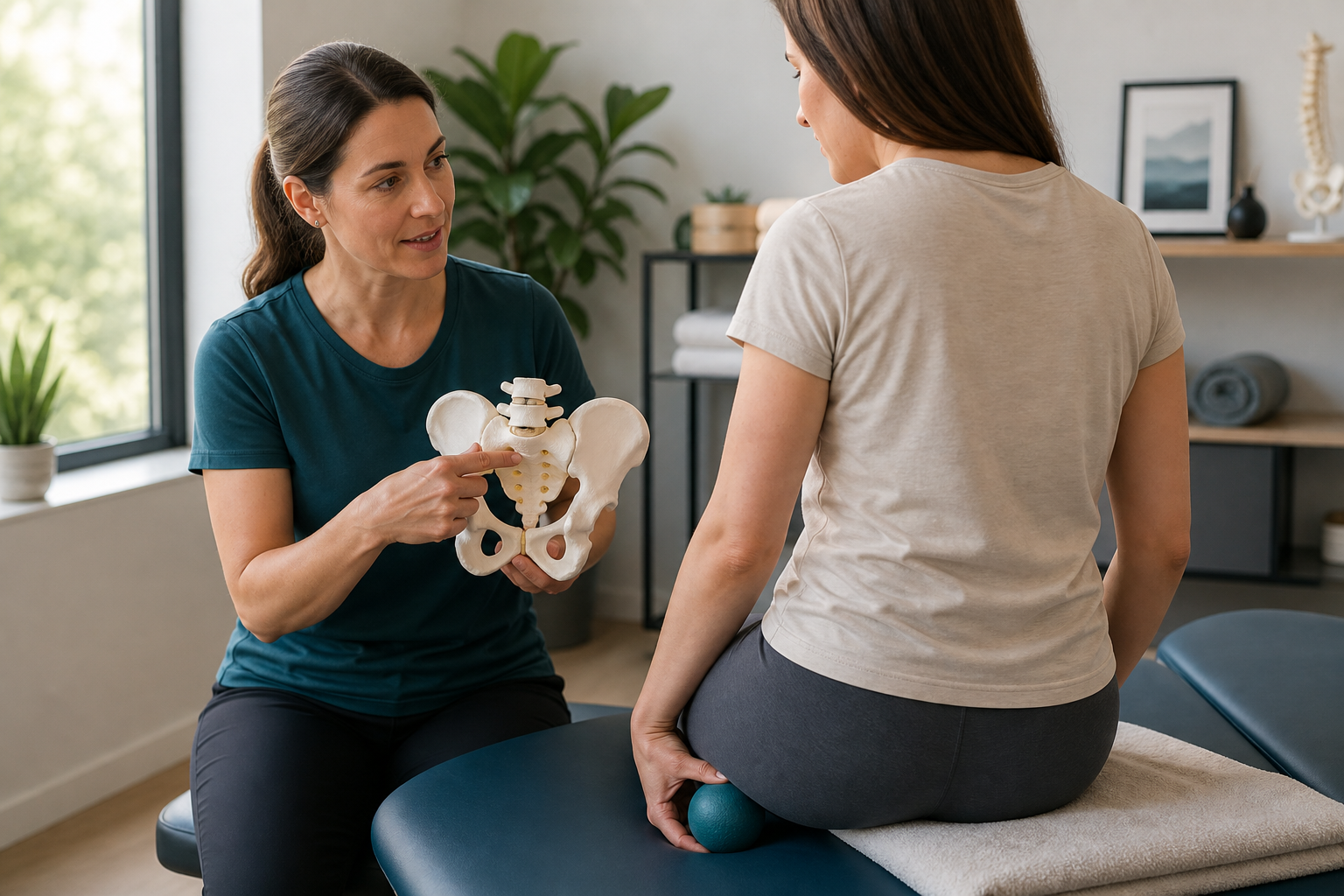
Massage for tailbone pain sounds logical in theory — loosen the muscles, reduce the pressure, feel better. In practice, the picture is more complicated. Some massage techniques genuinely help. Others can make things worse. And the most important distinction of all is where the pressure is applied and by whom. Here's what the evidence says, what experienced pelvic floor therapists recommend, and how to tell whether massage belongs in your coccyx pain plan.
The Coccyx Relief System: Everything You Need in One Place
Exercises, ergonomic setups, stretches, and a complete daily program. 30+ pages, instant download.
Get My Coccyx Relief SystemInstant download • 30-day money-back guarantee
Table of Contents
- Can Massage Actually Help Tailbone Pain?
- Why Coccyx Pain Is Different From Other Back Pain
- Types of Massage That Help Coccyx Pain
- Types of Massage That Don't Help — or Make It Worse
- What About Internal Massage?
- Massage vs. Other Coccyx Pain Treatments
- Coccyx Pain Massage Techniques — Comparison Table
- When to See a Professional Instead
- How to Find a Qualified Therapist
- Sources & Methodology
- Frequently Asked Questions
Can Massage Actually Help Tailbone Pain?
The short answer is: yes — in the right circumstances, with the right techniques, performed by the right person.
The longer answer requires some important nuance. Coccyx pain — known medically as coccydynia — has multiple possible causes. The pain may originate from the tailbone joint itself (a fracture, dislocation, or joint degeneration), from the surrounding muscles and ligaments, from the pelvic floor, or from a combination of all three. Massage is most effective when the pain source is muscular in origin. It is least effective — and potentially harmful — when the source is a bone fracture or joint injury that hasn't been properly diagnosed.
Research on pelvic floor physical therapy, a discipline that overlaps significantly with therapeutic massage, shows meaningful symptom reduction in a significant proportion of patients with chronic coccyx pain. A study published in the Journal of Bodywork and Movement Therapies found that patients receiving targeted trigger point release therapy for the pelvic floor and hip rotator muscles reported meaningful pain reduction within three to five sessions. The evidence base is still developing, but the clinical results are consistent enough that major physiotherapy bodies now include manual therapy as a standard recommendation for appropriate coccyx pain cases.
The critical point is this: massage for coccyx pain is not a generic activity. The difference between a useful massage and a counterproductive one often comes down to whether the therapist understands the anatomical complexity of the pelvic region and tailbone mechanics. Going to a general relaxation massage therapist for coccyx pain is unlikely to produce meaningful results. Going to a pelvic floor physical therapist trained in internal and external manual therapy is a different story entirely.
Why Coccyx Pain Is Different From Other Back Pain
To understand why massage works for some coccyx pain cases and not others, it helps to understand what you're actually dealing with anatomically.
The coccyx — your tailbone — is a small triangular bone at the very base of your spine. It's the remnant of a tail that, in humans, fused into this series of small vertebral segments. It connects to the sacrum above it via a joint (the sacrococcygeal joint), and it's anchored by several ligaments and muscles, including the levator ani and the coccygeus — muscles that form part of your pelvic floor.
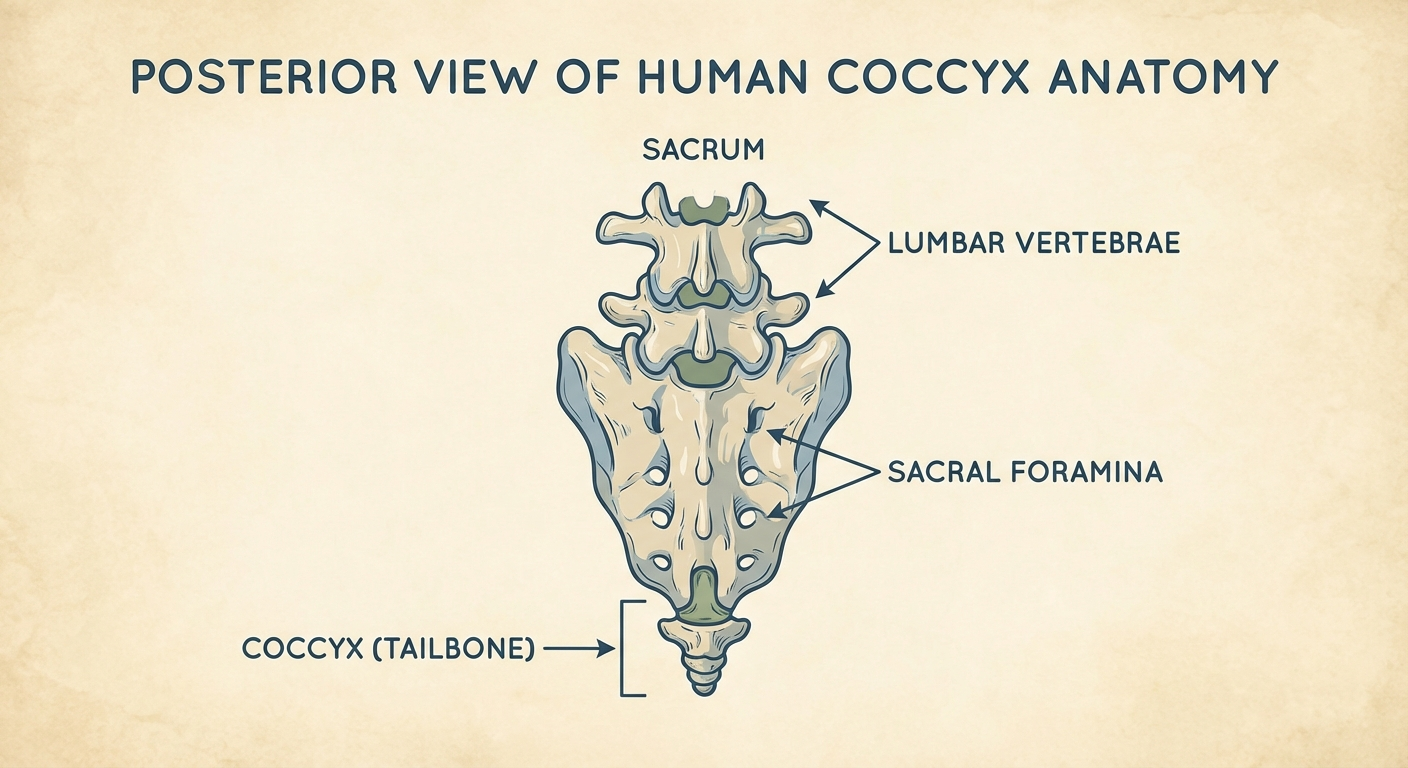
When coccyx pain develops, it usually falls into one of three categories:
- Joint-based: The sacrococcygeal joint is inflamed, subluxed, or degenerated. This type tends to be stubborn and responds poorly to massage alone.
- Muscle-based: The pelvic floor muscles, hip rotators (especially the obturator internus and piriformis), or lumbar paraspinals are hypertonic (overly tight) and referring pain to the coccyx region. This type responds well to targeted manual therapy.
- Ligament-based: The ligaments anchoring the coccyx have been stretched or partially torn. Ligament pain tends to be more localised and less responsive to muscle-focused massage.
Many patients have a combination of all three. This is part of why the same massage technique can work brilliantly for one person and do nothing for another — they're treating different pain generators.
This anatomical complexity also explains why tailbone pain frequently overlaps with sciatica. The sciatic nerve passes close to the piriformis muscle, which itself is mechanically linked to the pelvic floor. When the piriformis is tight — a common finding in people with coccyx pain — it can compress the sciatic nerve, adding leg pain and tingling to the picture. If your coccyx pain comes with radiating leg symptoms, you'll find detailed sciatica stretching protocols and causes at SciaticaSpot.com, which covers this overlap comprehensively.
The other reason coccyx pain is anatomically distinctive is that it is profoundly affected by sitting posture. Unlike mid-back pain or neck pain, which can be relieved relatively easily by movement, coccyx pain is triggered every time you sit down. This means that even excellent manual therapy work can be undermined if the person returns to the same problematic chair and sitting posture that created the muscular compensation in the first place.
Types of Massage That Help Coccyx Pain
Not all massage modalities are equal when it comes to treating coccyx pain. Here's what the evidence and clinical practice support.
1. Pelvic Floor Trigger Point Release
This is the most clinically relevant massage technique for coccyx pain. Trigger points — localised areas of hypertonic muscle tissue that refer pain to other regions — are commonly found in the pelvic floor muscles of people with chronic tailbone pain. The levator ani, coccygeus, and obturator internus frequently develop active trigger points that produce pain felt at the coccyx itself.
A pelvic floor physical therapist trained in internal trigger point release can locate and deactivate these points. "Internal" here means intravaginal or intrarectal — this is not a spa massage technique, and it requires clinical training, proper lubrication, and informed consent at every step. The therapist uses a gloved finger to apply precise pressure to the trigger point until it releases, typically for 30 to 90 seconds per point.
Research published in the Journal of Women's Health Physical Therapy documented significant reductions in pelvic pain scores following a course of pelvic floor trigger point release therapy in women with chronic coccyx pain. Similar findings have been replicated in mixed-gender cohorts. The key mechanism is simple: when a trigger point releases, the muscle relaxes, pressure on adjacent structures decreases, and the referred pain diminishes.
What it feels like: Trigger point release can be uncomfortable — sometimes sharply so — as the pressure hits the knot in the muscle. But it should never be unbearable. A good therapist will stay within your pain tolerance and work gradually.
How many sessions: Most people need three to eight sessions spaced over several weeks. The therapist may also give you home exercises to maintain the gains between sessions.
2. External Myofascial Release
Before any internal work happens, most therapists will address the external muscles that contribute to coccyx pain. These include:
- Piriformis: A deep hip rotator located near the sciatic nerve. When tight, it can pull on the sacrum and indirectly strain the coccyx.
- Gluteus maximus and medius: The gluteal muscles attach to the sacrum and ilium. Chronic sitting shortens these muscles, creating posterior pelvic tension.
- Lumbar paraspinals: The long muscles running alongside your lower spine. When tight, they alter pelvic tilt and increase pressure on the sacrococcygeal joint.
- Hamstrings: Often overlooked, but the semitendinosus and semimembranosus attach to the ischial tuberosity ("sit bones") and can pull the pelvis into posterior tilt, increasing coccyx pressure when sitting.
External myofascial release uses sustained pressure (typically held for 90 seconds to several minutes) to lengthen shortened fascia and muscle tissue. A foam roller, massage ball, or the therapist's hands apply this pressure. This is also an area where self-massage has a meaningful role — more on that below.
What it feels like: Deep pressure, almost aching in quality. The tissue initially resists and then gradually softens. It should not feel sharp or like you're being injured.
How many sessions: Often combined with internal work. If doing external-only therapy, four to six sessions is a reasonable starting point.
3. Hot Stone Massage Adjunct Therapy
Hot stone massage is not a primary treatment for coccyx pain, but it can be a useful adjunct to manual therapy. The heat increases blood flow to the treated area, which can enhance the pliability of the fascia and make manual trigger point release more effective. Heat also has independent analgesic properties through gate control theory — warmth stimulates the thermoreceptors, which can partially inhibit pain signal transmission at the spinal cord level.
Used in the first 10 to 15 minutes of a session before manual therapy begins, hot stone work on the lumbar and gluteal region can improve outcomes. The stones should be placed off the bone itself — heat on an inflamed sacrococcygeal joint can increase inflammation rather than reduce it.
What it feels like: Warm, deeply relaxing. Like a heating pad, but more consistent and enveloping.
How many sessions: Adjunct to other therapy — no fixed number as a standalone treatment.
4. Self-Massage for Secondary Muscle Tension
One of the most practical aspects of massage therapy for coccyx pain is that a good therapist will teach you self-massage techniques to maintain gains between sessions. The most useful tools for self-massage are:
- Massage ball (lacrosse ball or yoga ball): Placed under the gluteus maximus or piriformis while lying on your side or face-up, this provides effective pressure release for the hip rotators without needing any special equipment.
- Foam roller: Targets the lumbar paraspinals and gluteal muscles. Roll slowly and stop on tender spots for 60 to 90 seconds.
- Percussive therapy devices: Devices like a Theragun or similar can be used on the gluteal and lumbar muscles for temporary relief of muscular tension. They do not replace manual trigger point work but can be useful for maintenance.
Self-massage is safe and effective for the external muscles listed above. It is not safe for the pelvic floor muscles — those require clinical training to address correctly.
How often: Two to three times per week as maintenance, or daily during an acute flare if tolerated.
Types of Massage That Don't Help — or Make It Worse
The world of massage is vast, and not all of it is appropriate for coccyx pain. Here's what to be cautious about.
Swedish massage (relaxation): A standard Swedish massage — the kind you'd book at a spa — targets the superficial tissues and promotes general relaxation. While relaxing, it rarely addresses the specific muscular tensions that drive coccyx pain. Think of it as pleasant but not therapeutic for this condition. Many patients book a Swedish session hoping for relief and leave disappointed.
Deep tissue massage on the tailbone itself: This is a genuine risk. Some therapists — with good intentions but insufficient understanding of the anatomy — will apply deep pressure directly over the coccyx bone. If the pain has a joint component (fracture, joint inflammation, ligament sprain), this can significantly worsen inflammation and delay healing. Deep pressure over the bone should be avoided until a joint cause has been definitively ruled out by imaging.
Hot stone massage directly on the tailbone: As noted above, heat can be beneficial as an adjunct. But placing a heated stone directly over the inflamed tailbone joint can increase local inflammation. The tailbone is not well-vascularised and heat dissipation is poor in this area — an inflamed joint does not respond to heat the way a large muscle does.
Aggressive sports massage during an acute flare: Sports massage techniques that work well for athletic muscle recovery — friction, compression, tapotement — can be counterproductive during an acute coccyx pain flare. The tissues are already inflamed and sensitised; aggressive work can push the nervous system into a more heightened pain state.
The common thread: generic massage does not treat specific coccyx pain. The technique must match the tissue and the pain mechanism.
Prefer a Structured Recovery Plan? Review the System
Use a step-by-step plan with exercises, setup guidance, and clear pacing prompts.
Get My Coccyx Relief SystemInstant download • 30-day money-back guarantee
What About Internal Massage?
Internal massage of the pelvic floor — where the therapist works through the vagina or rectum to release the levator ani, coccygeus, and obturator internus muscles — is the most targeted manual therapy available for muscular coccyx pain. It is also the most commonly misunderstood.
What it actually is: An examination and treatment technique performed by a pelvic floor physical therapist. It involves a gloved finger applying direct pressure to the pelvic floor muscles through the vaginal or rectal canal. The therapist locates tight bands and trigger points and applies sustained pressure until they release. This is always preceded by an external assessment and an informed consent conversation.
Why it works: The pelvic floor muscles are difficult or impossible to reach with external techniques. When these muscles develop trigger points — which is common in chronic coccyx pain — they refer pain to the tailbone region. Internal work is the only reliable way to deactivate them.
The risks: Internal work carries infection risk if hygiene protocols aren't followed. It can cause bruising if performed too aggressively. And it can cause significant psychological distress in some patients — particularly those with a history of trauma — if not handled with care and clear consent. A good therapist will check in at every session and never proceed if the patient is uncomfortable.
Who should perform it: Only a qualified pelvic floor physical therapist (not a general massage therapist, not a general physiotherapist, not a personal trainer). Look for someone with specific post-graduate training in pelvic health physical therapy. In the US, the Academy of Pelvic Health Physical Therapy (APTA Pelvic Health) maintains a directory of credentialed therapists.
What the evidence says: A systematic review published in Physical Therapy (the official journal of the APTA) found that pelvic floor manual therapy, including internal techniques, produced statistically significant improvements in pelvic pain scores across multiple randomised and non-randomised studies. The effect size was moderate to large, and adverse events were rare when techniques were performed by trained therapists.
Massage vs. Other Coccyx Pain Treatments
Massage does not exist in isolation. Most people with coccyx pain benefit from a multimodal approach. How does massage compare to other treatments?
Massage vs. coccyx cushions: Cushions address the mechanical cause — sitting pressure on the tailbone. Massage addresses the muscular component. Neither replaces the other. Mat's story at CoccyxRelief.com documents how a quality coccyx cushion was the single biggest immediate change in his coccyx pain. Massage complements this by releasing the muscular tension that the cushion alone doesn't fix.
Massage vs. physical therapy: Physical therapy is the broader discipline. Massage — particularly trigger point release and myofascial release — is one tool within physical therapy. A comprehensive PT programme for coccyx pain may also include joint mobilisation, nerve gliding exercises, posture retraining, and therapeutic exercise. Massage alone may not address the biomechanical causes of the pain.
Massage vs. pain medication: Non-steroidal anti-inflammatory drugs (NSAIDs) can reduce inflammation and provide temporary pain relief. They do not address the underlying muscular tension or trigger points. Used together — NSAIDs for pain management during the acute phase while beginning massage therapy — they can be complementary.
Massage vs. surgery: Coccygectomy (surgical removal of the coccyx) is reserved for severe, refractory cases where all conservative treatments have failed. It is never a first-line treatment and is rarely needed. Massage has no role in post-surgical rehabilitation beyond the general benefits of manual therapy.
Massage vs. diaphragmatic breathing: This is worth noting because Mat's story on this site documents how significant breathing work was in his recovery. Diaphragmatic breathing addresses the neurological component of chronic pain — the sensitised nerve pathways that keep the pain signal running even after tissue healing. Massage addresses the structural muscular component. Both belong in a comprehensive coccyx pain plan. If you haven't tried diaphragmatic breathing yet, it is worth exploring alongside whatever manual therapy you pursue. The detailed breathing protocol is covered in Mat's full story.
Coccyx Pain Massage Techniques — Comparison Table
| Technique | Target Tissue | Performed By | Sessions Needed | Effectiveness |
|---|---|---|---|---|
| Pelvic floor trigger point release | Internal pelvic floor muscles (levator ani, coccygeus, obturator internus) | Pelvic floor PT only | 3–8 sessions | High — most effective for muscular coccyx pain |
| External myofascial release | Piriformis, glutes, lumbar paraspinals, hamstrings | PT, massage therapist with training | 4–6 sessions | Moderate to high |
| Hot stone adjunct | Superficial tissue, as prep for manual therapy | Any licensed therapist | Adjunct only | Low alone, enhances other techniques |
| Self-massage with ball/foam roller | External hip rotators, glutes | Self (external only) | Ongoing maintenance | Moderate for maintenance |
| Swedish massage | Superficial tissue | Any licensed massage therapist | N/A | Low for coccyx pain specifically |
| Deep tissue over tailbone bone | N/A — not recommended | N/A | Not recommended | Potentially harmful |
| Internal massage (self) | N/A — not recommended | N/A | Not recommended | Dangerous without training |
When to See a Professional Instead
Self-massage and at-home techniques have a real role in managing coccyx pain — but there are situations where you should not attempt treatment on your own and should instead see a qualified professional.
See a professional if:
- Your coccyx pain started after a fall or direct trauma to the tailbone — even if you thought it was minor at the time, you need imaging to rule out a fracture before any manual therapy
- You have pain that radiates down your leg with numbness or tingling — this could indicate a disc issue or sciatica that requires differential diagnosis
- You have bowel or bladder changes alongside your coccyx pain — this is a red flag that requires urgent medical evaluation
- You are pregnant and have coccyx pain — some massage techniques are contraindicated in pregnancy and you should consult your obstetric provider first
- Your pain worsens significantly at night — night pain can indicate more serious pathology
- You've been treating yourself for more than four to six weeks with no improvement
- You have a history of pelvic floor dysfunction, interstitial cystitis, or chronic pelvic pain syndromes
The key principle: know your diagnosis before you choose your treatment. Massage is a treatment modality that must be matched to the specific cause of your pain. Treating the wrong cause wastes time and money at best, and can worsen things at worst.
How to Find a Qualified Therapist
Finding the right therapist is the single biggest predictor of whether massage will help your coccyx pain. A few guidelines:
Pelvic floor physical therapist: Look for someone with post-graduate training in pelvic health. In the US, the APTA Pelvic Health section maintains a searchable directory at pelvichealth.org. In the UK, the Pelvic, Obstetric and Gynaecological Physiotherapy (POGP) group maintains a similar register. In Australia, the Australian Pelvic Floor Exercises website has therapist listings. Ask specifically about their experience treating coccyx pain — not all pelvic floor therapists see this condition regularly.
Questions to ask before booking:
- Do you have experience treating coccyx pain specifically?
- What techniques do you use?
- Is internal work part of your treatment? (It should be presented as an option, not a default)
- What should I expect at the first session?
First session expectations: A good pelvic floor therapist will begin with a thorough history — they will ask about your pain onset, what makes it better and worse, your sitting posture, your sleep, your medical history, and your goals. They will perform an external assessment before considering any internal work, and they will explain everything before they do it. You should feel informed, respected, and in control at every step.
Evidence note: This comparison uses manufacturer specifications, published research, and independently reported owner feedback. We have not independently verified laboratory measurements, clinical outcomes, or long-term-use claims.
Sources & Methodology
-
Mayo Clinic — Coccydynia (Tailbone Pain): Overview of causes, risk factors, and treatment approaches for coccyx pain, including manual therapy. Available at: https://www.mayoclinic.org/diseases-conditions/coccydynia
-
American Physical Therapy Association (APTA) — Pelvic Health Physical Therapy: Clinical standards and continuing education requirements for pelvic floor physical therapists. Available at: https://www.apta.org
-
Cleveland Clinic — Coccydynia (Tailbone Pain): Clinical overview of coccyx pain including anatomy, causes, and manual therapy options reviewed by medical staff. Available at: https://my.clevelandclinic.org/health/diseases/coccydynia-tailbone-pain
-
Hansen HC, et al. — "Treatment of coccydynia with injection of local anesthetic and steroid." Journal of Spinal Disorders & Techniques. Clinical evidence on management approaches for coccyx pain. Abstract available at: https://journals.lww.com
-
Maigne JY, et al. — "Acute and chronic traumatic coccygodynia: a review of 108 cases." Journal of Spinal Disorders & Techniques. Documentation of trauma-related coccyx pain mechanisms. Abstract available at: https://journals.lww.com
-
Academy of Pelvic Health Physical Therapy — Pelvic Floor Physical Therapy Resources: Information on internal manual therapy standards and training requirements. Available at: https://www.pelvichealth.org
-
National Institute of Neurological Disorders and Stroke (NINDS) — Chronic Pain Information Page: Documentation of central sensitisation mechanisms relevant to understanding why some coccyx pain persists and how complementary therapies like massage may help. Available at: https://www.ninds.nih.gov
Frequently Asked Questions
Can massage actually help tailbone pain?
Yes — but selectively. Research on pelvic floor physical therapy, including massage-based techniques, shows meaningful improvement in chronic coccyx pain, particularly when the pain involves muscular tightness in the pelvic floor, hip rotators, or lower back. However, massage is not a standalone cure. It works best as part of a broader coccyx pain management plan that may also include cushion use, posture correction, and in some cases breathing exercises.
Is it safe to massage directly on the tailbone?
Direct pressure on a fractured or bruised coccyx is generally not recommended, especially in the early stages after injury. Internal massage of the pelvic floor should only be performed by a qualified pelvic floor physical therapist with specific training. Attempting internal techniques without proper clinical training can cause bruising, increased pain, or nerve irritation. Always obtain a proper diagnosis before any manual therapy.
What type of massage is most effective for coccyx pain?
Based on clinical evidence, trigger point release therapy targeting the pelvic floor and hip rotator muscles, performed by a trained pelvic floor physical therapist, tends to be most effective for chronic coccyx pain. Myofascial release and hot stone massage as an adjunct also show good results for secondary muscle tension. Standard Swedish massage alone has limited impact on the underlying causes of tailbone pain.
How often should you get a massage for coccyx pain?
Most people benefit from two to three sessions per week for the first two to three weeks when treating an acute muscular component, then reduce to once every one to two weeks for maintenance. Improvement is typically noticeable within three to five sessions. If there is no change after five sessions, consult your therapist about alternative approaches or a re-evaluation of your diagnosis.
Can self-massage help tailbone pain at home?
Yes — for external muscles only. Using a tennis ball or massage ball against the gluteal muscles, hip rotators, and lower back can release secondary tension that contributes to coccyx pain. This is safe and effective as a maintenance strategy between professional sessions. Internal self-massage is not safe and should never be attempted without professional supervision.
When should you not use massage for coccyx pain?
Avoid massage if you have a recent fracture, bone infection, pregnancy with a high-risk condition, or if your coccyx pain is caused by a tumour or cyst. Always obtain a medical diagnosis before beginning any manual therapy, as the underlying cause must be known before treatment is selected. If you have bowel or bladder changes alongside your coccyx pain, this is a red flag requiring urgent medical evaluation before any manual therapy.
What massage techniques should you avoid with coccyx pain?
Avoid deep tissue pressure applied directly over the tailbone bone itself, any forceful internal massage performed by an untrained practitioner, hot stone massage placed directly on the tailbone joint, and aggressive sports massage during an acute inflammatory flare. These can increase inflammation, worsen symptoms, and delay healing. The key principle: the technique must match the cause. Generic deep tissue work is not a treatment for coccyx pain.
Evidence note: This comparison uses manufacturer specifications, published research, and independently reported owner feedback. We have not independently verified laboratory measurements, clinical outcomes, or long-term-use claims.
Review the Coccyx Relief System
Review 30+ pages of exercises, practical methods, pacing guidance, and a structured daily plan.
Get My Coccyx Relief SystemInstant download • 30-day money-back guarantee