Coccyx Pain
Coccyx Pain in Men: Causes & Treatment (2026 Guide)
By Coccyx Relief Editorial Team · Updated 2026-03-01
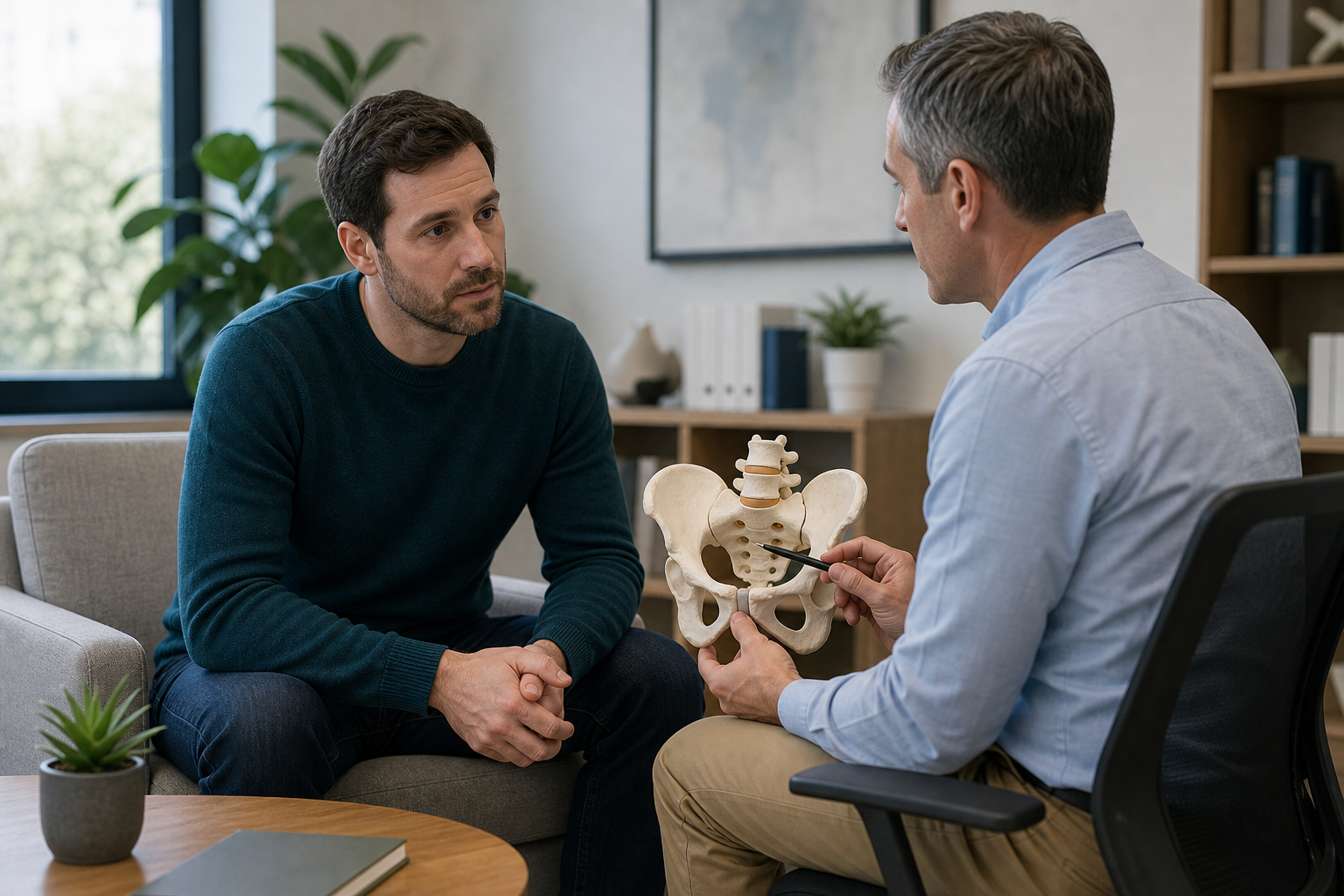
Coccyx pain (coccydynia) is 5 times more common in women due to anatomical differences, but men are more likely to develop it from sports trauma or falls, and overweight men who sit for long periods are at elevated risk. When men do develop tailbone pain, it often goes untreated for longer — because it is perceived as a women's condition.
It is not. And the treatment works just as well.
The Coccyx Relief System: Everything You Need in One Place
Exercises, ergonomic setups, stretches, and a complete daily program. 30+ pages, instant download.
Get My Coccyx Relief SystemInstant download • 30-day money-back guarantee
Table of Contents
- Why Men Get Coccyx Pain
- Top Causes in Men
- Anatomy Differences That Matter
- Diagnosis
- Treatment
- Best Exercises for Men with Coccyx Pain
- Best Cushions for Male Anatomy
- When to Seek Help
- Frequently Asked Questions
Why Men Get Coccyx Pain
While women are more frequently affected overall, men develop coccydynia through specific mechanisms that are more common in male populations:
- Higher participation in contact and impact sports — rugby, cycling, rowing, horse riding, gymnastics
- Different fat distribution — men typically have less gluteal fat padding than women, meaning the coccyx is closer to the seat surface
- Longer coccyx that protrudes further — men's coccyx tends to be less curved inward, making it more exposed during sitting
- Higher BMI in some populations — obesity increases coccygeal pressure significantly in both sexes
- Delayed help-seeking — men often tolerate pain longer, allowing acute injury to become chronic
Top Causes of Coccyx Pain in Men
1. Sports Injuries (Most Common in Men)
Cycling is the leading cause of coccyx pain in male cyclists. Narrow saddles and prolonged pressure on the perineal and coccygeal area cause bruising and eventually coccydynia. Even recreational cyclists on indoor bikes can develop this after long sessions.
High-risk sports for coccyx injury:
- Rugby — tackles, falls, scrummage pressure
- Cycling — saddle pressure over long distances
- Rowing — repetitive loaded forward flexion
- Horse riding — sustained impact
- Gymnastics — falls during practice
- Martial arts — falls to hard mats
- Snowboarding and skateboarding — falls onto the tailbone
2. Prolonged Sitting at Work
Men who sit for 8+ hours daily in poorly designed office chairs without lumbar or pelvic support are at significant risk. This is particularly common in:
- Truck and delivery drivers
- Office workers and programmers
- Remote workers using non-ergonomic home setups
3. Falls and Direct Trauma
A hard fall onto the buttocks — on stairs, ice, a hard floor, or in the bath — is one of the most common causes of acute coccyx injury in men. The force of a direct impact on the tailbone can bruise or fracture the coccyx.
4. Weight-Related Pressure
Higher BMI significantly increases the pressure exerted on the coccyx during sitting. Men with a BMI over 27.4 have a higher risk of idiopathic (no clear traumatic cause) coccydynia. This is one of the few cases where weight loss directly reduces pain.
5. Idiopathic (Unknown Cause)
Approximately 30% of coccyx pain cases have no identifiable cause. The pain develops gradually without a clear injury event.
Anatomy Differences That Matter
Male pelvic anatomy differs from female in ways that affect coccyx pain:
| Feature | Male | Female | Effect |
|---|---|---|---|
| Pelvic inlet | Narrower, heart-shaped | Wider, oval | Less natural coccyx protection |
| Coccyx position | Less curved inward | More curved inward | More exposure to sitting pressure |
| Gluteal fat | Less | More | Less natural cushioning |
| Overall coccydynia incidence | 1 in 6 cases | 5 in 6 cases | Less common overall |
The anatomical factors that reduce risk in men also mean that when men do develop coccyx pain, it is more likely to be from significant trauma rather than postural or hormonal causes.
Prefer a Structured Recovery Plan? Review the System
Use a step-by-step plan with exercises, setup guidance, and clear pacing prompts.
Get My Coccyx Relief SystemInstant download • 30-day money-back guarantee
Diagnosis
How coccyx pain is diagnosed in men
Your GP or physiotherapist will:
- Take a detailed history — when did pain start, was there trauma, what makes it worse or better
- Palpate the coccyx externally to identify the precise pain location
- Potentially perform an internal examination to assess coccyx mobility
- Order X-ray if fracture is suspected, or MRI if neurological symptoms are present
What to mention at your appointment
Be specific about:
- The exact nature of any injury or activity that preceded pain
- Whether pain is worse sitting on one side (may indicate unilateral sacrociliac involvement)
- Whether you have any bowel, bladder, or sexual function changes (important red flags)
- Your sports activities, cycling frequency, or sitting hours at work
Treatment
Conservative Treatment (First 3 Months)
1. Coccyx cushion The most immediate and effective intervention. A quality cushion with a U-shaped rear cutout removes direct pressure from the tailbone during all sitting. Use it at work, in the car, and at home.
2. NSAIDs Ibuprofen or naproxen reduce inflammation effectively for both acute and sub-acute coccyx pain. Take with food; follow package instructions for dosage. Not a long-term solution — maximum 2 weeks of continuous use without medical supervision.
3. Physiotherapy A physiotherapist can perform manual coccyx mobilisation, pelvic floor assessment, and prescribe targeted exercises. Particularly important for sports-related coccyx injuries where surrounding muscle imbalances need addressing.
4. Activity modification Specific adjustments for men with sport-related coccyx pain:
- Cycling: Reduce duration; switch to a saddle with a central cutout or relief channel; use padded shorts
- Rowing: Reduce intensity; address forward flexion mechanics with a physio
- Contact sports: Temporary rest during acute phase; consider padded shorts when returning
Injections
For pain not responding to conservative treatment after 6–8 weeks:
Corticosteroid injection — into the sacrococcygeal joint or surrounding tissue. Effective for 4–12 weeks in many patients. Can be repeated 2–3 times.
Ganglion impar nerve block — targets the nerve plexus directly responsible for transmitting coccyx pain. Often highly effective for chronic cases.
Surgery (Last Resort)
Coccygectomy (surgical removal of the coccyx) is considered only after 6–12 months of failed conservative treatment. Success rates are 80–90% in properly selected patients. See our full guide on coccygectomy surgery for more detail.
Best Exercises for Men with Coccyx Pain
These exercises specifically address the muscle groups most commonly contributing to male coccydynia:
Piriformis Stretch
Men tend to have tighter hip rotators than women due to sports and prolonged sitting. The piriformis attaches near the coccyx and its tightness directly contributes to tailbone pain.
- Lie on your back, cross right ankle over left knee
- Draw both legs toward your chest until you feel a deep stretch in the outer right hip
- Hold 45 seconds each side, 3 repetitions
Glute Bridge
Weak glutes are a major contributor to coccyx pain in desk workers.
- Lie on your back, knees bent
- Squeeze glutes and lift hips to a straight line
- Hold 3 seconds at the top, lower slowly
- 15 repetitions, 3 sets
Hip Flexor Lunge Stretch
Cycling and desk work tighten hip flexors, causing posterior pelvic tilt and increased coccyx loading.
- Drop one knee to the floor in a lunge position
- Push hips forward until you feel a stretch in the front of the rear hip
- Hold 45 seconds each side, 3 repetitions
Cat-Cow Mobilisation
Mobilises the entire spinal column including the sacrococcygeal joint.
- On hands and knees, alternate between arching and rounding the spine
- 10 slow cycles, focusing on movement reaching the tailbone
Best Cushions for Male Anatomy
Men generally need a cushion with a slightly wider cutout and more robust foam density than women, due to lower natural gluteal cushioning.
Top recommendations for men:
Xtreme Comforts Large Coccyx Cushion — The deepest available cutout (3.5 inches) and 52 kg/m³ foam density. Best for men with significant coccyx pain or larger builds.
ComfiLife Gel Enhanced — Good size and cooling. The gel layer benefits men who spend long hours in warm offices or vehicles.
FOMI Premium with Wedge — Particularly useful for desk workers and cyclists where posterior pelvic tilt is a contributing factor. The wedge corrects the tilt.
When to Seek Help
See your GP or physiotherapist if:
- Pain has not improved after 4 weeks of conservative treatment
- Pain is severe enough to affect work, sport, or sleep
- You have neurological symptoms: numbness, tingling, weakness in the legs
- You notice changes in bowel, bladder, or sexual function
- Pain follows significant trauma
Frequently Asked Questions
Is coccyx pain common in men? Coccydynia is 5× more common in women due to anatomical differences. However, men are more likely to develop it from sports trauma or falls. Overweight men who sit for long periods are at elevated risk.
Can cycling cause coccyx pain in men? Yes. Cycling is a leading cause of coccyx pain in men. Narrow saddles and prolonged pressure on the perineal and coccygeal area cause bruising and eventually coccydynia. A proper cycling saddle with a cutout and padded shorts significantly reduce risk.
What sports most commonly cause coccyx injury in men? Rugby, cycling, rowing, horse riding, and gymnastics carry the highest risk. Any sport involving falls onto a hard surface or repeated pressure on the sitting bones can cause coccyx injury.
How should men sit with coccyx pain? Use a coccyx cushion with a rear cutout, lean slightly forward to shift weight to the thighs rather than the tailbone, and take standing breaks every 30–45 minutes.
How long does coccyx pain take to heal in men? Bruising typically resolves in 4–6 weeks. Fractures take 8–12 weeks. Chronic coccydynia without treatment can persist for months to years — early intervention is critical.
Review the Coccyx Relief System
Review 30+ pages of exercises, practical methods, pacing guidance, and a structured daily plan.
Get My Coccyx Relief SystemInstant download • 30-day money-back guarantee