Coccyx Pain
Cold vs Heat Therapy for Coccyx Pain (2026)
By Coccyx Relief Editorial Team · Updated 2026-03-01
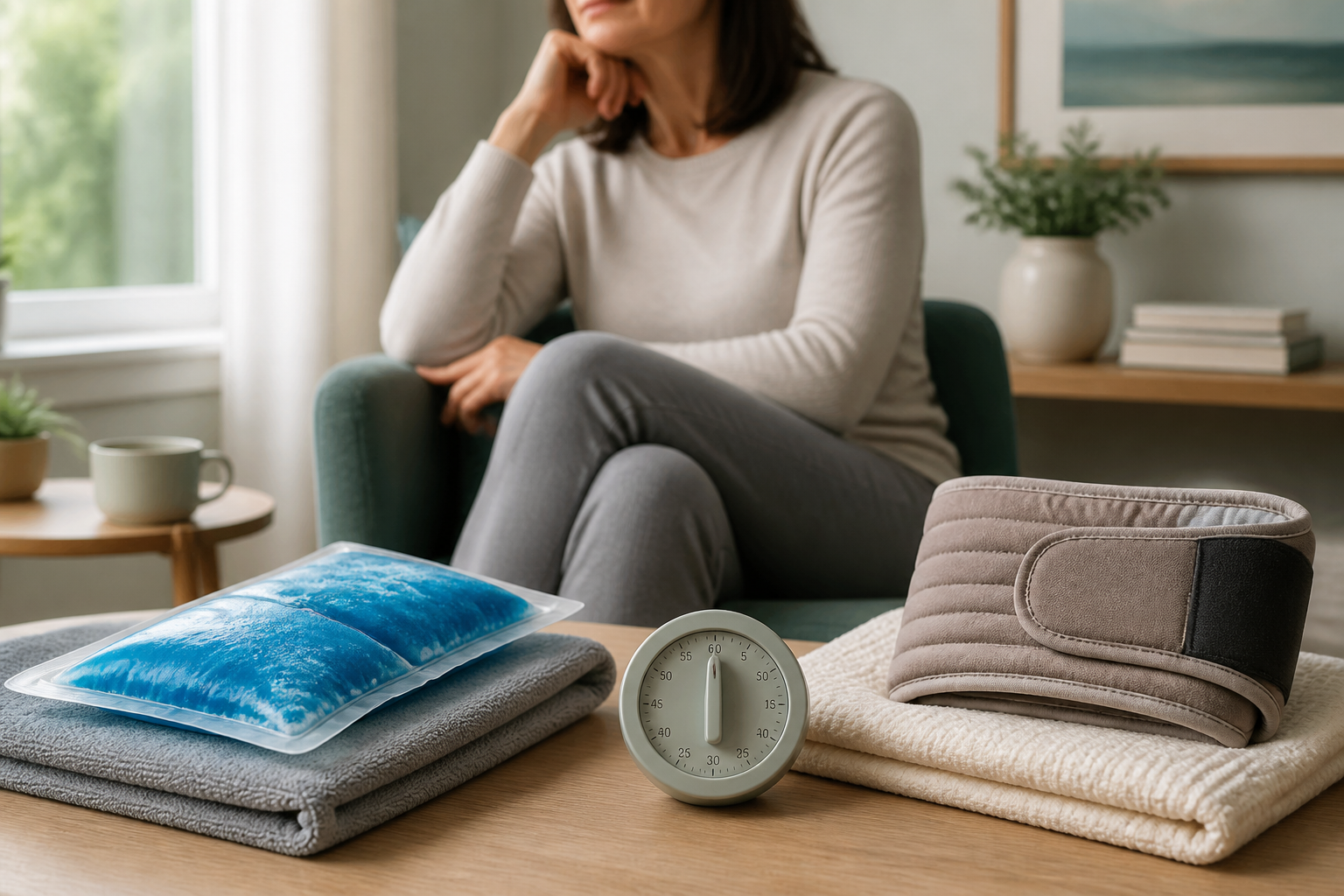
Use ice (cold therapy) for the first 48–72 hours after injury or during acute inflammation. Use heat for chronic coccyx pain, muscle tension, or stiffness lasting more than 72 hours. When in doubt, ice is the safer starting point.
Both have specific roles in coccyx pain management. Understanding which to use — and when — can significantly accelerate your recovery.
The Coccyx Relief System: Everything You Need in One Place
Exercises, ergonomic setups, stretches, and a complete daily program. 30+ pages, instant download.
Get My Coccyx Relief SystemInstant download • 30-day money-back guarantee
Table of Contents
- The Simple Rule
- When to Use Ice (Cold Therapy)
- When to Use Heat
- Contrast Therapy: Alternating Hot and Cold
- How to Apply Ice to the Coccyx
- How to Apply Heat to the Coccyx
- Product Recommendations
- Common Mistakes to Avoid
- Frequently Asked Questions
The Simple Rule
| Situation | Use |
|---|---|
| Fresh injury (fall, trauma) — first 72 hours | Ice |
| Acute flare-up with swelling | Ice |
| Chronic pain, tight muscles | Heat |
| Stiffness after sitting | Heat |
| Post-physiotherapy soreness | Ice or heat depending on source |
| More than 72 hours post-injury | Heat |
| Unsure which to use | Start with ice |
When to Use Ice (Cold Therapy)
Ice (cryotherapy) works by:
- Reducing blood flow to the injured area, limiting swelling
- Slowing nerve conduction, which reduces pain signal transmission
- Decreasing metabolic activity in damaged tissue, limiting secondary cell death
Best situations for ice
Acute injury (within 72 hours) Any fresh trauma to the coccyx — a fall, a hard impact — should be treated with ice immediately and for the first 48–72 hours. Early ice application is most effective at controlling swelling.
Acute flare-ups in chronic coccydynia If you have chronic coccyx pain and experience a significant flare-up with increased swelling or warmth in the area, ice is appropriate for the first 24–48 hours of that flare.
Post-activity soreness After any activity that has aggravated your coccyx (a long flight, a difficult car journey, a day without your cushion), ice can reduce the inflammatory response before it fully develops.
Post-physiotherapy or injection After a physiotherapy session with manual manipulation, or immediately after a corticosteroid injection, ice is recommended to manage local tissue irritation.
How long to apply ice
- 15–20 minutes per session
- Allow at least 1 hour between applications
- Up to 4 sessions per day in the acute phase
- Never apply ice directly to skin — always use a cloth or thin towel barrier
When to Use Heat
Heat therapy works by:
- Increasing blood flow to the area, delivering oxygen and nutrients to healing tissue
- Relaxing muscle tension in the gluteal and pelvic floor muscles around the coccyx
- Increasing tissue extensibility — warmer tissue is more pliable and stretches more effectively
- Reducing pain perception through sensory nerve modulation
Best situations for heat
Chronic coccyx pain (more than 3 months) For longstanding tailbone pain without significant recent inflammation, heat is generally more effective than ice. The primary mechanism is muscle relaxation rather than anti-inflammatory action.
Morning stiffness Many people with coccydynia find their tailbone is most painful first thing in the morning. A warm heat pack applied to the sacrococcygeal region for 15 minutes before getting up can significantly improve morning comfort.
Before exercise or physiotherapy Applying heat for 15 minutes before your coccyx pain exercises improves tissue extensibility, making the stretches more effective and less uncomfortable.
After a long sitting session If you have been sitting for an extended period and feel muscle tension building around your coccyx and lower back, heat can relieve the muscular component of that discomfort.
How long to apply heat
- 15–20 minutes per session
- Temperature should be comfortably warm, not hot — aim for 40–45°C
- Never fall asleep with a heat pack — burns can occur even with moderate heat over extended periods
- Do not apply heat during the first 72 hours after a fresh injury
Prefer a Structured Recovery Plan? Review the System
Use a step-by-step plan with exercises, setup guidance, and clear pacing prompts.
Get My Coccyx Relief SystemInstant download • 30-day money-back guarantee
Contrast Therapy: Alternating Hot and Cold
Contrast therapy — alternating between heat and cold — is supported by evidence for chronic pain management and post-activity recovery.
How it works
Contrast therapy creates a "pumping" effect in local blood vessels: heat causes vasodilation (vessels expand), cold causes vasoconstriction (vessels contract). This cycle promotes circulation, reduces chronic inflammation, and can break the muscle-tension pain cycle.
Protocol for coccyx pain
- Apply heat to the sacrococcygeal area for 3–4 minutes
- Switch to ice/cold pack for 1 minute
- Repeat 3–4 cycles
- Always end on cold — finishing with ice prevents the vasodilation from the final heat application
Important: Do not use contrast therapy in the acute phase (first 72 hours after injury). It is most appropriate for chronic coccyx pain after the acute phase has resolved.
How to Apply Ice to the Coccyx
Option 1: Standard Ice Pack
- Fill a zip-lock bag with ice cubes or crushed ice
- Wrap in a thin tea towel or pillowcase
- Apply to the sacrococcygeal region (lower back / upper buttock cleft)
- 15–20 minutes, 3–4 times daily
Option 2: Frozen Gel Pack
- Reusable gel packs maintain consistent cold better than ice bags
- Keep 2 in the freezer so you always have a cold one available
- Wrap in thin cloth before applying
Option 3: Frozen Peas or Vegetables
- Conforms to body contours better than rigid ice packs
- Do not eat the peas after using as an ice pack — mark clearly
Position during icing
- Lying on your front (prone) with a pillow under your abdomen
- Or lying on your side in a comfortable position
- You can also apply ice while seated on a coccyx cushion, though the position is less ideal
How to Apply Heat to the Coccyx
Option 1: Microwavable Heat Pack
- Most convenient for home use
- Heat according to instructions; always test temperature on your wrist before applying to the coccyx
- Cover with a thin cloth to prevent burns
Option 2: Electric Heat Pad
- Use on low to medium setting with automatic shut-off
- Do not use on the highest setting — burns can occur even with moderate-heat appliances
- Excellent for sustained heat application during work or reading
Option 3: Warm Bath or Shower
- A warm bath (not hot) is effective for full pelvic floor relaxation
- Direct warm shower on the lower back and sacral area for 10–15 minutes works well
- Do not use very hot baths — particularly relevant for pregnant women
Product Recommendations
For cold therapy
- Therapearl Body Pack — flexible, reusable, stays cold for 20+ minutes
- Chattanooga ColPac — clinical-grade; the gold standard for physiotherapy clinics
- Hyperice Venom (cold) — wearable technology option
For heat therapy
- Sunbeam Electric Heat Pad with auto-off — reliable, consistent heat
- Therapearl Microwavable Pack — works for both hot and cold
- TheraCane heat pad — contours well to the sacral region
- Wheat bags / lavender packs — microwavable; eco-friendly option
Common Mistakes to Avoid
Applying ice directly to skin Always use a barrier. Even a thin cloth is enough. Direct ice-to-skin contact for more than 5 minutes can cause frostbite or ice burns.
Applying heat in the acute phase Heat increases blood flow and can amplify swelling and inflammation during the first 72 hours after injury. This is the most common thermal therapy mistake.
Using heat or ice for more than 20 minutes at a time After 20 minutes, the effect plateaus and your body adapts. Multiple shorter applications are more effective than one long application.
Falling asleep with a heat pack Burns occur more commonly than you might expect. Use heat packs with an automatic shut-off, or set a timer.
Expecting thermal therapy to fix structural problems Ice and heat manage pain and inflammation. They cannot realign a displaced coccyx, fix muscle imbalances, or replace physiotherapy. Use them as adjuncts to a comprehensive treatment plan.
Frequently Asked Questions
Should I use ice or heat for coccyx pain? Use ice for the first 48–72 hours after an injury or during acute inflammation. Use heat therapy for chronic coccyx pain, muscle tension, or stiffness lasting more than 72 hours. If unsure, ice is the safer starting choice for new or worsening pain.
How long should I apply ice to my tailbone? Apply ice for 15–20 minutes at a time, with at least 1 hour between applications. Never apply ice directly to skin. You can ice 3–4 times daily during the acute phase.
Can heat make coccyx pain worse? Yes, heat can worsen coccyx pain if applied during the acute inflammatory phase (first 48–72 hours after injury). Wait until acute inflammation subsides before using heat therapy.
Is contrast therapy (alternating hot and cold) safe for coccyx pain? Yes, after 72 hours. Alternate 3–4 minutes of heat with 1 minute of cold, repeating 3–4 cycles. Always end on cold. Contrast therapy promotes blood flow while controlling inflammation.
What temperature is safe for heat therapy on the coccyx? Heat should feel comfortably warm, not hot — approximately 40–45°C. Never use scalding heat. Test on your wrist before applying. Use electric pads on low to medium settings with automatic shut-off.
Review the Coccyx Relief System
Review 30+ pages of exercises, practical methods, pacing guidance, and a structured daily plan.
Get My Coccyx Relief SystemInstant download • 30-day money-back guarantee