Coccyx Pain
Tailbone Pain Relief Exercises: 10-Minute Daily Routine (2026)
By Coccyx Relief Editorial Team · Updated 2026-03-01
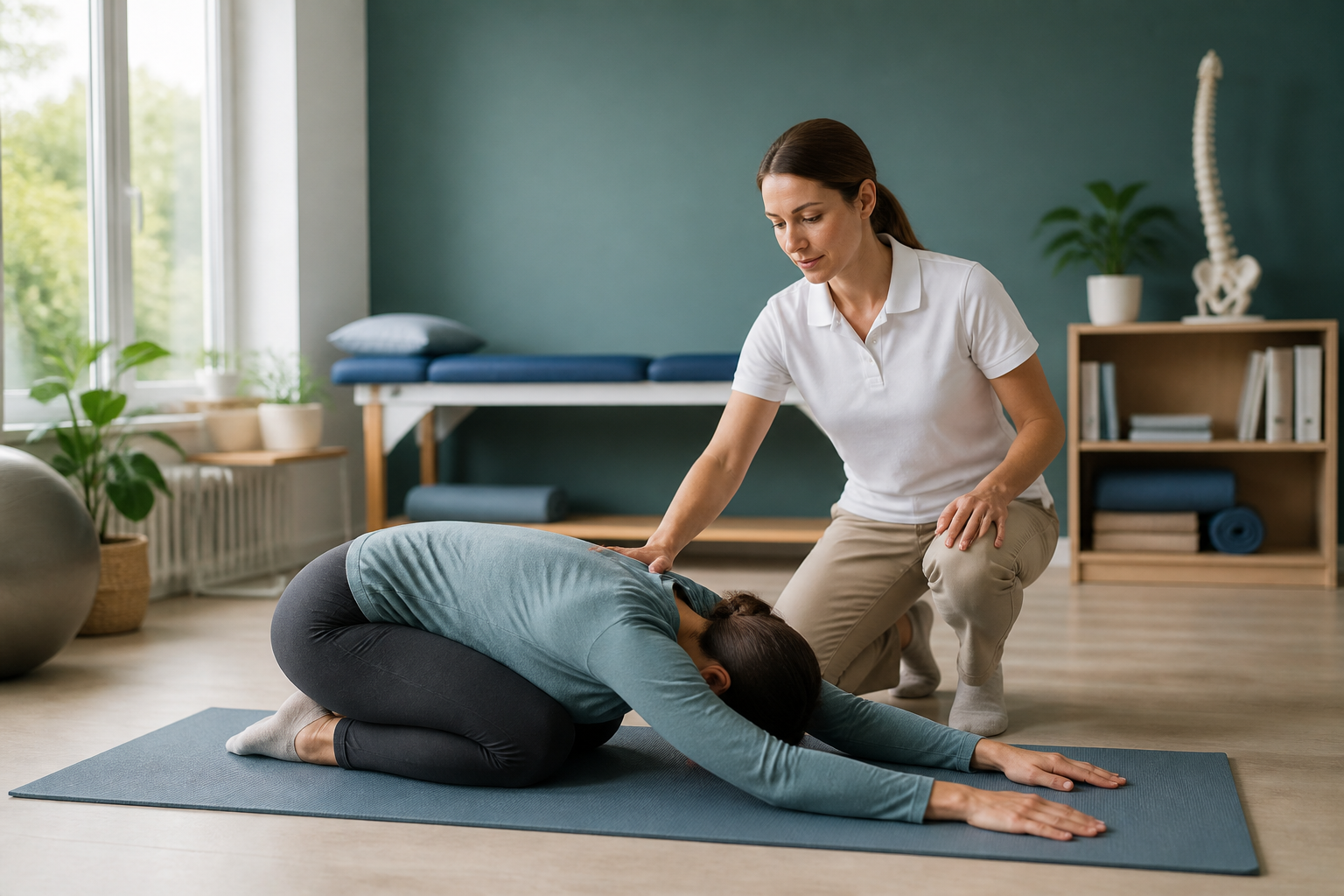
The fastest relief from tailbone pain comes from a combination of gentle stretching, piriformis release, and targeted glute strengthening — all achievable in 10 minutes daily. Consistency matters more than duration: daily 10-minute sessions outperform occasional long sessions every time.
This routine is designed by physiotherapists specifically for coccyx and tailbone pain. It requires no equipment and can be done at home.
The Coccyx Relief System: Everything You Need in One Place
Exercises, ergonomic setups, stretches, and a complete daily program. 30+ pages, instant download.
Get My Coccyx Relief SystemInstant download • 30-day money-back guarantee
Table of Contents
- How to Use This Routine
- Warm-Up: 2 Minutes
- Core Routine: 8 Minutes
- Full Routine Summary
- When to Modify or Skip Exercises
- Progress Markers
- Frequently Asked Questions
How to Use This Routine
When: Daily — morning before you start sitting, or evening to decompress after a day at a desk. Both work well.
Equipment needed: None. Optional: a yoga mat or soft surface for lying exercises, a tennis ball for trigger point work.
Stopping rule: Stop any exercise that causes a sharp increase in tailbone pain. Mild discomfort during stretching is normal; sharp pain is a signal to stop.
Progress tracking: Rate your tailbone pain 0–10 before starting the routine. Rate again after 1 week of daily practice. Most people see improvement within 7–14 days.
Warm-Up: 2 Minutes
1. Diaphragmatic Breathing (1 minute)
Why it starts the routine: Breathing patterns directly affect pelvic floor tension — the pelvic floor rises and falls with every breath. Beginning with conscious breathing downregulates the nervous system and begins releasing the muscular tension that maintains tailbone pain.
How:
- Lie on your back with knees bent, one hand on your belly
- Breathe in slowly through your nose — let your belly rise, not your chest
- Breathe out slowly — consciously let the pelvic floor soften and release as you exhale
- 8–10 breaths, each lasting 5–6 seconds in and out
2. Pelvic Tilt Warm-Up (1 minute)
Why: Gentle movement through the sacrococcygeal joint prepares it for the stretches to follow.
How:
- Lie on your back, knees bent, feet flat
- Slowly tilt your pelvis so your lower back presses into the floor — hold 3 seconds
- Then tilt the other way, creating a small arch in your lower back — hold 3 seconds
- Rock slowly between these positions — 10 repetitions
Keep movements small and pain-free. This is a warm-up, not a stretch.
Prefer a Structured Recovery Plan? Review the System
Use a step-by-step plan with exercises, setup guidance, and clear pacing prompts.
Get My Coccyx Relief SystemInstant download • 30-day money-back guarantee
Core Routine: 8 Minutes
3. Knee-to-Chest Stretch (1.5 minutes)
Targets: Gluteus maximus, sacrococcygeal joint decompression
How:
- Lie on your back, knees bent
- Draw your right knee slowly toward your chest, holding behind the thigh (not the knee)
- Hold 30 seconds — breathe continuously, relax into the stretch
- Lower slowly and repeat on the left side
- Then draw both knees to chest simultaneously — hold 30 seconds
4. Piriformis Stretch — Figure-4 (2 minutes)
Why this matters: The piriformis muscle connects the sacrum to the femur and passes very close to the coccygeal region. Tightness in this muscle is one of the most commonly missed contributors to tailbone pain.
How:
- Lie on your back, both knees bent
- Cross your right ankle over your left knee (like the number 4)
- Flex your right foot — this protects the knee during the stretch
- To deepen: hold behind your left thigh and draw both legs toward your chest
- Hold 45 seconds each side
- You should feel the stretch in the outer right hip and buttock — not in the tailbone itself
Modification: If this is too intense, simply cross the ankle over the knee and let gravity do the work without drawing the legs in.
5. Cat-Cow Spinal Mobilisation (1 minute)
Targets: Entire spinal column including sacrococcygeal segments
How:
- On hands and knees in tabletop position
- Cat: Exhale and round your spine upward — chin to chest, tailbone tucked under
- Cow: Inhale and let your belly drop, lifting your head and tailbone upward
- Move slowly between positions — 10 cycles
- As you move through each cycle, try to feel the movement reaching all the way to the tailbone
6. Child's Pose with Lateral Reach (1 minute)
Targets: Posterior hip, sacrum, thoracolumbar fascia
How:
- From kneeling, sit back onto your heels
- Extend your arms forward on the floor and rest your forehead down
- Hold the central position for 20 seconds
- Then walk your hands to the right — hold 20 seconds
- Then walk to the left — hold 20 seconds
- Return to centre, take 3 deep breaths
7. Glute Bridge — Strengthening (1.5 minutes)
Why: Weak glutes are the most common underlying cause of persistent tailbone pain in desk workers and people who sit for long hours. Strong glutes stabilise the pelvis and reduce sacrococcygeal loading.
How:
- Lie on your back, knees bent, feet flat on the floor about hip-width apart
- Squeeze your glutes firmly and lift your hips until your body forms a straight line from shoulders to knees
- Hold the top position for 2–3 seconds — actively squeeze the glutes
- Lower slowly over 3 counts
- 12–15 repetitions
Focus: The squeeze at the top is what activates the gluteus maximus. Many people do this too quickly and lose the muscle activation benefit.
8. Hip Flexor Lunge Stretch (1 minute)
Why: Hip flexor tightness (from sitting) causes posterior pelvic tilt — the single most common sitting posture that loads the coccyx.
How:
- From standing, step your right foot forward and lower your left knee toward the floor
- Keep your torso upright
- Gently push your hips forward until you feel a stretch in the front of your left hip
- Hold 30 seconds each side
- For a deeper stretch: raise the arm on the same side as the rear leg overhead
9. Seated Pelvic Clock — Final Mobility (1 minute)
Why: This exercise is best done seated on a firm chair or your coccyx cushion at the end of the routine. It integrates all the mobility work done lying down into functional seated movement.
How:
- Sit on a firm surface with your hands on your hips
- Imagine a clock face beneath you
- Gently shift your weight to 12 o'clock (forward), 3, 6 (posterior — be gentle here), 9, and back to 12
- Keep movements small and controlled
- 5 full circles clockwise, then 5 counterclockwise
Full Routine Summary
| Exercise | Duration | Position | Purpose |
|---|---|---|---|
| Diaphragmatic breathing | 1 min | Lying | Nervous system, pelvic floor release |
| Pelvic tilt warm-up | 1 min | Lying | Sacrococcygeal joint mobility |
| Knee-to-chest stretch | 1.5 min | Lying | Decompression, glute release |
| Piriformis stretch (figure-4) | 2 min | Lying | Hip rotator release |
| Cat-cow | 1 min | Hands/knees | Spinal mobility |
| Child's pose with lateral reach | 1 min | Kneeling | Posterior chain release |
| Glute bridge | 1.5 min | Lying | Glute strengthening |
| Hip flexor lunge stretch | 1 min | Standing | Hip flexor release |
| Seated pelvic clock | 1 min | Seated | Functional mobility integration |
| Total | ~10 minutes |
When to Modify or Skip Exercises
If you have acute/severe pain
- Start with only the breathing and pelvic tilt exercises (exercises 1 and 2)
- Add knee-to-chest when pain is below 6/10
- Add the remainder when pain is below 4/10
If you are pregnant
- Skip glute bridges after 16 weeks (lying flat restriction)
- Perform piriformis stretch in seated or side-lying variation
- Cat-cow and child's pose are safe throughout pregnancy
- Add a pillow under your abdomen for child's pose
If you have knee problems
- Avoid the lunge stretch — substitute standing hip flexor stretch using a wall for support
- Modify glute bridge to have feet closer together if knee flexion is uncomfortable
If you have neck or shoulder problems
- Modify hands-and-knees exercises to forearms-and-knees (lower wrist load)
Progress Markers
Track these weekly:
Pain scale: Rate 0–10 tailbone pain at rest and with sitting. Expect 20–30% reduction in 2 weeks.
Sitting tolerance: How many minutes before tailbone pain escalates. Expect gradual increase.
Morning stiffness: How stiff is the tailbone in the first 10 minutes after waking. Usually one of the first things to improve.
Activity capacity: Can you sit through a full meal? A 30-minute drive? A 2-hour work session? Track what was previously impossible.
Frequently Asked Questions
How often should I do tailbone pain exercises? Daily. Consistency matters more than any other factor. Even 5 minutes daily is more effective than 30 minutes three times a week.
Can exercises make coccyx pain worse? If done incorrectly or too aggressively, yes. Stop any exercise that causes sharp pain. Mild discomfort during stretching is expected and normal. Avoid deep squats, heavy deadlifts, and rowing machines during acute flare-ups.
What is the fastest way to relieve tailbone pain? Fastest relief combines: gentle piriformis stretching, a coccyx cushion removing direct pressure, and ice for 15 minutes. The 10-minute routine above addresses the muscular and joint components that most single interventions miss.
Should I stretch or strengthen for coccyx pain? Both. The routine includes both in the right proportion for active pain: approximately 60% stretching and releasing, 40% strengthening. As pain decreases, shift toward more strengthening to prevent recurrence.
Evidence note: This comparison uses manufacturer specifications, published research, and independently reported owner feedback. We have not independently verified laboratory measurements, clinical outcomes, or long-term-use claims.
Review the Coccyx Relief System
Review 30+ pages of exercises, practical methods, pacing guidance, and a structured daily plan.
Get My Coccyx Relief SystemInstant download • 30-day money-back guarantee