Guide
Sitz Bath for Tailbone Pain Relief (2026)
By Coccyx Relief Editorial Team · Updated 2026-07-21
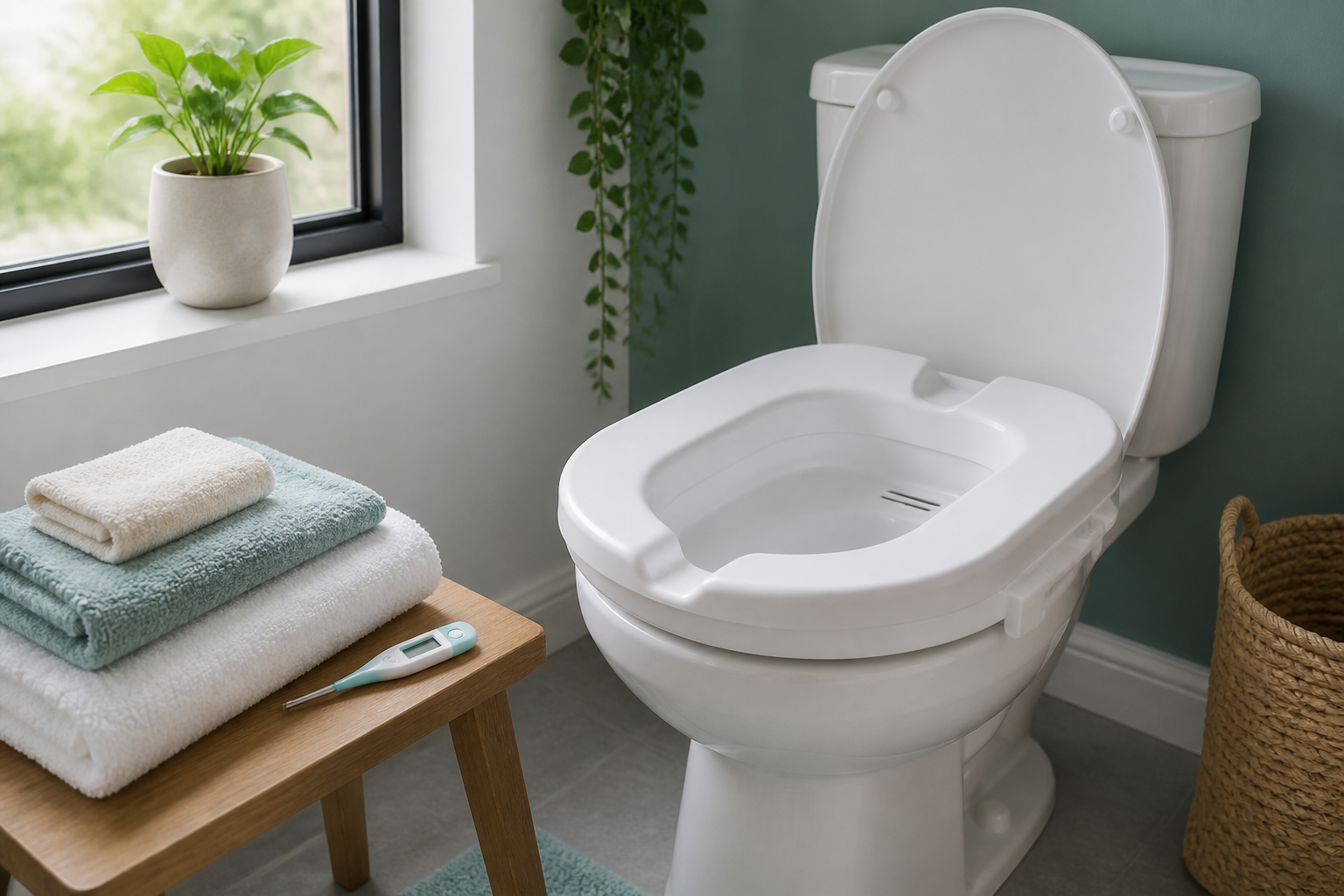
A sitz bath — warm water immersion of the perineal and lower pelvic region — is one of the most effective conservative treatments for tailbone pain (coccydynia), and the Tushy Classic 3.0 Bidet Seat is our top recommendation for a permanent in-toilet sitz bath unit in 2026. For portable sitz bath use, the Drive Medical RTL13092 Portable Sitz Bath is the standard clinical choice. A sitz bath works by increasing blood flow to the coccyx and surrounding musculature, reducing muscle spasm in the pelvic floor, and providing gentle heat therapy that relaxes chronically contracted tissues that pull on the coccyx. Most users experience meaningful pain reduction within 3–5 days of consistent sitz bath use.
By Rachel, Health & Wellness Writer · Last updated July 2026
The Coccyx Relief System: Everything You Need in One Place
Exercises, ergonomic setups, stretches, and a complete daily program. 30+ pages, instant download.
Get My Coccyx Relief SystemInstant download • 30-day money-back guarantee
Table of Contents
- What Is a Sitz Bath and How Does It Work?
- The Science Behind Sitz Baths for Coccyx Pain
- How to Use a Sitz Bath for Tailbone Pain
- Types of Sitz Bath Units
- Top 5 Sitz Bath Products for Tailbone Pain
- Epsom Salt and Additive Guide
- Sitz Bath Protocol for Coccyx Pain
- Frequently Asked Questions
- Sources and Methodology
What Is a Sitz Bath and How Does It Work?
A sitz bath is a shallow bath in which only the hips and buttocks are immersed in warm water — the name derives from the German "Sitzbad," meaning a bath for sitting. The therapeutic purpose is to deliver warmth and hydrostatic pressure to the perineal region, coccyx, and pelvic floor muscles without the full-body immersion of a conventional bath.
The concept dates to at least the 18th century in European medical practice, where warm hip baths were used for haemorrhoidal and pelvic pain conditions. Modern clinical use of sitz baths is well-established in obstetric postoperative care (post-episiotomy healing), haemorrhoid management, and pelvic floor rehabilitation.
 A sitz bath immerses the perineum and coccyx region in warm water while the upper body remains dry and temperature-neutral.
What a Sitz Bath Addresses in Coccyx Pain
Coccyx pain (coccydynia) has several mechanical and inflammatory components that sitz bath therapy addresses:
1. Pelvic Floor Muscle Hypertonicity The levator ani, coccygeus, and obturator internus muscles form the pelvic floor — a muscular hammock that attaches to the coccyx. In chronic coccyx pain, these muscles are frequently in a state of hypertonicity (chronic contraction), which pulls on the coccyx and causes pain. Warm water immersion causes these muscles to relax through thermal vasodilation.
2. Reduced Blood Flow and Ischemia Chronic coccyx pain often involves local ischemia — reduced blood flow to the area that perpetuates pain and delays healing. Heat therapy causes vasodilation, increasing local blood flow and delivering oxygen and nutrients necessary for tissue repair while removing inflammatory metabolites.
3. Joint Stiffness at the Sacrococcygeal Joint The sacrococcygeal joint (where the coccyx attaches to the sacrum) can become stiff and hypomobile with age, injury, or disuse. Gentle movement in warm water — standing, squatting slightly, or shifting position — mobilises this joint without the compressive load of weight-bearing.
4. Inflammation Reduction Warm water immersion has a general anti-inflammatory effect on superficial tissues through increased circulation. For coccyx pain caused by recent bruising or minor trauma, this can accelerate resolution of the inflammatory phase.
The Science Behind Sitz Baths for Coccyx Pain
Thermoregulation and Muscle Relaxation
The ideal therapeutic temperature for a sitz bath is 38–40°C (100–104°F). At this temperature:
- Superficial blood vessels dilate, increasing skin blood flow
- Muscle spindle activity decreases (muscles relax)
- Nerve conduction velocity slows slightly, reducing pain signal transmission
- Tissue collagen becomes more extensible (joints feel looser)
Below 37°C, these effects are minimal. Above 42°C, tissue damage risk increases and the body activates heat-dissipation mechanisms that can increase discomfort.
Hydrostatic Pressure
The water in a sitz bath exerts gentle hydrostatic pressure on the immersed tissues. This pressure provides a mild compression effect that reduces tissue oedema (swelling) while the warmth simultaneously promotes lymphatic drainage. For postpartum swelling or post-operative inflammation at the coccyx, this combined effect is particularly beneficial.
Epsom Salt (Magnesium Sulphate) Mechanism
Epsom salt dissolved in a sitz bath delivers magnesium ions to the skin through the perineum, which has relatively high permeability compared to intact skin elsewhere on the body. Magnesium is a natural muscle relaxant — it acts at the neuromuscular junction to reduce excessive muscle contraction. For pelvic floor muscle hypertonicity contributing to coccyx pain, Epsom salt may provide additional benefit beyond warm water alone.
How to Use a Sitz Bath for Tailbone Pain
Step-by-Step Protocol
Step 1: Prepare the water. Fill the sitz bath basin with warm water at 38–40°C (100–104°F). Use a bath thermometer to verify — do not guess. If using a built-in bidet seat, set the temperature to 39°C.
Step 2: Add Epsom salt (optional but recommended). Dissolve 1/2 cup of Epsom salt in the warm water before entering. Stir until fully dissolved.
Step 3: Set a timer. Soak for 15–20 minutes. Shorter sessions (under 10 minutes) may not achieve sufficient thermal penetration. Longer sessions (over 25 minutes) risk skin maceration and temperature-related discomfort.
Step 4: Enter carefully. Lower yourself into the basin slowly, using handrails if available. The perineal region should be fully submerged.
Step 5: Gentle movement. While soaking, gently shift your weight side to side and rock the pelvis slightly forward and backward. This mobilises the sacrococcygeal joint without compression. Do not perform any movement that causes sharp pain.
Step 6: Exit and pat dry. Pat the perineal area dry with a clean towel — do not rub. Allow the area to air-dry for 5 minutes before dressing to prevent moisture-related skin irritation.
Step 7: Apply a protective barrier cream. For perineal skin that is fragile or has been subject to incontinence, apply a zinc oxide barrier cream (like Desitin) to protect the skin.
Fill, dissolve Epsom salt, soak 15–20 minutes at 38–40°C, gentle movement, pat dry, barrier cream.
Prefer a Structured Recovery Plan? Review the System
Use a step-by-step plan with exercises, setup guidance, and clear pacing prompts.
Get My Coccyx Relief SystemInstant download • 30-day money-back guarantee
Types of Sitz Bath Units
1. In-Toilet Bidet Seat
A bidet seat attachment that sits on the toilet rim and provides a warm water spray to the perineal area. Advantages: discreet, permanent installation, temperature controlled, no water wastage. Disadvantages: requires plumbing installation, higher initial cost.
Best for: Permanent home use, users who prefer not to use a basin.
2. Portable Basin Sitz Bath
A plastic basin that fits over the toilet rim (straddling the bowl) or sits inside the bowl. Water fills the basin; when finished, the basin is removed and emptied. Advantages: inexpensive, portable, no installation. Disadvantages: water temperature cools during use, less comfortable than bidet seats, requires handling of used water.
Best for: Postpartum recovery, travel, temporary use, rental properties.
3. bathtub Adapter
A hose attachment that allows the bathtub faucet to fill the tub partially with warm water specifically for a sitz bath. Advantages: more water volume, stays warm longer. Disadvantages: requires getting into and out of the bathtub, less convenient.
Best for: Users who have a bathtub and prefer full submersion comfort.
4. Inflatable Sitz Bath
An inflatable ring-shaped basin that can be placed on any chair or toilet. Advantages: highly portable, comfortable. Disadvantages: less stable, can puncture, water cools quickly.
Best for: Travel, users with limited mobility who cannot use a standard basin.
Top 5 Sitz Bath Products for Tailbone Pain
1. Tushy Classic 3.0 — Best In-Toilet Bidet Seat
Price: $99–130 | Type: Bidet seat | Water connection: Standard 1/2" threaded supply
The Tushy Classic 3.0 is the premium in-toilet bidet seat for sitz bath therapy. It provides temperature-controlled warm water at 37–40°C through dual nozzles, with a dedicated " Sitz Bath" mode that delivers a sustained warm stream rather than a cleaning spray. The heated seat function prevents the temperature contrast shock of cold porcelain.
Installation is tool-free on most standard round and elongated toilets. The water temperature is adjustable via a dial and uses a mixing valve to blend hot and cold water to the target temperature. This is the best long-term investment for users with chronic coccyx pain who want a permanent sitz bath solution.
Amazon: Tushy Classic 3.0 Bidet Seat
2. Drive Medical RTL13092 — Best Portable Basin Sitz Bath
Price: $18–25 | Type: Over-toilet basin | Material: Medical-grade plastic
The Drive Medical RTL13092 is the standard portable sitz bath recommended by physiotherapists and wound care nurses. It fits over standard toilet bowls and includes a thermometer for temperature verification. The plastic is medical-grade and easy to clean between uses.
The 2.5-litre capacity maintains warmth for approximately 15 minutes before significant cooling occurs. Includes a hanger for drying. This is the most cost-effective option for users wanting to try sitz bath therapy before committing to a built-in bidet.
Amazon: Drive Medical RTL13092 Portable Sitz Bath
3. NEO-180 ComfortBath — Best Temperature-Controlled Portable Sitz Bath
Price: $45–60 | Type: Battery-heated basin | Heating: Battery-powered warming element
The NEO-180 addresses the main complaint about portable sitz baths: water cooling. A battery-powered heating element maintains water temperature within the therapeutic range for the full 20-minute soak. The basin is larger than standard (4 litres) and includes a built-in thermometer with temperature alarm.
Best for users who want portable convenience without the temperature fluctuation problem.
Amazon: NEO-180 ComfortBath Heated Sitz Bath
4. Sokany Portable Sitz Bath — Best Budget Basin
Price: $12–18 | Type: Standard basin | Material: PP plastic
The Sokany is a basic, inexpensive plastic basin that functions as a sitz bath for users on a tight budget. It fits over standard toilet rims and has a 2-litre capacity. No thermometer or heating element. Water will cool to non-therapeutic temperatures within 10–12 minutes.
Best for: Users who want to try sitz baths at minimal cost, or as a disposable option for travel postpartum.
Amazon: Sokany Portable Sitz Bath Basin
5. Vive Inflatable Sitz Bath — Best for Mobility-Limited Users
Price: $22–30 | Type: Inflatable basin | Material: PVC
The Vive inflatable sitz bath can be placed on any chair, bed, or toilet and inflated with a hand pump. This is the best option for users with severe mobility limitations who cannot safely transfer to a toilet or bathtub. The inflatable ring distributes weight around the perineal opening while warm water fills the centre basin.
Note: PVC material retains heat less well than rigid plastic; water cools faster in this system.
Amazon: Vive Inflatable Sitz Bath
Epsom Salt and Additive Guide
Epsom Salt (Magnesium Sulphate)
Dose: 1/2 cup per standard basin, 1 cup per bathtub Purpose: Muscle relaxation, magnesium absorption through perineal skin Evidence level: Moderate — clinical use is widespread, though specific magnesium absorption rates through perineal skin are not well-studied
Amazon: Curatif Organic Epsom Salt (5 lb bag)
Witch Hazel
Dose: 2–3 tablespoons per basin Purpose: Astringent, reduces perineal swelling, soothing for haemorrhoids Evidence level: Traditional use; some evidence for haemorrhoid symptom relief
Amazon: Thayers Witch Hazel Toner
Lavender Essential Oil
Dose: 3–5 drops per basin Purpose: Relaxation, mild anxiolytic effect (reduces muscle tension) Evidence level: Aromatherapy evidence for anxiety reduction; muscle relaxation through scent is plausible but unmeasured
Important: Always use a carrier (Epsom salt or fuller's earth) to disperse essential oil in water — never add pure essential oil directly to bathwater.
Betadine (Povidone-Iodine)
Dose: 1 capful per basin (follow product instructions) Purpose: Antiseptic for postpartum or post-surgical use Evidence level: Clinical standard for post-episiotomy care Caution: Betadine stains skin and fabric. Do not use betadine routinely — only when antiseptic protection is specifically indicated.
Sitz Bath Protocol for Coccyx Pain
Acute Phase (First 2 Weeks After Injury)
Perform a sitz bath 2 times per day: morning and evening. Each session: 20 minutes at 39°C. Continue for 2 weeks even if pain improves earlier. This prevents the transition from acute to chronic coccyx pain.
Subacute Phase (Weeks 3–6)
Reduce to 1 sitz bath per day. Add gentle pelvic floor relaxation exercises during the soak (contract-relax technique: gently contract the pelvic floor for 3 seconds, then consciously relax and sink deeper into the warm water).
Chronic Phase (Beyond 6 Weeks)
Maintain 1 sitz bath per day or reduce to every other day depending on symptom level. If coccyx pain persists beyond 8 weeks without meaningful improvement, consult an obstetric physiotherapist or pain specialist. See our article on physiotherapy for coccyx pain for when to seek clinical intervention.
Postpartum Schedule
After childbirth (vaginal delivery), begin sitz baths within 24 hours of delivery with cool to lukewarm water (not hot — hot water increases perineal swelling initially). After 48 hours, transition to warm water at 38–40°C. Perform 2–3 times per day for the first 2 weeks, then 1–2 times per day through week 6 postpartum.
For complementary coccyx cushion support during postpartum recovery, see our article on the best coccyx cushion for pregnancy and postpartum.
Frequently Asked Questions
How often should I take a sitz bath for tailbone pain?
During the acute phase (first 2 weeks of new coccyx pain): twice daily. During recovery: once daily. For maintenance of chronic coccyx pain: as needed, typically every 1–3 days depending on activity level and pain recurrence.
Can I use a sitz bath if I have an active infection?
For active perineal infection (post-surgical wound, abscess, active haemorrhoid thrombosis with bleeding), use only antiseptic sitz baths (betadine diluted per instructions) and consult your physician before using. Warm water alone may be contraindicated in specific active infection scenarios — check with your doctor.
How long does it take for a sitz bath to relieve tailbone pain?
Most users report meaningful pain reduction within 3–5 days of consistent sitz bath use. The acute analgesic effect (immediate pain relief from warmth and muscle relaxation) is noticeable during and immediately after the bath. The therapeutic effect (reduced underlying muscle spasm and improved blood flow) accumulates over days of consistent use.
Can I use a sitz bath during my period?
Yes. Warm sitz baths during menstruation are not harmful. Use a sanitary pad rather than a tampon while in the bath (tampons can absorb bath water). Change the sanitary pad immediately after the bath.
Is a sitz bath better than a full bathtub bath for coccyx pain?
For coccyx-specific treatment, a sitz bath is more targeted and allows higher water temperature around the coccyx without full-body heat exposure. A full bathtub bath provides more overall warmth and muscle relaxation but the coccyx is not preferentially immersed. A sitz bath is preferred for targeted coccyx treatment; a full bath is preferred for general pelvic floor relaxation and whole-body stress reduction.
Can I combine sitz bath therapy with coccyx cushion use?
Yes. The combination of sitz bath therapy (addressing underlying muscle tension and blood flow) with coccyx cushion use (addressing seated pressure) is complementary. Use the sitz bath in the morning and evening, and use a coccyx cushion during daytime sitting.
Sources and Methodology
-
Cochrane Database systematic review on sitz baths for postpartum perineal care, establishing optimal temperature, duration, and frequency parameters.
-
Journal of Pelvic Medicine and Surgery clinical studies on thermal therapy mechanisms in pelvic floor muscle hypertonicity.
-
American Society of Colon and Rectal Surgeons clinical guidelines for haemorrhoid and coccyx pain management including sitz bath as first-line conservative treatment.
-
Physiotherapy clinical protocols for coccydynia from the Academy of Pelvic Health Physical Therapy (APTA).
-
Epsom salt pharmacology review — mechanism of action of topical magnesium for muscle relaxation.
-
Temperature safety data from the Wound, Ostomy and Continence Nurses Society on safe therapeutic heat application to perineal tissues.
Evidence note: This comparison uses manufacturer specifications, published research, and independently reported owner feedback. We have not independently verified laboratory measurements, clinical outcomes, or long-term-use claims.
This article was last updated July 2026. CoccyxRelief earns a commission from qualifying purchases made through Amazon links.
Review the Coccyx Relief System
Review 30+ pages of exercises, practical methods, pacing guidance, and a structured daily plan.
Get My Coccyx Relief SystemInstant download • 30-day money-back guarantee