Cushion Fit Guides
Washable Coccyx Cushion Cover Buying Guide
By Coccyx Relief Editorial Team · Updated 2026-08-20
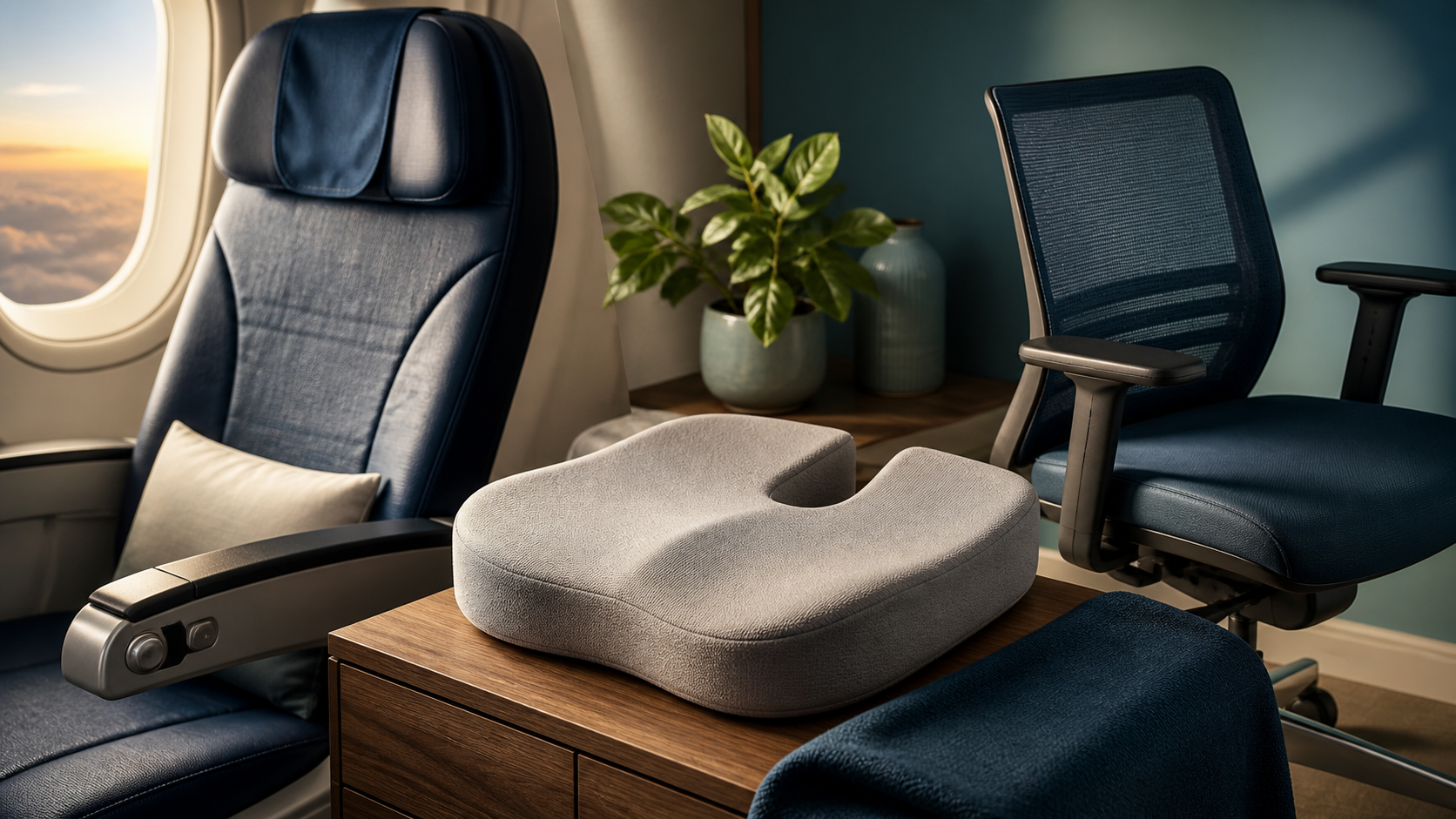
Quick answer: the best cushion cover is the one that satisfies the measured constraints of the real setup, not the option with the longest feature list. For buyers prioritizing hygiene, replacement covers and practical care, compare removable design, zipper placement, wash label, then verify drying method, fabric stretch, replacement availability. Use current primary-source specifications, keep health or performance promises separate from product facts, and plan a reversible trial with clear return criteria.
Affiliate disclosure: Coccyx Relief may earn a commission from qualifying purchases made through clearly marked Amazon links. Retailer links are shopping paths, not proof that a product is suitable. We did not hands-on test or clinically evaluate products for this article.
Health boundary: This guide is general information, not diagnosis or individualized care. Seek qualified help for new, severe, progressive or worrying symptoms. Follow urgent-care advice from your local health service.
Table of contents
- Quick answer
- Who this guide is for
- Key takeaways
- Research and evidence method
- Comparison criteria
- Criterion: removable design
- Criterion: zipper placement
- Criterion: wash label
- Criterion: drying method
- Criterion: fabric stretch
- Criterion: replacement availability
- Decision table
- Related guides
- Frequently asked questions
- Sources and update method
- Conclusion
Quick answer
Searching for washable coccyx cushion cover often produces pages that jump directly from a feature label to a recommendation. This guide uses a contingency planning instead. It translates the query into a scenario sheet, ownership map and fallback plan. The result remains understandable even if models, prices or retailer listings change.
No single cushion cover is best for every person or setting. The strongest choice is the exact variant that fits the intended environment, is supported by current documentation, and can be returned or changed if the trial exposes a problem. That is a narrower promise than “best,” but it is more honest and more actionable.
Who this guide is for
This article is for buyers prioritizing hygiene, replacement covers and practical care. It is designed for readers who want to compare options carefully without confusing specifications with outcomes. It does not rank unverified models, repeat static prices, invent hands-on testing, or imply that an affiliate destination is independent evidence.
The scope is practical: define the task, measure the environment, compare documented features, check compatibility, and evaluate a real setup. Medical diagnosis, emergency response, individualized treatment, legal compliance and educational sufficiency remain with the appropriate qualified professional or official authority.
Key takeaways
- Start with the job and environment, not a retailer category.
- Treat removable design and zipper placement as measurable constraints.
- Verify the exact model, size, hand, format or edition; family-level facts are not enough.
- Separate product identity from comfort, durability, treatment, safety or performance claims.
- Prefer a reversible comparison with written pass and stop criteria.
- Recheck specifications and availability on the day you buy.
Research and evidence method
This cover guide distinguishes removable, washable, wipe-clean and replaceable using the exact manufacturer's care record. The Federal Trade Commission Care Labeling Rule page applies to covered apparel and certain piece goods, not automatically to cushion covers. We use its explanation only to illustrate why washing method, drying and warnings are separate details.
The FTC's consumer-facing care-label guidance reinforces that complete instructions consider all attached components. For seat geometry after refitting, the OSHA chair evaluation checklist provides neutral width, depth and edge checks.
Health context is bounded by the NHS tailbone-pain guidance. None of these sources endorses a cover, antimicrobial claim or cleaning outcome. We reviewed the material on 2026-08-20; retain the product label because web instructions can change.
Comparison criteria
The six criteria below turn a broad washable coccyx cushion cover search into a repeatable comparison. Give each one a status—pass, conditional, fail or unknown—and keep unknowns visible. Do not average away a failed mandatory constraint with several attractive optional features.
Comparison criterion: removable design
Removable and washable describe different facts. Verify exactly which shell detaches, whether an inner liner remains, and whether machine, hand or surface cleaning is permitted for the selected model.
Confirm that the cover separates from the core without tools and that removal is permitted for the exact model. Some listings use washable to describe only a surface-wipe process; others mean the textile shell can enter a machine. Record the manufacturer's exact wording. Never immerse foam, gel or an insert unless its instructions expressly allow it.
Pass when washable clearly identifies the removable component and permitted method. Reject a listing that blurs cover care with core care.
Comparison criterion: zipper placement
Zipper placement affects removal, chair contact and rear-opening clearance. Inspect opening length, slider parking point and the amount of core flex needed before accepting the design.
Map the zipper path and slider parking point. A rear zipper can interfere with an open cutout; an underside zipper can contact a hard chair; a side closure may sit in a handling zone. Check whether the opening is wide enough to remove the core without folding or tearing it and whether any internal liner must remain in place.
Pass when the closure can be used without damaging the foam and parks away from the chair and body. Photograph the original orientation before removal.
Comparison criterion: wash label
A usable wash label covers method, temperature where relevant, drying and warnings. Copy the maker's wording rather than substituting a household routine that merely sounds gentle.
Read all care elements before buying: hand or machine method, water temperature, cycle, detergent restrictions, bleach warning, drying method and any ironing prohibition. The U.S. Federal Trade Commission's apparel rule does not necessarily govern a cushion cover, but its explanation usefully shows why a complete instruction includes washing, drying and relevant warnings. Follow the cushion maker's label.
Pass when complete manufacturer instructions cover washing, drying and material warnings needed for ordinary care. Save a copy because listings change.
Comparison criterion: drying method
Drying method determines both material risk and time out of service. Plan ventilated flat or line space when required and never refit a damp shell around foam or gel.
Drying determines downtime and can affect fit. Air-dry, flat-dry and tumble settings are not interchangeable. Estimate whether the household can leave the cover out of service for the full stated period. Do not reinstall it damp over a foam core, and do not accelerate drying with unapproved heat.
Pass when drying time fits the real routine and the cover can return fully dry. A spare is optional workflow support, not a reason to ignore care directions.
Comparison criterion: fabric stretch
Stretch must return the cover to its intended contour. Evaluate seams, rear channel and underside grip after laundering; a generic elastic fit can block functional features.
Stretch helps a close-fitting shell pass over contours, but a loose cover can wrinkle or migrate. Compare exact model dimensions, seam locations and closure orientation. After cleaning, inspect whether the shell returns evenly without excessive force. Do not substitute a generic cover when it blocks a rear opening or changes base friction.
Pass when the cleaned shell refits without wrinkles, blocked openings or altered grip. Stop if seams, coating or elastic show damage.
Comparison criterion: replacement availability
Replacement availability is exact-model evidence, not a search-result promise. Bind the spare to SKU, size, shape, zipper and base treatment before counting it in the care plan.
Check whether an exact spare cover has a stable SKU, compatible model list and current seller. A generic phrase such as fits most does not establish compatibility. For frequent laundering, two verified covers may reduce downtime, but only if both preserve the original shape, base surface and closure position.
Pass when the replacement is explicitly listed for the exact cushion model and size. Keep generic alternatives out of the recommendation unless measured compatibility is documented.
Decision table
| Criterion | Evidence to capture | Decision use |
|---|---|---|
| removable design | Record the current constraint and exact variant | Measure before comparing listings |
| zipper placement | Record the current constraint and exact variant | Verify compatibility and tradeoffs |
| wash label | Record the current constraint and exact variant | Measure before comparing listings |
| drying method | Record the current constraint and exact variant | Verify compatibility and tradeoffs |
| fabric stretch | Record the current constraint and exact variant | Measure before comparing listings |
| replacement availability | Record the current constraint and exact variant | Verify compatibility and tradeoffs |
Use the table before opening multiple retailer tabs. A written baseline makes it easier to reject irrelevant options and reduces the chance that advertising language will redefine the need. Keep links or screenshots for material specifications, but date them because models and listings change.
Build a cover-care system before purchase
A washable coccyx cushion cover is useful only when the word washable refers to a clearly identified component and complete instructions. Many cushions combine a textile shell, zipper, grip coating, inner liner and foam or gel core. Those parts can have different care limits. The product page should say what comes off, what can enter water and how it must dry.
Decode “washable” precisely
Separate four claims: removable cover, machine-washable shell, hand-wash-only shell and wipe-clean surface. They are not synonyms. Capture the wording for the exact model and colour because surface treatments can vary. If the maker provides only an icon, find its key in the manual rather than guessing.
The Federal Trade Commission's Care Labeling Rule applies to covered apparel and certain piece goods, not automatically to every cushion. Its consumer guidance nevertheless illustrates the information a complete care instruction may need: washing method, water temperature where relevant, drying method and warnings about harmful procedures. For a cushion, the manufacturer's own current label controls.
Inspect the zipper and internal liner
Before removal, photograph the top, front and underside. Close the zipper slider into its normal parking area, then open it gently. Avoid sharply folding foam to force it through a short opening. If a thin liner surrounds the core, determine whether it is removable or part of the product.
Run a finger along the outside seam after refitting. A slider or thick seam should not land against a hard chair edge or within the rear cutout. If the cover must be rotated to hide the zipper, it is not correctly fitted.
Plan the full wash-to-dry interval
Follow the stated load type, cycle and temperature. Do not assume that cold water, bleach-free detergent or low heat is universally correct; those choices still need to match the label. Wash with like colours when directed and keep hook-and-loop fasteners from catching the fabric.
Drying is part of the instruction. Flat drying may need a ventilated surface and substantially more time than a tumble cycle. Do not put a damp shell back on a core: trapped moisture can create odour and material problems. If turnaround matters, time one permitted wash before deciding whether an exact spare cover is worth buying.
Verify replacement compatibility
Use the model name, size, outer dimensions, opening shape, zipper location and underside material as a compatibility record. An elastic generic cover can close a U-shaped rear channel or cover grip material. A replacement that fits the outer rectangle but changes those functional details is not equivalent.
Keep a small care card
Store a photo of the label, purchase date, model/SKU, stain restrictions and drying method. Note whether the core is wipe-only and which side faces forward. This practical record prevents a household member from treating the whole cushion as one washable item and makes it easier to order the same shell later.
Wash-day protocol for a removable cover
Before the first wash, save the model name, cover SKU, fibre description, care-label photograph and purchase record. Photograph the installed cover from above and below. These images show opening orientation, seam alignment, zipper parking and which face carries the grip material.
Remove loose debris using the permitted method. Close or open the zipper exactly as directed and ease the core out without a sharp fold. Keep any inner liner in its assigned position. Inspect the empty shell for colour transfer, coating damage, split seams or a distorted opening before it enters water.
Translate the label into a checklist
Write separate lines for wash method, water setting, cycle, detergent restriction, bleach rule, drying method and heat warning. Do not infer that silence permits the harshest process; follow the manufacturer's complete manual and ask for clarification when a material instruction is ambiguous.
Use a laundry bag only if it is compatible with the directions. Fasten hook-and-loop closures so they cannot catch adjacent fabric. Wash with similar colours where specified. Never add disinfectant, fragrance booster or stain treatment merely because the normal detergent seems insufficient; the product maker must permit those chemicals.
Dry without distorting the shape
Support a wet contoured shell so its own weight does not stretch the rear channel or zipper opening. Flat-dry on a ventilated surface when instructed and turn it only if the guidance allows. Keep it away from radiators, direct high heat and improvised hair-dryer treatment.
Confirm dryness at seams, elastic zones and grip coating, not only on the broad top panel. Record actual turnaround from removal to safe refitting. That observation helps decide whether one cover is sufficient for the household schedule.
Refit in the original orientation
Match front, rear, top and underside to the photographs. Compress the core only as much as the maker permits and avoid pulling the zipper against foam. Work the fabric gradually into each corner, then check that the opening, contour and underside are unobstructed.
Place the refitted cushion on the chair and look for wrinkles, rocking, cover creep or a newly exposed slider. A clean cover that no longer preserves the original geometry has failed the post-wash fit check.
Evaluate a spare cover
An exact spare should state compatible model, size and version. Compare its outer dimensions, opening seam, zipper length, fabric stretch and underside treatment with the original. Similar colour or a shared brand name does not prove interchangeability.
Keep replacement packaging until the fit and one permitted cleaning cycle are confirmed. If the seller provides a version code, store it with the cushion record because model names can persist while cover construction changes.
Retire damaged covers
Stop using a shell with a broken closure, exposed sharp component, peeling grip material, permanent stretch that permits core movement or a seam failure that changes the rear opening. Ask the manufacturer whether repair is supported. Do not sew through foam or add patches that alter chair contact without approved instructions.
Related guides
These internal resources cover adjacent decisions. Use them to avoid asking one page or product to answer every question in the topic cluster.
Frequently asked questions
What does washable mean on a coccyx cushion?
It may mean the removable textile cover can be machine washed, hand washed or only wiped. It rarely means the foam or gel core can be immersed. Read the exact model's component-specific instructions before purchase.
Can I put the cushion cover in a dryer?
Only if the label permits tumble drying and specifies any temperature limit. Air-dry, dry-flat and tumble directions are not interchangeable. Unapproved heat may shrink fabric, alter grip coating or damage elastic.
How often should I wash a seat-cushion cover?
There is no universal interval. Follow the maker's instructions and adjust for actual soiling, spills, shared use and household needs. Washing more often than permitted can shorten service life; leaving a contaminated cover in use is also impractical.
Can I wash memory foam or a gel core?
Do not immerse a core unless its manufacturer explicitly allows that method. Many cores are spot- or surface-clean only. Keep the care record for each component separate so washable cover is not misread as washable cushion.
Will a universal replacement cover fit a U-shaped cushion?
Not necessarily. A generic shell may close the rear channel, relocate the zipper or cover the grip base. Compare model, outer dimensions, opening geometry, seams and underside material before treating it as compatible.
Is a spare cover worth buying?
It can reduce downtime when laundering is frequent, provided the spare is verified for the exact model and preserves every functional surface. Time one complete wash-and-dry cycle first; the real turnaround may be shorter than expected.
Sources and update method
- FTC: Care Labeling Rule
- FTC: care-label business guidance
- OSHA: chair evaluation checklist
- NHS: coccyx-pain health boundary
Update rule: confirm the exact cover label, core restrictions, drying method, compatible replacement SKU and functional fit whenever a model version changes. The FTC material is explanatory context, not a claim that apparel rules necessarily cover this product.
Conclusion
A useful washable coccyx cushion cover decision starts with the real job and ends with a documented trial. Compare removable design, zipper placement, wash label, drying method, fabric stretch, replacement availability; verify the exact variant; preserve unknowns; and keep outcome promises separate from observable product or planning facts. That process will not manufacture certainty, but it will help you make a clearer, safer and more defensible choice.