Guide
Best Coccyx Pain Relief Creams and Topical Products (2026)
By Coccyx Relief Editorial Team · Updated 2026-07-21
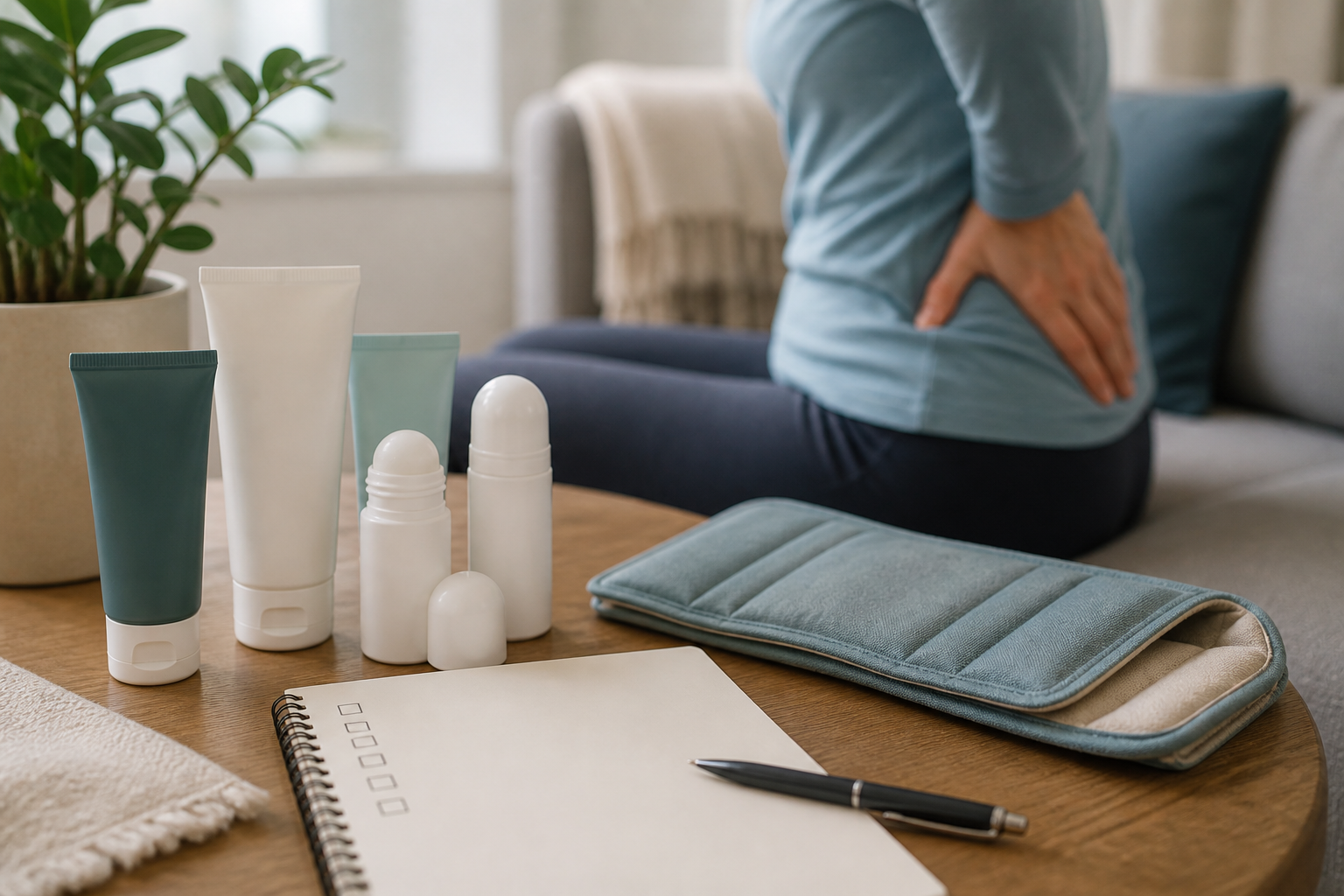
The best coccyx pain relief creams and topical products in 2026 are organised by mechanism of action: menthol-based gels (like Biofreeze 4% Menthol Gel) for immediate cooling-based pain gate activation, capsaicin creams (like Zostrix High Potency) for depletion-based desensitisation of pain fibres over 1–2 weeks of consistent use, lidocaine patches (like Salonpas Lidocaine 4%) for numbing-based temporary relief lasting 8–12 hours, and CBD balms (like Joy Organics CBD Sport Balm) for anti-inflammatory topical application with emerging but promising evidence. No topical product cures underlying coccyx pathology, but each provides meaningful symptomatic relief that can reduce reliance on oral analgesics. The optimal choice depends on the nature and duration of your coccyx pain.
By Rachel, Health & Wellness Writer · Last updated July 2026
The Coccyx Relief System: Everything You Need in One Place
Exercises, ergonomic setups, stretches, and a complete daily program. 30+ pages, instant download.
Get My Coccyx Relief SystemInstant download • 30-day money-back guarantee
Table of Contents
- How Topical Pain Relief Works
- Types of Topical Products for Coccyx Pain
- Active Ingredients Compared
- Top 8 Coccyx Pain Relief Creams and Topicals
- Product Comparison Table
- How to Apply Topical Products for Maximum Effect
- When Topicals Are Not Enough
- Frequently Asked Questions
- Sources and Methodology
How Topical Pain Relief Works
Topical pain relief products work through one of three primary mechanisms, each targeting a different component of the pain pathway. Understanding these mechanisms helps you select the right product for your specific type of coccyx pain.
Mechanism 1: Pain Gate Activation (Menthol, Camphor)
The Gate Control Theory of pain (Melzack and Wall, 1965) proposes that pain signals from peripheral nerve fibres can be "gated" or interrupted at the spinal cord level by competing sensory signals. Menthol and camphor activate the TRPM8 and TRPV1 cold/heat receptors in the skin, creating a cooling sensation that competes with and partially interrupts pain signal transmission.
In practical terms: menthol gels provide rapid-onset relief (within 5 minutes) that lasts 1–2 hours. The effect is immediate but does not address underlying inflammation or nerve sensitisation.
 Menthol activates TRPM8 cold receptors in the skin, creating a competing sensory signal that partially blocks pain fibre transmission at the spinal cord.
Mechanism 2: Substance P Depletion (Capsaicin)
Capsaicin is the active compound in chilli peppers. It activates the TRPV1 heat/pain receptors in sensory nerve endings, causing an initial intense burning sensation followed by desensitisation. With repeated application over 1–2 weeks, capsaicin depletes Substance P — the neuropeptide that pain fibres use to signal to the spinal cord. With reduced Substance P, pain signal transmission is diminished.
Important: The initial "burn" from capsaicin is normal and expected. It diminishes with each use as desensitisation develops. High-potency capsaicin (0.1% or higher) requires care in application and should not be used near mucous membranes.
Mechanism 3: Sodium Channel Blockade (Lidocaine, NSAIDs)
Lidocaine is a local anaesthetic that blocks voltage-gated sodium channels in nerve membranes, preventing action potential propagation. When applied topically, it numbs the skin and underlying tissues in the area of application without systemic absorption. The effect is purely local numbness lasting 4–12 hours depending on formulation.
Topical NSAIDs (diclofenac gel, ibuprofen cream) work similarly but through cyclooxygenase (COX) enzyme inhibition, reducing local prostaglandin production — addressing inflammation rather than just nerve signal transmission.
Mechanism 4: Anti-Inflammatory (CBD, Arnica)
Cannabidiol (CBD) and arnica are natural anti-inflammatory compounds applied topically. Their evidence base is less robust than pharmaceutical topicals, but user reports and preliminary studies suggest meaningful benefit for mild-to-moderate inflammatory pain.
Types of Topical Products for Coccyx Pain
1. Menthol Gels
Fast-acting, cooling, suitable for acute flare-ups. Available over the counter in concentrations of 1–16% (higher concentrations require care). Duration: 1–2 hours.
2. Capsaicin Creams
Long-term desensitisation therapy. Requires 1–2 weeks of consistent use before full effect. Initial burning sensation. High-potency formulations (0.1%+) are prescription-strength in some regions.
3. Lidocaine Patches and Gels
Direct numbing. Best for severe acute pain or nighttime use. Patches provide 8–12 hours of sustained release. Gels provide more flexible application.
4. CBD Balms
Anti-inflammatory. Legal in all 50 US states. Requires consistent daily application over several weeks for maximum effect. Non-psychoactive (contains no THC).
5. Combination Products
Some products combine menthol + lidocaine or arnica + CBD for multi-mechanism relief. These can be effective but are more expensive.
Active Ingredients Compared
| Ingredient | Mechanism | Onset | Duration | Best For |
|---|---|---|---|---|
| Menthol (1–10%) | Pain gate activation | 5 min | 1–2 hrs | Acute flare-ups |
| Camphor (1–11%) | Pain gate activation | 5 min | 1–2 hrs | Acute flare-ups |
| Capsaicin (0.025–0.1%) | Substance P depletion | 1–2 weeks | Long-term reduction | Chronic pain |
| Lidocaine (2–5%) | Sodium channel blockade | 15–30 min | 4–12 hrs | Severe pain, sleep |
| Diclofenac gel (1%) | COX inhibition (NSAID) | 30–60 min | 6–8 hrs | Inflammatory pain |
| CBD (500–1500mg) | Anti-inflammatory | 3–7 days | Ongoing | Mild chronic pain |
| Arnica (homeopathic) | Anti-bruising | Variable | Variable | Post-injury bruising |
Prefer a Structured Recovery Plan? Review the System
Use a step-by-step plan with exercises, setup guidance, and clear pacing prompts.
Get My Coccyx Relief SystemInstant download • 30-day money-back guarantee
Top 8 Coccyx Pain Relief Creams and Topicals
1. Biofreeze 4% Menthol Gel — Best Menthol Gel for Acute Relief
Price: $12–18 (89ml tube) | Active: 4% menthol | Format: Gel
Biofreeze is the most widely used menthol-based topical in physiotherapy and chiropractic offices, and the 4% formulation is the professional-strength version available without prescription. The gel format absorbs quickly without a greasy residue and can be applied directly to the gluteal cleft area without significant transfer to clothing.
The 4% concentration provides stronger and longer-lasting cooling than the standard 1–3% formulations in drugstores. Application every 3–4 hours maintains pain gate activation. The product has a distinct green colour and menthol scent that may be noticeable.
Amazon: Biofreeze 4% Menthol Gel
2. Zostrix High Potency Capsaicin Cream — Best for Chronic Coccyx Pain
Price: $15–22 (45g tube) | Active: 0.1% capsaicin | Format: Cream
Zostrix is the gold-standard capsaicin cream for neuropathic and chronic musculoskeletal pain. The 0.1% concentration is the highest available without prescription. For chronic coccyx pain (pain lasting more than 12 weeks), capsaicin is the topical with the most specific mechanism for long-term pain reduction.
Application must be consistent — twice daily for a minimum of 14 days before full effect. The initial burning sensation is normal and expected; it diminishes with each use. Wash hands thoroughly after application; avoid contact with eyes, nose, and mucous membranes.
Amazon: Zostrix High Potency Cap
3. Salonpas Lidocaine Pain Relief Patch — Best for Sustained 12-Hour Relief
Price: $18–25 (6 patches) | Active: 4% lidocaine | Format: Patch
Salonpas patches deliver lidocaine through an adhesive patch format that provides 8–12 hours of sustained release. For coccyx pain that disrupts sleep, applying a patch before bed can provide uninterrupted overnight relief. The large patch format (7 × 10 cm) covers the entire sacrococcygeal region adequately.
The patches adhere well to skin but can be removed without skin damage. They are not washable. Each patch is single-use. For daytime use in an office setting, the patch is discreet under clothing.
Amazon: Salonpas Lidocaine 4% Patches
4. Voltaren Emulgel (Diclofenac Diethylammonium) — Best Anti-Inflammatory Topical
Price: $16–24 (150g tube) | Active: 1.16% diclofenac | Format: Gel
Voltaren is the most evidence-supported topical NSAID available without prescription. The diclofenac gel penetrates to underlying joints and soft tissues, reducing local prostaglandin-mediated inflammation. For coccyx pain involving active inflammation (post-injury swelling, inflammatory arthropathy), Voltaren addresses the cause rather than just masking symptoms.
Use up to 4 times daily. Wash hands after application. Do not use with oral NSAIDs concurrently without physician supervision. Do not apply to broken skin.
Amazon: Voltaren Emulgel Extra Strength
5. Joy Organics CBD Sport Balm — Best CBD Topical
Price: $35–45 (120ml tin) | Active: 500mg broad-spectrum CBD | Format: Balm
Joy Organics broad-spectrum CBD balm contains zero THC and 500mg CBD per tin. The balm format is thicker than a gel and stays in place well when applied to the gluteal region. Broad-spectrum means it includes other non-psychoactive cannabinoids that may enhance the anti-inflammatory effect through the entourage effect.
The evidence for CBD in pain relief is emerging rather than established. Preliminary clinical trials suggest meaningful benefit for chronic pain conditions, but FDA has not approved CBD for pain management. We recommend CBD as a complementary option alongside established treatments, not as a primary standalone therapy.
Amazon: Joy Organics CBD Sport Balm
6. Iodex Ultra-Strength Methyl Salicylate Cream — Best for Heat Sensation Relief
Price: $9–14 (100g tube) | Active: 30% methyl salicylate | Format: Cream
Methyl salicylate is related to aspirin — it provides a warming sensation through counter-irritation (similar mechanism to menthol but with warmth rather than coolness). At 30% concentration, Iodex Ultra-Strength provides significant warming that competes with pain signals.
For users who prefer heat to cold, methyl salicylate creams are the warming equivalent of menthol gels. The warming sensation can be particularly soothing for chronic coccyx pain that is worsened by cold weather or air conditioning.
Amazon: Iodex Ultra-Strength Methyl Salicylate
7. Tiger Balm Red — Best Traditional Combination Formula
Price: $8–12 (18g tin) | Active: Camphor 11%, menthol 10%, cajuput oil, clove oil | Format: Ointment
Tiger Balm Red is a traditional Asian analgesic ointment used for over a century. The combination of high-concentration camphor (11%) and menthol (10%) plus natural oils (cajuput, clove, and cassia) provides multi-compound pain gate activation. The red colour comes from the clove oil.
The ointment format is richer and longer-lasting than a gel. A small amount goes a long way. The strong scent may not be suitable for workplace use. Tiger Balm Red is stronger than the white version; for sensitive skin, start with a small test area.
Amazon: Tiger Balm Red Extra Strength
8. Arnicare Bruise Ointment — Best for Post-Injury Bruising
Price: $12–16 (35g tube) | Active: Arnica montana 30CK | Format: Ointment
For coccyx pain that resulted from a direct fall or impact injury, arnicare ointment addresses the resulting bruising and tissue trauma. Arnica montana is a traditional homeopathic remedy for bruising — clinical evidence is mixed, but user reports of bruise resolution and pain reduction are consistent enough that many physiotherapists recommend it as an adjunct to conventional treatment.
Best used immediately after a coccyx impact injury and continued for 5–7 days. For chronic coccyx pain without a specific injury, arnica is less relevant.
Amazon: Arnicare Bruise Ointment
Product Comparison Table
| Product | Active | Concentration | Format | Onset | Duration | Best For |
|---|---|---|---|---|---|---|
| Biofreeze Gel | Menthol | 4% | Gel | 5 min | 1–2 hrs | Acute flare-ups |
| Zostrix Cap | Capsaicin | 0.1% | Cream | 1–2 weeks | Long-term | Chronic pain |
| Salonpas Patch | Lidocaine | 4% | Patch | 15 min | 8–12 hrs | Overnight relief |
| Voltaren Gel | Diclofenac | 1.16% | Gel | 30 min | 6–8 hrs | Inflammatory pain |
| Joy Organics CBD | CBD | 500mg | Balm | 3–7 days | Ongoing | Mild chronic pain |
| Iodex MS | Methyl salicylate | 30% | Cream | 10 min | 2–3 hrs | Warming preference |
| Tiger Balm Red | Camphor/Menthol | 11%/10% | Ointment | 5 min | 2–3 hrs | Traditional formula |
| Arnicare | Arnica | 30CK | Ointment | 1–3 days | 5–7 days | Post-injury bruising |
How to Apply Topical Products for Maximum Effect
Before Application
- Clean the area with mild soap and water. Remove any oils or lotions that would create a barrier to absorption.
- Pat the skin dry. Moist skin can increase absorption but also increase initial burning sensation for capsaicin products.
- Apply a small test amount to assess skin sensitivity, especially for the first use of any new product.
Application Technique
- For gels and creams: Squeeze a small amount (pea to dime size for the coccyx region) onto your fingertip. Apply directly to the painful area over the coccyx. Gently massage in circular motions until the product is absorbed.
- For patches: Peel the backing off the patch and apply adhesive side to the clean, dry skin over the coccyx. Press firmly for 10 seconds to ensure adhesion.
- For balms: Use a finger to scoop a small amount. Warm it between your fingers briefly, then apply.
Frequency
- Menthol gels: Every 3–4 hours as needed
- Capsaicin: Twice daily, minimum 14 days for effect
- Lidocaine patches: Every 8–12 hours (replace after 12 hours maximum)
- Voltaren: Up to 4 times daily
- CBD balms: 2–3 times daily consistently
After Application
Wash hands thoroughly with soap and water after applying any topical pain product. This is especially critical for capsaicin products — accidental transfer to the eyes causes intense burning pain.
When Topicals Are Not Enough
Topical products are first-line conservative treatment for mild-to-moderate coccyx pain. However, they address symptoms, not causes. Seek professional medical assessment if:
- Coccyx pain persists beyond 8 weeks without meaningful improvement despite conservative treatment (topicals + cushions + sitz baths)
- Pain is severe (interfering with sleep, activities of daily living)
- There is a history of recent fall or direct trauma to the tailbone
- There is visible bruising or swelling over the coccyx
- Bowel or bladder symptoms accompany coccyx pain (could indicate cauda equina syndrome — a medical emergency)
- Fever or signs of infection accompany local coccyx redness/warmth
For a full clinical treatment pathway including when to escalate from topicals to physiotherapy and beyond, see our article on physiotherapy for coccyx pain. For assessing whether your symptoms are coccyx pain or haemorrhoids, see tailbone pain vs haemorrhoids.
Frequently Asked Questions
Can I use multiple topical products at the same time?
Generally, no. Applying multiple products simultaneously can cause unpredictable skin reactions, excessive skin absorption of active ingredients, and difficulty determining which product is working. If one product category is not sufficient, try rotating: menthol gel in the morning for immediate relief, lidocaine patch at night for sleep, and capsaicin as baseline chronic pain management.
Are topical pain relief products safe during pregnancy?
Most topical pain relief products are not recommended during pregnancy, particularly in the perineal/gluteal region. Menthol and camphor products should be avoided. Lidocaine patches have insufficient safety data for pregnancy. Capsaicin should be avoided. Consult your obstetrician before using any topical pain product during pregnancy or breastfeeding. The safest approach during pregnancy is a properly selected coccyx cushion and sitz bath.
Do topical products interact with oral medications?
Topical lidocaine at standard concentrations does not produce significant systemic absorption and does not interact with oral medications in any clinically meaningful way. Topical NSAIDs (diclofenac gel) should be used cautiously with oral NSAIDs — the combined systemic load, while small, is not well-studied. Do not exceed the maximum daily dose of diclofenac gel if using oral NSAIDs concurrently.
How long does a tube or jar of topical cream last?
For the coccyx region (a relatively small application area), a standard tube (45–89g) of gel or cream typically lasts 2–4 weeks with regular use (3–4 applications per day). Patches are consumed one per application. Calculate cost per day at your expected usage frequency before purchasing.
Can I use topical creams on broken or cut skin?
No. Do not apply menthol, capsaicin, or lidocaine products to broken skin — this can cause intense burning, systemic absorption, and delayed wound healing. If the perineal or gluteal skin is broken (from incontinence dermatitis, pressure injury, or surgical incision), treat the skin condition first and wait for healing before resuming topical pain products.
Are natural/organic topical products as effective as pharmaceutical ones?
The evidence base for natural products (arnica, CBD, essential oil blends) is less robust than for pharmaceutical topicals (menthol, lidocaine, diclofenac). For mild pain, natural products may provide adequate relief. For moderate-to-severe pain, pharmaceutical topicals have more consistent clinical trial evidence. Consider natural products as adjuncts rather than primary treatments for significant coccyx pain.
Sources and Methodology
-
Gate Control Theory of pain — Melzack and Wall, Pain Mechanisms: A New Theory (1965), Science.
-
Capsaicin clinical evidence — Cochrane systematic review on topical capsaicin for chronic neuropathic pain.
-
Lidocaine patch efficacy data — FDA OTC monograph for topical analgesics and clinical trials on lidocaine 4% patch for musculoskeletal pain.
-
Diclofenac gel (Voltaren) — FDA approval clinical data and Journal of Clinical Rheumatology meta-analysis.
-
CBD topical evidence — Frontiers in Pharmacology systematic review on cannabinoids for chronic pain (2022).
-
Arnicare clinical evidence — British Journal of Sports Medicine systematic review on arnica for bruising and swelling.
Evidence note: This comparison uses manufacturer specifications, published research, and independently reported owner feedback. We have not independently verified laboratory measurements, clinical outcomes, or long-term-use claims.
This article was last updated July 2026. CoccyxRelief earns a commission from qualifying purchases made through Amazon links.
Review the Coccyx Relief System
Review 30+ pages of exercises, practical methods, pacing guidance, and a structured daily plan.
Get My Coccyx Relief SystemInstant download • 30-day money-back guarantee