Guide
Tailbone Pain vs Hemorrhoids — How to Tell the Difference (2026)
By Coccyx Relief Editorial Team · Updated 2026-07-21
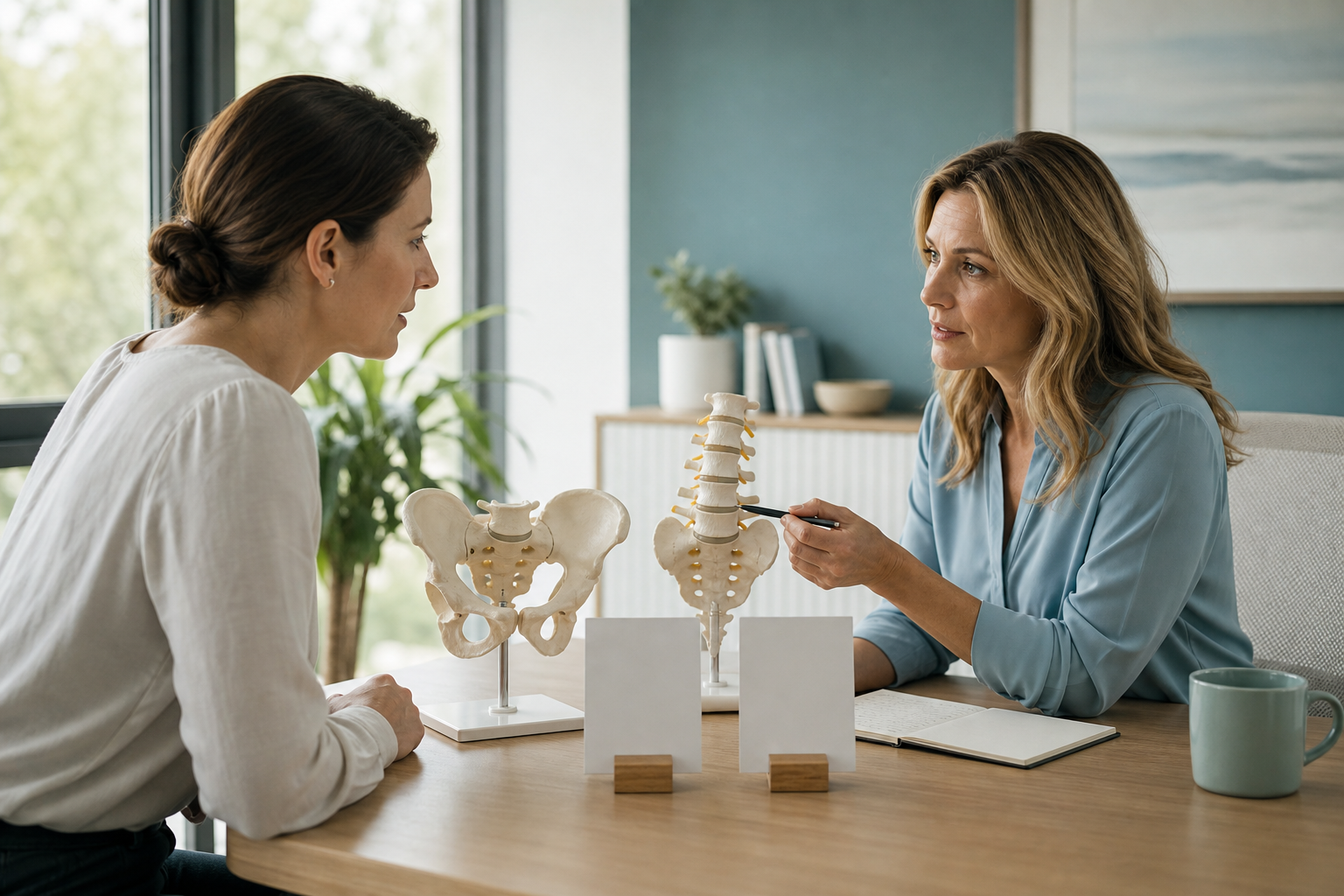
Tailbone pain (coccydynia) and haemorrhoids cause similar pain in the same anatomical region — the base of the spine and perineal area — making self-diagnosis difficult. The key differentiating feature is that tailbone pain is centred directly over the bony tailbone at the top of the gluteal cleft, worsens with sitting (particularly on hard surfaces), and is tender to direct pressure on the coccyx. Haemorrhoids cause pain centred lower in the perineal canal, are associated with visible swelling or bleeding during bowel movements, and cause itching and irritation rather than deep bone-level tenderness. Both conditions benefit from a donut-shaped coccyx cushion and can be managed with overlapping conservative approaches — but they require different specific treatments beyond those shared interventions.
By Rachel, Health & Wellness Writer · Last updated July 2026
Table of Contents
- Anatomy: Where the Tailbone and Haemorrhoids Are Located
- Tailbone Pain: Causes, Symptoms, and Diagnosis
- Haemorrhoids: Causes, Symptoms, and Diagnosis
- The Key Differences at a Glance
- Can You Have Both at the Same Time?
- Treatment Approaches for Each Condition
- Shared Conservative Approaches
- When to See a Doctor
- Frequently Asked Questions
- Sources and Methodology
Anatomy: Where the Tailbone and Haemorrhoids Are Located
The coccyx (tailbone) and haemorrhoids occupy overlapping but distinct anatomical territories. Understanding this overlap explains why the two conditions are so frequently confused.
The Coccyx
The coccyx is a triangular bony structure at the very base of the vertebral column, formed by 3–5 fused vertebrae. It is located:
- At the apex of the gluteal cleft (top of the cleavage between the buttocks)
- Immediately posterior to the rectum
- Superior to the anus
- At the posterior boundary of the pelvic floor muscles
The coccyx articulates with the sacrum via the sacrococcygeal joint and serves as an attachment point for multiple ligaments and muscles of the pelvic floor.
 Cross-sectional anatomy showing the coccyx (posterior, bony) vs haemorrhoids (internal and external, centred in the anal canal).
Haemorrhoids
Haemorrhoids are vascular cushions in the anal canal — clusters of arteriovenous connective tissue supported by smooth muscle and fibrous tissue. They are categorised as:
- Internal haemorrhoids: Located above the dentate/pectinate line, covered by columnar epithelium. Typically painless but can bleed.
- External haemorrhoids: Located below the dentate line, covered by squamous epithelium. Can thrombose (form a clot) causing significant pain.
Haemorrhoids are located:
- Within the anal canal
- At the anal verge (at or just outside the anus)
- NOT directly on the coccyx
The key anatomical separation: coccyx pain is posterior and bony; haemorrhoid pain is centred in the anal canal itself.
Tailbone Pain: Causes, Symptoms, and Diagnosis
Common Causes of Tailbone Pain (Coccydynia)
- Direct trauma — a fall onto the buttocks, striking the tailbone directly on a hard edge
- Repetitive strain — prolonged sitting on hard surfaces (boat seats, cycling, rowing)
- Childbirth — pressure and trauma to the coccyx during delivery
- Degenerative joint changes — osteoarthritis of the sacrococcygeal joint in older adults
- Hypermobility — excessive movement at the sacrococcygeal joint, common during pregnancy
- Idiopathic — no identifiable cause in approximately 35% of cases
Classic Symptoms of Coccydynia
- Pain directly over the tailbone (at the apex of the gluteal cleft)
- Pain worsens when sitting, especially on hard surfaces or when leaning backward
- Pain when transitioning from sitting to standing (coccyx shifts under bodyweight)
- Local tenderness when the skin over the coccyx is pressed
- Pain during sexual intercourse (certain positions)
- Pain during bowel movements (secondary to pelvic floor muscle contraction)
Diagnosis
Diagnosis of coccydynia is primarily clinical:
- Physical examination: Direct palpation of the coccyx through the gluteal cleft, assessment of coccyx mobility
- Imaging: Lateral X-ray of the sacrococcygeal junction to identify fracture, dislocation, or degenerative changes
- MRI: Rarely needed but used when internal pelvic pathology must be excluded
Haemorrhoids: Causes, Symptoms, and Diagnosis
Common Causes of Haemorrhoids
- Increased intra-abdominal pressure — straining during bowel movements (constipation)
- Pregnancy — increased pelvic blood flow and pressure on haemorrhoidal veins
- Prolonged sitting — especially on the toilet
- Low-fibre diet — leads to constipation and straining
- Obesity — increased intra-abdominal pressure
- Heavy lifting — increases intra-abdominal pressure acutely
Classic Symptoms of Haemorrhoids
Internal haemorrhoids:
- Painless bright red rectal bleeding during or after bowel movements
- Protruding tissue from the anus (prolapse) that may need manual reduction
- Mucus discharge
External haemorrhoids:
- Anal pain and itching
- Swelling at the anal verge
- Thrombosis (clot) causing a firm, blue-purple nodule that is intensely painful
- Bleeding if the overlying skin ruptures
Diagnosis
Haemorrhoids are diagnosed by visual examination and digital rectal examination:
- Anoscopy: A short tube with a light inserted into the anal canal to visualise internal haemorrhoids
- Colonoscopy: Indicated if there is rectal bleeding without a clear haemorrhoid source, to rule out colorectal pathology
The Key Differences at a Glance
| Feature | Tailbone Pain (Coccydynia) | Haemorrhoids |
|---|---|---|
| Primary location of pain | Bony tailbone at top of gluteal cleft | Anal canal and anal verge |
| Pain character | Deep, bony, aching | Sharp, throbbing (external), burning |
| Pain with sitting | Markedly worse, especially hard surfaces | Worse but less dramatic |
| Visible swelling | Rarely visible externally | Often visible as perianal swelling |
| Bleeding | No bleeding | Bright red blood on toilet paper/stool |
| Itching | Uncommon | Very common |
| Bowel movement pain | Secondary to muscle contraction | Primary symptom |
| Palpable bony prominence | Yes (the tender coccyx itself) | No bony prominence |
| Manual reduction of tissue | No | Prolapsed haemorrhoids may require manual reduction |
Decision guide: Does pressing directly on the bony tailbone reproduce your pain? YES = likely coccyx. NO = consider haemorrhoids.
Can You Have Both at the Same Time?
Yes. It is entirely possible — and not uncommon — to have both coccydynia and haemorrhoids simultaneously. Several risk factors overlap:
- Pregnancy: Both conditions are common during and after pregnancy
- Prolonged sitting: Both are exacerbated by extended periods of sitting
- Age: Both become more prevalent with age
- Low-fibre diet: Causes constipation, which worsens both conditions
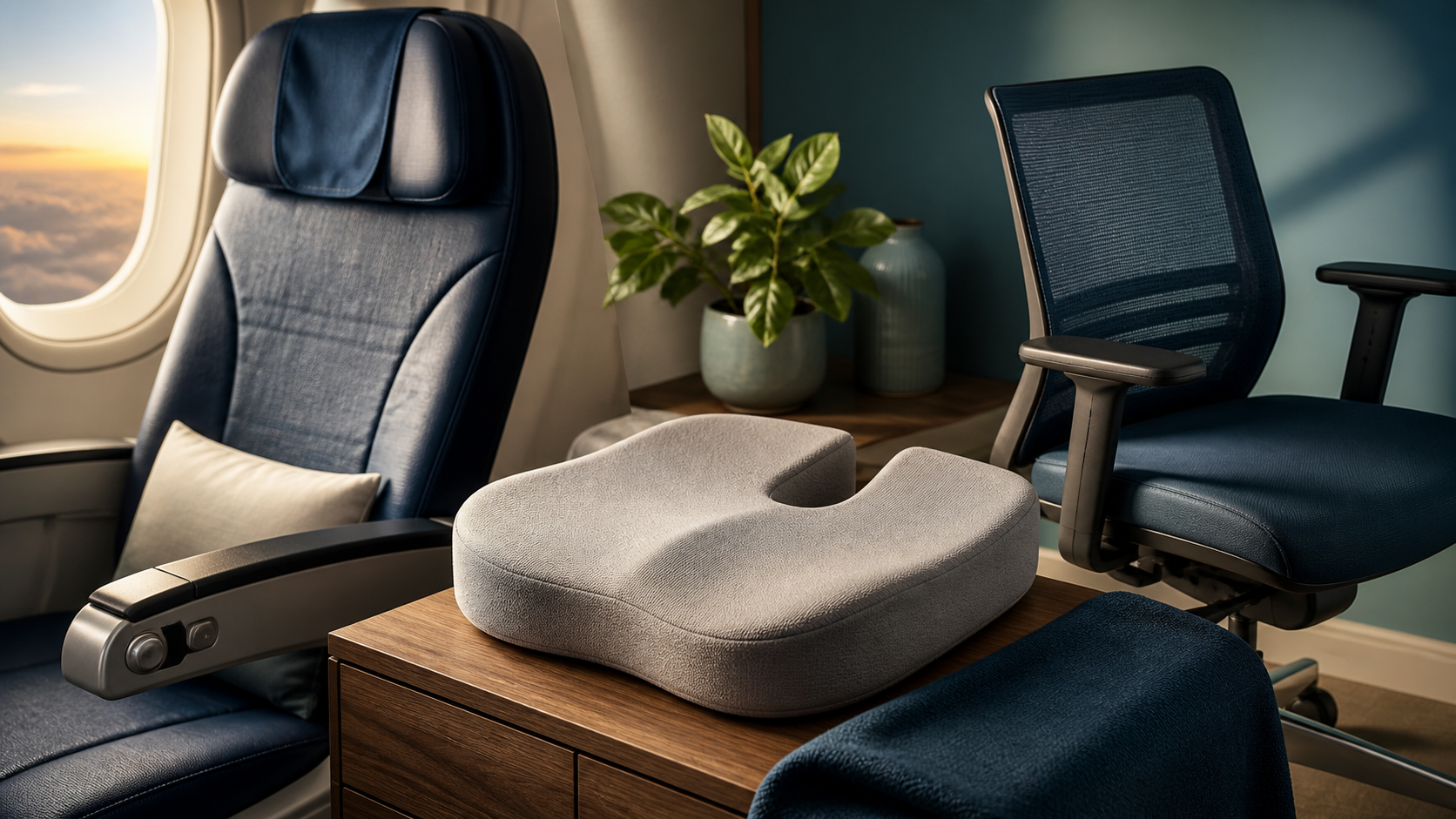
When both conditions are present, the treatment challenge increases: treatments that help one condition may worsen the other. For example, a standard U-shaped coccyx cushion offloads the coccyx but has a hard edge that can press against external haemorrhoids. A donut cushion offloads both the coccyx and the perianal area — making it the better choice when both conditions coexist.
Treatment Approaches for Each Condition
Coccyx Pain Treatment
- Coccyx cushion: U-shaped or donut cushion to offload the tailbone during sitting
- Sitz baths: Warm water immersion to relax pelvic floor muscles and increase blood flow
- Topical analgesics: Menthol gels, lidocaine patches (see our topical creams guide)
- Physiotherapy: Internal and external pelvic floor release techniques (see our physiotherapy guide)
- Injections: Corticosteroid or platelet-rich plasma (PRP) injection into the sacrococcygeal joint for refractory cases
- Surgery: Coccygectomy (partial or total removal of the coccyx) for severe, refractory cases
Haemorrhoid Treatment
- Dietary modification: Increase fibre to 25–35g/day to soften stool and reduce straining
- Stool softeners: Docusate sodium or polyethylene glycol to reduce straining
- Topical haemorrhoid treatments: Hydrocortisone suppositories, phenylephrine ointments, witch hazel pads
- Sitz baths: Warm water sitz baths 2–3 times daily (beneficial for both conditions)
- Rubber band ligation: Outpatient procedure where a rubber band is placed at the base of the haemorrhoid, causing it to wither and fall off
- Haemorrhoidectomy: Surgical removal for severe or recurrent haemorrhoids
- ** haemorrhoidopexy:** Stapled procedure for prolapsing internal haemorrhoids
Shared Conservative Approaches
Donut Cushion
A donut (round with centre hole) cushion offloads both the tailbone AND the perianal area, making it the universal cushion for anyone with pain in the sacrococcygeal-perianal region. Unlike a U-shaped coccyx cushion, the donut cushion has no posterior edge that could press against external haemorrhoids.
Our recommended donut cushion: the Donut Hole Round Coccyx Cushion with CertiPUR-US foam and organic cotton cover.
Sitz Baths
Warm sitz baths benefit both conditions:
- For coccyx pain: relaxes pelvic floor muscles and increases local blood flow
- For haemorrhoids: reduces sphincter spasm, promotes hygiene, increases circulation to promote healing
The Drive Medical RTL13092 Portable Sitz Bath is the standard clinical choice.
Dietary Fibre
A high-fibre diet (25–35g/day) softens stool, reduces straining during bowel movements, and prevents constipation — which is the primary aggravating factor for both coccyx pain (through pelvic floor muscle contraction) and haemorrhoids (through increased intra-abdominal pressure and vascular congestion).
For a structured physiotherapy approach to coccyx pain that does not involve haemorrhoid treatments, see physiotherapy for coccyx pain.
When to See a Doctor
Seek medical attention promptly for any of the following:
For coccyx pain:
- Pain after a direct fall or trauma to the tailbone
- Inability to sit at all due to pain
- Pain that does not improve after 6–8 weeks of conservative treatment
- Bowel or bladder dysfunction accompanying tailbone pain (possible cauda equina syndrome — emergency)
For haemorrhoids:
- Rectal bleeding that is not obviously from haemorrhoids (dark blood, blood mixed with stool)
- Unexplained weight loss with rectal bleeding
- Change in bowel habits lasting more than 2 weeks
- Severe anaemia from ongoing haemorrhoid bleeding
- Thrombosed external haemorrhoid (extremely painful blue-purple nodule) — requires urgent evaluation
For either condition simultaneously:
- Severe pain that is not controlled with over-the-counter measures
- Signs of infection (fever, redness, warmth spreading from the area)
Frequently Asked Questions
Can a doctor tell the difference between tailbone pain and haemorrhoids during an exam?
Yes. A digital rectal examination and direct palpation of the coccyx will clearly identify which structure is generating the pain. A competent primary care physician or colorectal surgeon can differentiate these conditions in a standard office visit.
I've been using a U-shaped coccyx cushion and my haemorrhoids hurt more. Why?
The posterior edge of a U-shaped coccyx cushion — the arms of the U — press against the gluteal muscles on either side of the anus. If you have external haemorrhoids, this pressure can compress and irritate them. Switch to a donut cushion, which has an open centre and no posterior edge.
Can haemorrhoids cause tailbone pain?
Indirectly, yes. Large prolapsing haemorrhoids can cause compensatory changes in sitting posture as the person shifts weight to avoid pain. This shifted posture can increase posterior pelvic tilt, which stresses the sacrococcygeal joint and causes secondary coccyx pain.
Does pregnancy cause both conditions?
Yes. Pregnancy causes both coccyx pain (through relaxin-mediated joint laxity and mechanical pressure) and haemorrhoids (through increased pelvic blood flow and pressure on haemorrhoidal veins). Both are extremely common during pregnancy and the postpartum period.
Are haemorrhoids and tailbone pain related to cancer?
Neither condition is a cancer warning sign in isolation. However, rectal bleeding that is not clearly from haemorrhoids should be evaluated with a colonoscopy to rule out colorectal cancer. Persistent coccyx pain that does not respond to standard treatment should be investigated to rule out rare malignant causes (e.g., chordoma, a slow-growing tumour at the sacrococcygeal junction).
How long do haemorrhoids take to resolve with treatment?
With conservative treatment (diet, stool softeners, sitz baths, topical treatments), most symptomatic haemorrhoids improve within 1–2 weeks. Thrombosed external haemorrhoids typically resolve within 2–4 weeks as the clot is reabsorbed. Recurrent or chronic haemorrhoids may require procedural intervention.
Sources and Methodology
-
Cleveland Clinic clinical guidelines on haemorrhoid diagnosis and management.
-
American Society of Colon and Rectal Surgeons practice parameters for haemorrhoid management (2020).
-
Cochrane systematic review on conservative management of coccydynia.
-
Radiological differentiation of coccygeal fracture from haemorrhoid pathology — Clinical Radiology journal.
-
Pregnancy-related pelvic floor dysfunction causing both coccyx pain and haemorrhoids — International Urogynecology Journal.
-
Faecal incontinence and haemorrhoid epidemiology — population studies from the Journal of Gastroenterology.
Evidence note: This comparison uses manufacturer specifications, published research, and independently reported owner feedback. We have not independently verified laboratory measurements, clinical outcomes, or long-term-use claims.
This article was last updated July 2026. CoccyxRelief earns a commission from qualifying purchases made through Amazon links.